
The Bigger Picture Behind Industrial Textiles
In the realm of industrial textiles, the category into which a product falls can significantly influence decision-making processes. Understanding the distinctions among various industrial textile categories is essential not only for sourcing but also for ensuring that the selected materials meet specific performance requirements. With applications ranging from automotive to aerospace, the implications of these choices can be profound.
Industrial textiles are not merely functional; they embody a complex interplay of materials, structures, and processing techniques that collectively determine their performance. Recognizing how these factors contribute to the overall utility of a textile can help businesses navigate the often-overlooked nuances in material selection.
How Materials, Structure, and Processing Affect Results
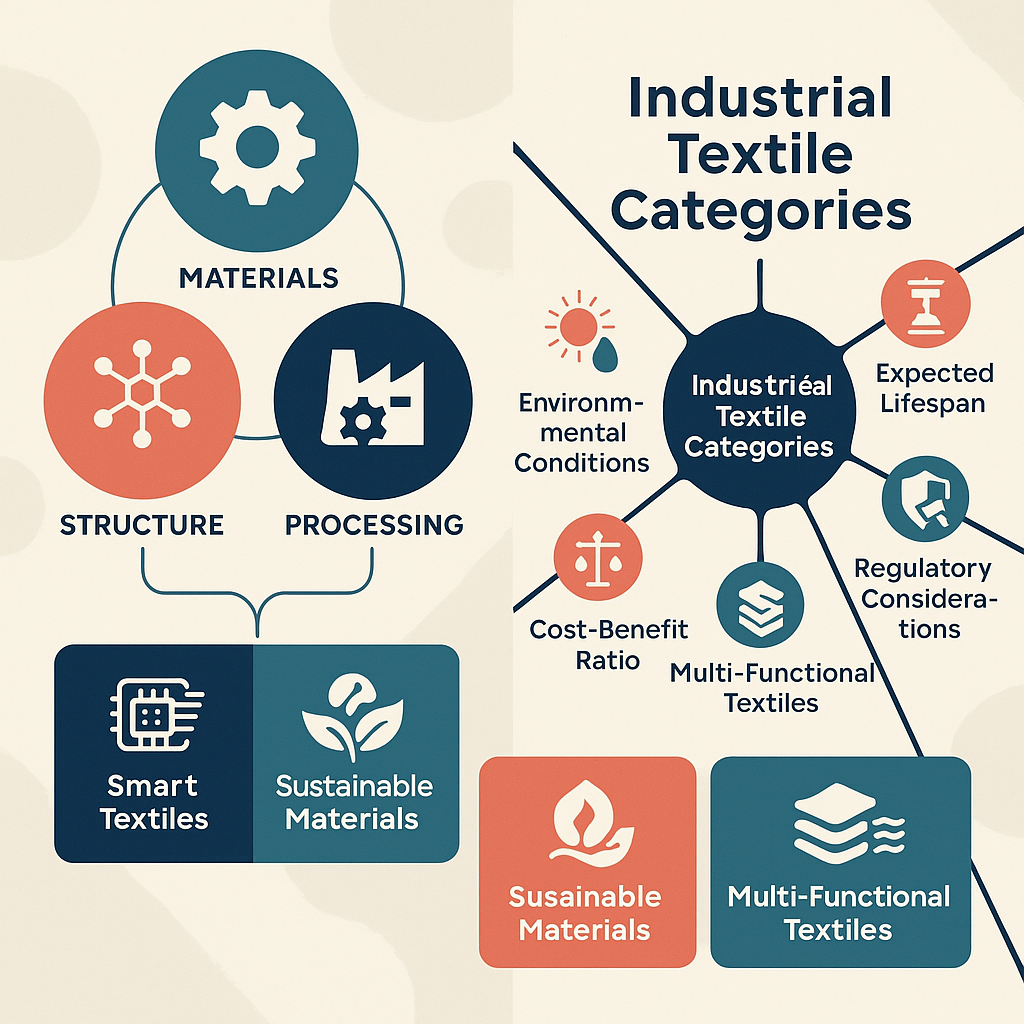
The performance of industrial textiles is influenced by three primary factors: the materials used, the structural design, and the processing methods employed. Each of these elements plays a critical role in determining the final product’s suitability for its intended application.
Why One Specification Never Tells the Full Story
When evaluating industrial textiles, it is tempting to rely on a single specification, such as tensile strength or abrasion resistance. However, this approach can lead to oversimplifications. For instance, while a high tensile strength may indicate durability, it does not account for other essential properties such as flexibility, weight, or moisture resistance. Each specification must be considered in the context of the application.
Moreover, the interactions between different material properties can result in unexpected performance outcomes. For example, a high-performance fiber may excel in tensile strength but could be less effective in environments where chemical resistance is paramount. Therefore, a holistic view that encompasses multiple specifications is crucial for making informed decisions.
How to Compare Options by End-Use Requirements
To effectively compare different industrial textile categories, it is essential to align the material properties with the specific requirements of the end-use application. This alignment ensures that the selected textiles will perform optimally under the expected conditions.
Questions Worth Asking Before Sourcing
- What are the environmental conditions? Understanding the operational environment—such as temperature, humidity, and exposure to chemicals—can guide material selection.
- What are the mechanical demands? Consider factors like load-bearing requirements, flexibility, and wear resistance.
- What is the expected lifespan? Evaluating the longevity of the textile in its intended application can influence material choice.
- Are there regulatory considerations? Compliance with industry standards and regulations can dictate material selection.
- What is the cost-benefit ratio? Assessing the trade-offs between performance and cost is crucial for budget-conscious decisions.
By addressing these questions, decision-makers can better navigate the complexities of high-end industrial textiles and select materials that align with their operational needs.
Examples, Trends, and What to Watch Next
The landscape of industrial textiles is continually evolving, driven by advancements in technology and changing market demands. Here are some notable trends and examples that illustrate how different categories can lead to varied product decisions:
- Smart Textiles: The integration of sensors and electronics into textiles is gaining traction. These advanced industrial textiles can monitor conditions such as temperature and moisture, providing real-time data that can enhance performance.
- Sustainable Materials: There is a growing emphasis on sustainability in textile production. Biodegradable and recycled materials are becoming more prevalent, influencing sourcing decisions.
- Multi-Functional Textiles: Textiles that serve multiple purposes—such as providing insulation while being lightweight—are increasingly sought after in various industries.
As these trends continue to develop, it is essential for businesses to stay informed about emerging technologies and materials that could impact their product decisions.
Conclusion
Understanding the intricacies of industrial textile categories is vital for making informed sourcing decisions. By considering the interplay of materials, structure, and processing, as well as aligning these factors with end-use requirements, decision-makers can navigate the complexities of textile selection more effectively. Asking the right questions and staying abreast of industry trends will further empower businesses to choose textiles that not only meet performance standards but also align with their strategic objectives.
In summary, the decision-making process in selecting industrial textiles is multifaceted. By applying a comprehensive evaluation framework, businesses can enhance their material selection strategies and ultimately drive better outcomes in their applications.