
What is Carbon Fiber for Marine Parts?
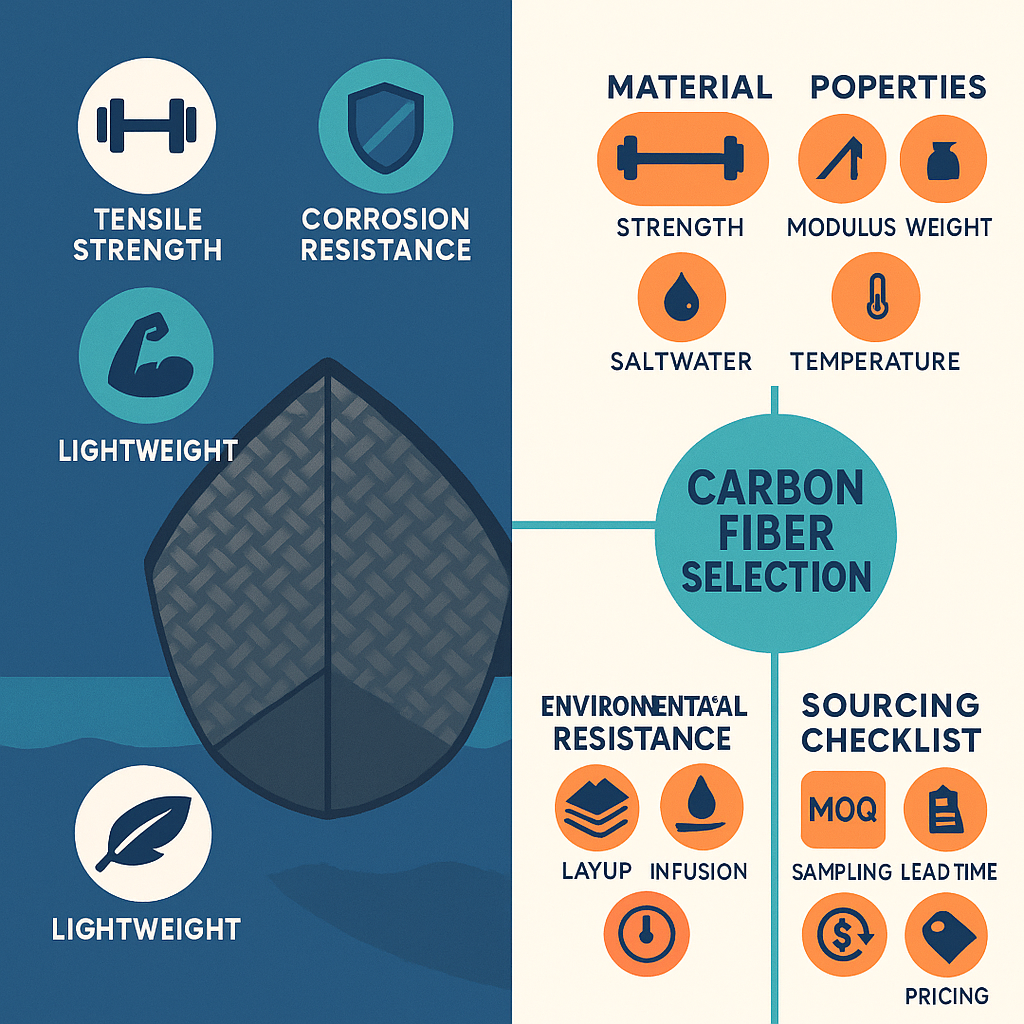
Carbon fiber is a high-performance composite material widely used in various industries, including marine applications. Its unique properties make it an ideal choice for manufacturing marine parts that require strength, lightweight characteristics, and resistance to environmental factors.
Core Definition and Material Structure
Carbon fiber is composed of thin strands of carbon atoms that are tightly bonded together in a crystalline structure. This arrangement provides exceptional tensile strength and rigidity, making it suitable for demanding applications such as boat hulls, masts, and various structural components. The fibers are often combined with a resin matrix to form a composite material, enhancing its mechanical properties.
Key Performance Characteristics
- High Strength-to-Weight Ratio: Carbon fiber is significantly lighter than metals like steel and aluminum while offering comparable or superior strength.
- Corrosion Resistance: Unlike metals, carbon fiber does not corrode, making it ideal for marine environments.
- Stiffness: The rigidity of carbon fiber allows for precise control in applications where deformation could affect performance.
- Fatigue Resistance: Carbon fiber maintains its properties over time, even under repetitive stress.
Typical Industrial Forms and Specifications
Carbon fiber for marine applications typically comes in various forms, including sheets, tubes, and pre-preg materials. Specifications may vary based on the intended application, with common metrics including fiber type (e.g., standard modulus vs. intermediate modulus), fiber diameter, and resin type. Understanding these specifications is crucial for ensuring the material meets the performance requirements of specific marine applications.
Key Specifications to Confirm Before Ordering
When sourcing carbon fiber for marine parts, it’s essential to confirm specific technical specifications to ensure compatibility with your application.
Key Technical Points
- Tensile Strength: Measure the maximum stress that the material can withstand while being stretched or pulled.
- Modulus of Elasticity: This indicates how much the material will deform under stress, which is critical for applications requiring rigidity.
- Weight: The overall weight of the material affects the performance and efficiency of marine vessels.
Application and Sourcing Considerations
Consider the specific marine application when selecting carbon fiber. For example, parts exposed to high impact may require higher tensile strength, while components focused on weight savings may prioritize lighter materials. Additionally, sourcing considerations such as supplier reliability and material traceability are vital for ensuring quality.
Buyer Checklist Before Sampling
- Confirm the required specifications for your application.
- Evaluate the supplier’s reputation and previous projects.
- Request samples to assess material performance in real-world conditions.
Performance Factors That Affect End Use
The performance of carbon fiber in marine applications is influenced by several factors that should be carefully evaluated.
Key Technical Points
- Environmental Resistance: Consider how the material will perform in saltwater, UV exposure, and temperature variations.
- Manufacturing Process: Different fabrication methods (e.g., layup, infusion) can affect the final properties of the composite.
Application and Sourcing Considerations
Understanding the end-use environment is crucial. For instance, components used in high-performance racing boats may require different specifications than those used in recreational vessels. Sourcing from reputable suppliers who can provide detailed material data sheets will help ensure the right fit.
Buyer Checklist Before Sampling
- Assess the environmental conditions the material will face.
- Review the manufacturing process and its impact on material properties.
- Ensure the supplier can provide detailed technical documentation.
How to Choose for Marine Parts
Choosing the right carbon fiber for marine parts involves a systematic approach to evaluating specifications and application requirements.
Key Specification Checklist
- Identify the mechanical properties required for your application.
- Consider the environmental factors that will affect the material.
- Determine the manufacturing process that will be used to create the parts.
Matching Material to Application Conditions
When selecting carbon fiber, it’s essential to match the material properties to the specific conditions of use. For example, if the part will be subject to high dynamic loads, a high-strength carbon fiber may be necessary. Conversely, for applications where weight is a priority, a lighter fiber may be more appropriate.
Common Mistakes Before Sampling or Bulk Order
- Overlooking environmental factors that could affect performance.
- Failing to verify the supplier’s quality assurance processes.
- Not considering the long-term implications of material choice on maintenance and durability.
MOQ, Sampling, Customization, and Lead Time
Understanding the nuances of minimum order quantities (MOQ), sampling, customization, and lead times is essential for effective sourcing of carbon fiber.
What Affects Pricing
Pricing for carbon fiber can vary based on several factors, including the type of fiber, the complexity of the manufacturing process, and the volume of the order. Customization requests may also impact costs, so it’s important to have a clear understanding of your requirements before engaging suppliers.
MOQ, Sample, and Lead Time Considerations
- Be aware of the supplier’s MOQ, as this can affect your initial sourcing strategy.
- Request samples early in the process to evaluate material performance.
- Understand lead times for both samples and bulk orders to align with project timelines.
What Buyers Should Confirm Before RFQ
- Confirm the specifications and performance criteria for your application.
- Ensure the supplier can meet your customization needs.
- Verify the supplier’s ability to provide timely delivery.
Common Mistakes Buyers Should Avoid
To ensure a successful sourcing experience, buyers should be aware of common pitfalls in the selection process.
Key Technical Points
- Neglecting to thoroughly review technical data sheets can lead to mismatched expectations.
- Overlooking the importance of supplier communication can result in misunderstandings about material properties.
Application and Sourcing Considerations
Buyers should avoid making assumptions about material performance without adequate testing. Each application may have unique requirements that necessitate a tailored approach to material selection.
Buyer Checklist Before Sampling
- Review all technical documentation and specifications.
- Communicate clearly with suppliers about your needs and expectations.
- Conduct thorough testing of samples to ensure suitability.
Inquiry Checklist for Suppliers and Trading Companies
When engaging with suppliers, having a structured inquiry checklist can streamline the sourcing process.
Key Technical Points
- Request detailed technical data sheets for the carbon fiber being considered.
- Inquire about the supplier’s quality control processes and certifications.
Application and Sourcing Considerations
Ask about the supplier’s experience with marine applications specifically, as this can provide insights into their capability to meet your needs.
Buyer Checklist Before Sampling
- Confirm lead times for samples and bulk orders.
- Evaluate the supplier’s ability to provide ongoing support and communication.
- Ensure clarity on pricing structures and any potential additional costs.
Conclusion
Choosing the right carbon fiber for marine parts is a multifaceted process that requires careful consideration of specifications, performance factors, and sourcing strategies. By understanding the material’s properties and aligning them with application requirements, decision-makers can make informed choices that enhance the performance and longevity of marine components. Utilize the provided checklists and insights to navigate the complexities of carbon fiber selection effectively.