
What is Carbon Fiber for Robotic Arms?
Carbon fiber is a high-performance material known for its exceptional strength-to-weight ratio, making it an ideal choice for various industrial applications, including robotic arms. The unique properties of carbon fiber enable the creation of lightweight yet robust structures that can enhance the performance and efficiency of robotic systems.
Core Definition and Material Structure
Carbon fiber is composed of thin strands of carbon atoms bonded together in a crystalline structure. This configuration provides remarkable tensile strength and rigidity, allowing for the construction of components that can withstand significant stress while remaining lightweight. The fibers are typically woven into fabrics or combined with resins to form composite materials, which are then used in the manufacturing of robotic arms.
Key Performance Characteristics
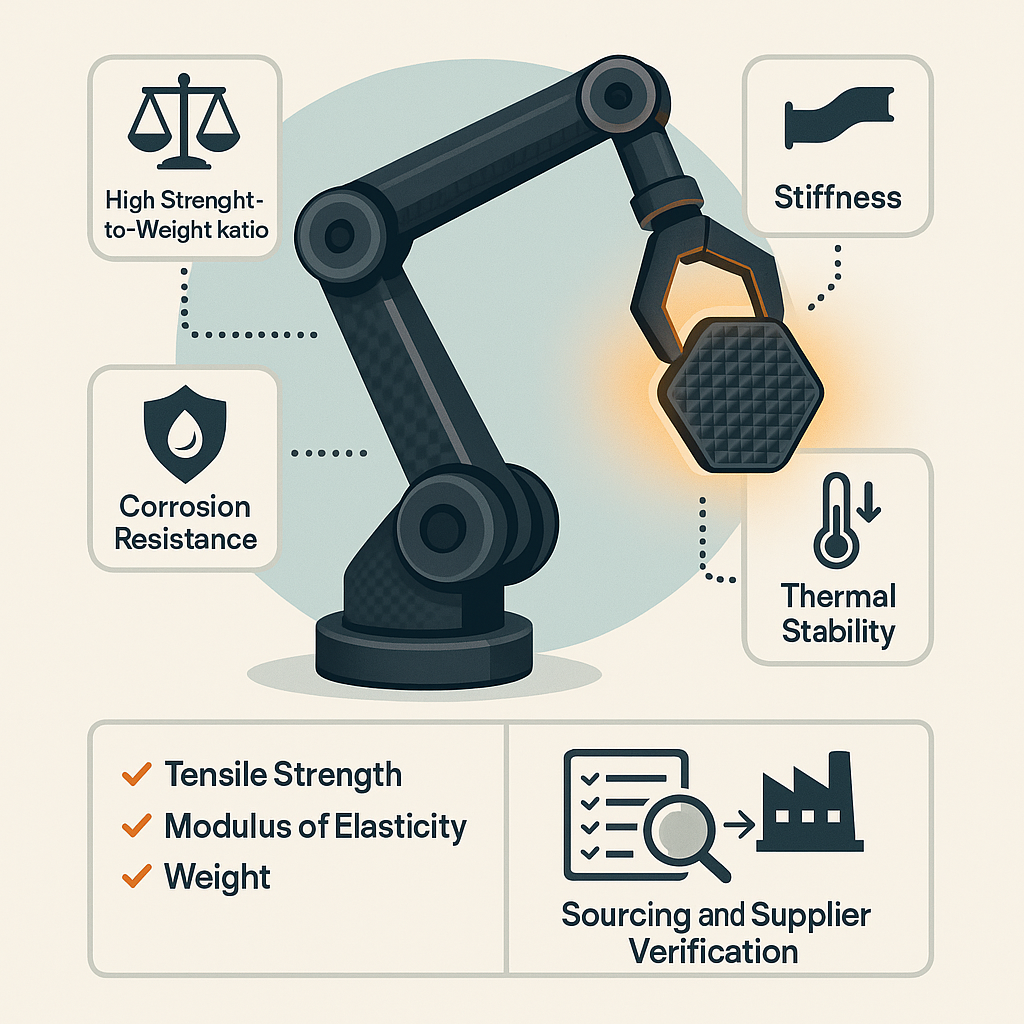
- High Strength-to-Weight Ratio: Carbon fiber is significantly lighter than metals like aluminum or steel, yet it can offer comparable or superior strength.
- Stiffness: The rigidity of carbon fiber reduces flexing during operation, which is crucial for precision tasks in robotic applications.
- Corrosion Resistance: Unlike metals, carbon fiber does not corrode, making it suitable for various environmental conditions.
- Thermal Stability: Carbon fiber maintains its properties over a wide temperature range, which is essential for robotic applications that may encounter varying thermal conditions.
Typical Industrial Forms and Specifications
Carbon fiber is available in various forms, including unidirectional tapes, woven fabrics, and pre-preg composites. Each form has distinct specifications that cater to different application needs. For robotic arms, it is essential to consider factors such as fiber orientation, resin type, and curing processes, as these can significantly influence the material’s performance.
Key Specifications to Confirm Before Ordering
Key Technical Points
When selecting carbon fiber for robotic arms, it is crucial to confirm specific technical specifications, such as:
- Tensile Strength: The maximum stress the material can withstand while being stretched.
- Modulus of Elasticity: A measure of the material’s stiffness, which affects its ability to resist deformation.
- Weight: The overall weight of the material, which impacts the robotic arm’s performance and energy efficiency.
- Thermal Conductivity: Important for applications where heat dissipation is a concern.
Application and Sourcing Considerations
Understanding the specific application of the robotic arm is critical for selecting the right carbon fiber. Factors such as load-bearing requirements, environmental conditions, and operational speed should influence material choice. Additionally, sourcing considerations, including supplier reliability and material traceability, are vital to ensure quality and performance.
Buyer Checklist Before Sampling
- Define the application requirements clearly.
- Identify the necessary specifications for performance.
- Research potential suppliers for quality assurance.
- Request samples to evaluate material properties in real-world conditions.
Performance Factors That Affect End Use
Key Technical Points
Several performance factors can influence the effectiveness of carbon fiber in robotic arms:
- Load Distribution: Understanding how loads are distributed across the robotic arm can help in selecting the appropriate carbon fiber type.
- Fatigue Resistance: The ability of the material to withstand repeated stress is crucial for long-term reliability.
- Impact Resistance: Consideration of how the material behaves under sudden loads or impacts is important for safety and durability.
Application and Sourcing Considerations
Different robotic applications may require specific material properties. For instance, high-speed robotic arms may prioritize lightweight materials, while those used in heavy-duty applications may focus on strength and durability. Sourcing from reputable suppliers who can provide detailed material specifications and certifications is essential for ensuring that the carbon fiber meets the required standards.
Buyer Checklist Before Sampling
- Assess the specific performance requirements of the robotic arm.
- Evaluate the supplier’s ability to meet these specifications.
- Consider the long-term operational environment of the robotic arm.
How to Choose for Robotic Arms
Key Specification Checklist
When choosing carbon fiber for robotic arms, a detailed checklist can help streamline the decision-making process:
- Confirm tensile strength and modulus of elasticity requirements.
- Evaluate weight constraints for the robotic arm design.
- Assess environmental factors that may affect material performance.
- Consider the manufacturing processes involved in creating the robotic arm.
Matching Material to Application Conditions
It is essential to align the selected carbon fiber with the specific conditions under which the robotic arm will operate. For example, if the arm will be used in a corrosive environment, selecting a resin system that offers enhanced chemical resistance is critical. Similarly, for applications that involve high temperatures, ensuring that the carbon fiber can withstand thermal stress is vital.
Common Mistakes Before Sampling or Bulk Order
- Overlooking the importance of detailed specifications.
- Failing to consider the operational environment.
- Neglecting to request samples for testing.
- Relying solely on supplier recommendations without independent verification.
MOQ, Sampling, Customization, and Lead Time
What Affects Pricing
The pricing of carbon fiber can be influenced by several factors, including:
- Material Quality: Higher quality fibers typically command a premium price.
- Form and Specifications: Custom forms or specialized specifications may increase costs.
- Order Volume: Larger orders may benefit from economies of scale.
MOQ, Sample, and Lead Time Considerations
Minimum order quantities (MOQ) can vary significantly between suppliers. Understanding the MOQ is essential for budgeting and planning. Additionally, lead times can affect project timelines, so it is advisable to confirm these details early in the sourcing process. Sampling is a critical step that allows for material evaluation before committing to bulk orders.
What Buyers Should Confirm Before RFQ
- Clarify the specifications required for the project.
- Confirm the supplier’s ability to meet lead times.
- Request detailed pricing information based on specific requirements.
Common Mistakes Buyers Should Avoid
Key Technical Points
Buyers often make several common mistakes when selecting carbon fiber for robotic arms:
- Not fully understanding the technical specifications required for their application.
- Failing to evaluate the long-term performance of the material.
- Overlooking the importance of supplier reputation and reliability.
Application and Sourcing Considerations
It is crucial to align the material selection process with the specific application needs. Buyers should avoid making assumptions about material performance based solely on general characteristics. Instead, a thorough assessment of the application environment and operational demands is necessary.
Buyer Checklist Before Sampling
- Review technical specifications and application requirements.
- Conduct supplier research to ensure quality and reliability.
- Prepare a comprehensive list of questions for potential suppliers.
Inquiry Checklist for Suppliers and Trading Companies
Key Technical Points
When engaging with suppliers, it is essential to ask targeted questions that clarify material properties and sourcing capabilities:
- What are the detailed specifications of the carbon fiber offered?
- Can you provide certifications or test results for the material?
- What is the expected lead time for orders?
Application and Sourcing Considerations
Understanding the supplier’s capabilities in meeting specific application needs is vital. Buyers should inquire about the supplier’s experience with similar projects and their ability to customize materials based on unique requirements.
Buyer Checklist Before Sampling
- Prepare a list of specifications and requirements for the robotic arm.
- Identify potential risks and challenges in sourcing.
- Ensure clear communication of expectations with suppliers.
Conclusion
Choosing the right carbon fiber for robotic arms is a multifaceted process that requires careful consideration of material properties, application requirements, and sourcing strategies. By understanding the key specifications, performance factors, and common pitfalls, decision-makers can make informed choices that enhance the efficiency and reliability of robotic systems. A thorough inquiry checklist can further streamline the selection process, ensuring that the chosen material aligns with project goals and operational demands.