
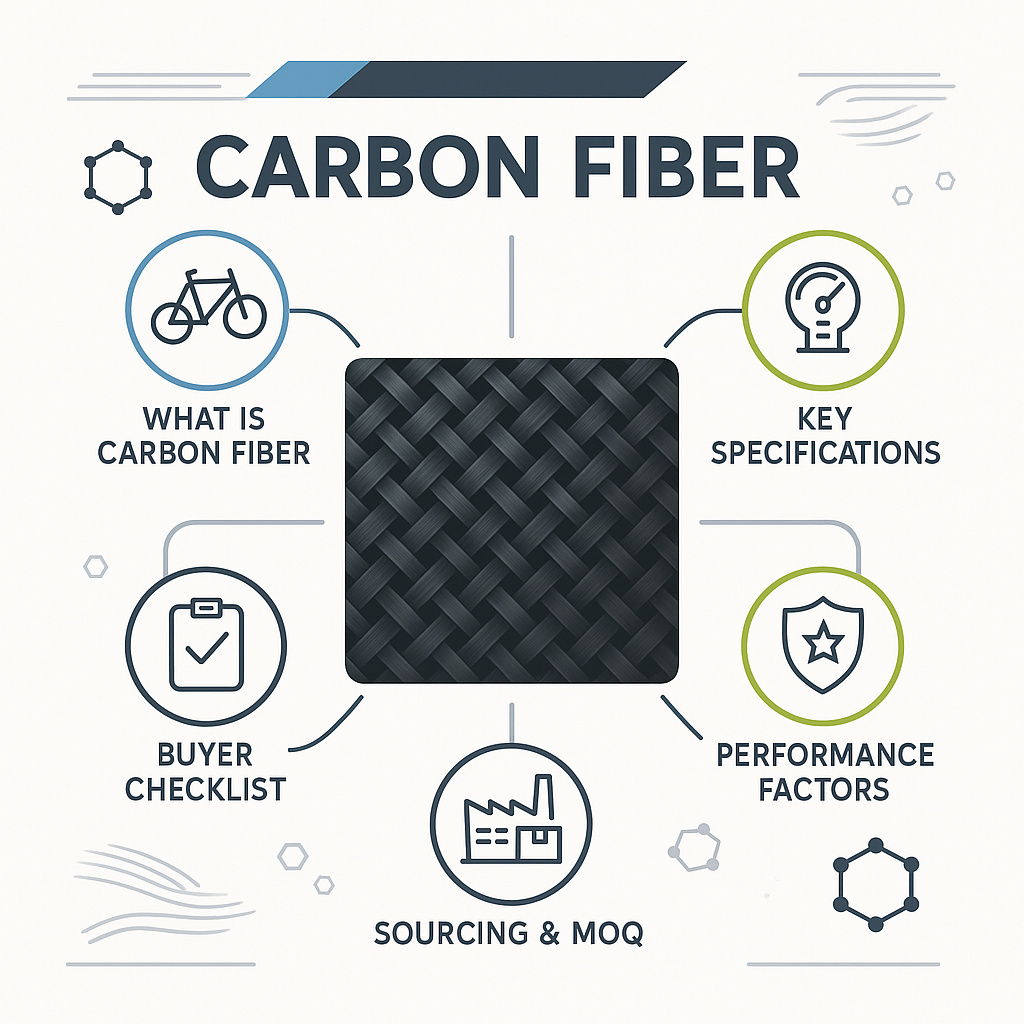
What is Carbon Fiber for Sporting Goods?
Carbon fiber is a high-performance material widely utilized in the sporting goods industry due to its exceptional strength-to-weight ratio, stiffness, and durability. Understanding how to choose carbon fiber for sporting goods is essential for manufacturers and designers aiming to enhance product performance while maintaining a competitive edge.
Core Definition and Material Structure
At its core, carbon fiber consists of thin strands of carbon atoms bonded together in a crystalline structure. This unique arrangement provides the material with remarkable tensile strength and rigidity, making it ideal for applications where weight savings are crucial. Carbon fibers can be woven into fabrics or used in composite materials, often combined with resins to form rigid structures.
Key Performance Characteristics
- Lightweight: Carbon fiber is significantly lighter than metals like aluminum and steel, allowing for enhanced maneuverability in sporting equipment.
- High Strength: The tensile strength of carbon fiber can exceed that of steel, providing durability and resilience under stress.
- Stiffness: The rigidity of carbon fiber contributes to improved performance in applications such as bicycle frames and tennis rackets.
- Corrosion Resistance: Unlike metals, carbon fiber does not rust, making it suitable for outdoor sporting goods.
Typical Industrial Forms and Specifications
Carbon fiber is available in various forms, including unidirectional tapes, woven fabrics, and pre-preg materials. Each form has specific specifications that can affect performance:
- Fabric Weight: Measured in grams per square meter (gsm), this affects the overall weight and stiffness of the final product.
- Fiber Orientation: The direction of the fibers can significantly influence the mechanical properties of the material.
- Resin Type: The choice of resin used in conjunction with carbon fiber can impact the final product’s flexibility and durability.
Key Specifications to Confirm Before Ordering
When sourcing carbon fiber for sporting goods, confirming specific technical specifications is vital to ensure optimal performance.
Key Technical Points
- Tensile Strength: Understand the required tensile strength for your application to avoid material failure.
- Modulus of Elasticity: This indicates how much the material will deform under stress, affecting performance.
- Thermal Stability: Consider the operating temperature range to ensure the material performs under expected conditions.
Application and Sourcing Considerations
Different sporting goods require varying specifications based on their intended use. For example, a high-performance bicycle frame may require a different grade of carbon fiber than a fishing rod. Understanding the application will guide your sourcing decisions.
Buyer Checklist Before Sampling
- Define the performance requirements for your specific application.
- Confirm the supplier’s ability to meet your specifications.
- Request samples to evaluate material properties before bulk ordering.
Performance Factors That Affect End Use
Several performance factors can influence the suitability of carbon fiber for specific sporting goods applications.
Key Technical Points
- Impact Resistance: Assess how the material will perform under sudden impacts, especially in high-contact sports.
- Fatigue Resistance: Consider how the material will endure repeated stress over time, which is critical for longevity.
Application and Sourcing Considerations
Different sports may impose unique demands on carbon fiber materials. For example, equipment used in extreme conditions may require enhanced impact resistance and thermal stability.
Buyer Checklist Before Sampling
- Evaluate the environmental conditions the product will face.
- Identify any specific performance metrics that must be met.
- Ensure that the supplier can provide relevant certifications and test results.
How to Choose for Sporting Goods
Choosing the right carbon fiber involves a systematic approach to ensure that the material aligns with your product goals.
Key Specification Checklist
- Determine the required weight and stiffness for your application.
- Identify the necessary tensile strength and modulus of elasticity.
- Consider the resin compatibility based on environmental exposure.
Matching Material to Application Conditions
Understanding the specific conditions under which the sporting goods will be used is critical. For example, equipment used in wet conditions may require additional moisture resistance, while items exposed to high UV light may need UV-stabilized resins.
Common Mistakes Before Sampling or Bulk Order
- Neglecting to test samples before committing to bulk orders.
- Overlooking the importance of fiber orientation and weave patterns.
- Failing to consider the long-term performance of the material under expected use conditions.
MOQ, Sampling, Customization, and Lead Time
Understanding the implications of minimum order quantities (MOQ), sampling, and customization is crucial for effective sourcing.
What Affects Pricing
Pricing for carbon fiber can vary based on several factors, including the grade of fiber, the complexity of the weave, and the type of resin used. Customization and small batch orders may also impact costs.
MOQ, Sample, and Lead Time Considerations
- Be aware of the supplier’s MOQ and how it aligns with your production needs.
- Request samples early in the process to avoid delays.
- Understand the lead times for both sampling and bulk orders to plan your production schedule effectively.
What Buyers Should Confirm Before RFQ
- Clarify the specifications and performance requirements in your request for quotation (RFQ).
- Ensure that the supplier can meet your timeline and MOQ.
- Ask about any potential customization options that may be available.
Common Mistakes Buyers Should Avoid
Being aware of common pitfalls can help streamline the sourcing process and improve outcomes.
Key Technical Points
- Assuming all carbon fiber is the same; different grades and specifications can lead to performance issues.
- Not conducting thorough testing of samples before making bulk purchases.
Application and Sourcing Considerations
Different applications may require unique considerations. For instance, equipment designed for extreme sports may need enhanced durability and impact resistance.
Buyer Checklist Before Sampling
- Review technical specifications thoroughly.
- Confirm the supplier’s experience with similar applications.
- Evaluate the supplier’s quality assurance processes.
Inquiry Checklist for Suppliers and Trading Companies
When reaching out to suppliers, having a structured inquiry checklist can facilitate effective communication and ensure all relevant details are covered.
Key Technical Points
- Inquire about the specific grades of carbon fiber available and their performance characteristics.
- Ask for information on the supplier’s sourcing and quality control processes.
Application and Sourcing Considerations
Understanding the supplier’s capabilities in relation to your specific application can help ensure a successful partnership.
Buyer Checklist Before Sampling
- Prepare a detailed list of your requirements and specifications.
- Ask about lead times and customization options.
- Request references or case studies related to your application.
Conclusion
Choosing the right carbon fiber for sporting goods is a multifaceted process that requires careful consideration of specifications, performance factors, and potential pitfalls. By following a structured approach and utilizing the provided checklists, buyers can make informed decisions that enhance the performance and durability of their products. Understanding the nuances of carbon fiber will not only improve product quality but also foster successful collaborations with suppliers, ultimately leading to better outcomes in the competitive sporting goods market.