
A Practical Way to Understand the Industrial Textiles
The terms industrial textiles and technical textiles are often used interchangeably, yet they represent distinct categories with unique characteristics and applications. Understanding these differences is essential for professionals involved in sourcing, engineering, and application development. This article aims to clarify these terms, explore their implications, and provide a framework for making informed decisions in material selection.
Materials and Construction Options
At the core of both industrial and technical textiles are the materials and construction methods used. While both categories may utilize similar fibers, the specific applications often dictate the choice of materials and construction techniques.
Where Each Option Tends to Fit Best
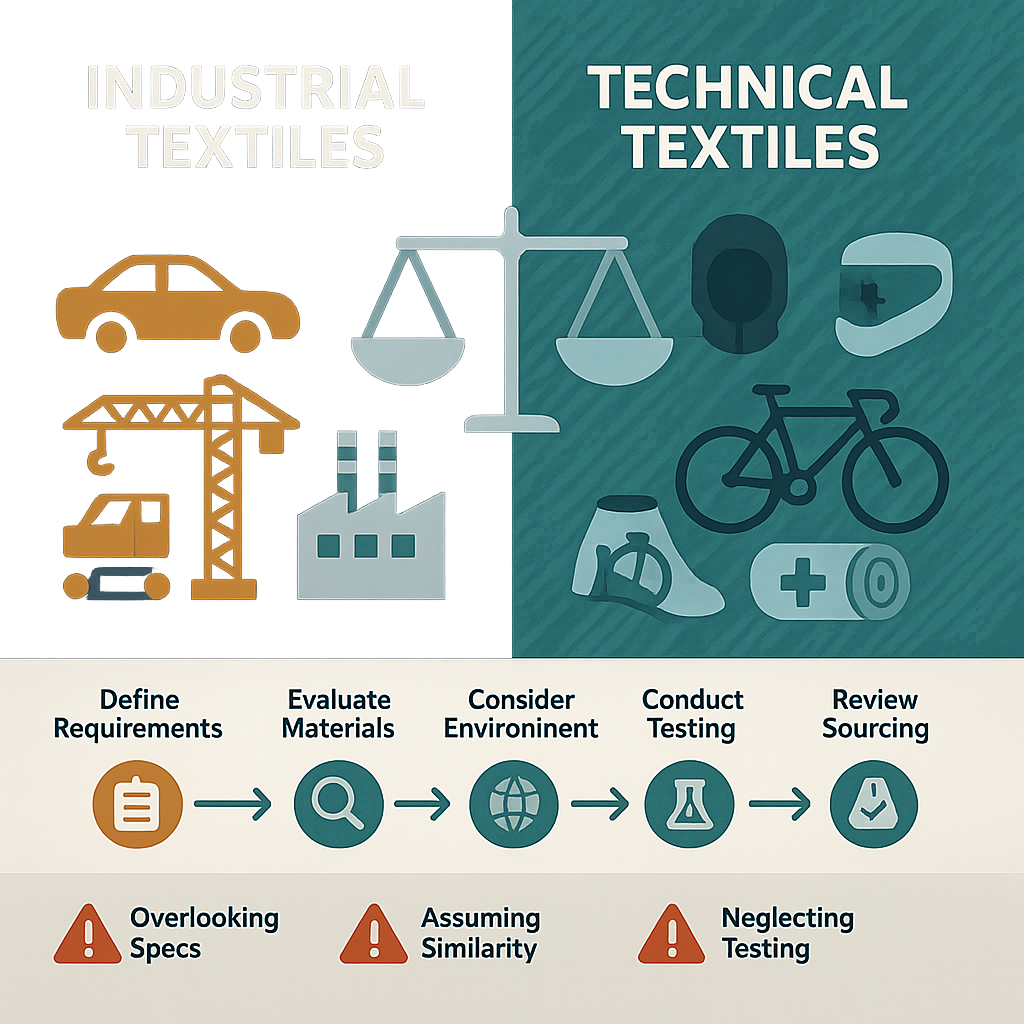
- Industrial Textiles: These are primarily designed for functional applications in various industries, including automotive, construction, and manufacturing. Common materials include polyester, nylon, and cotton, which are chosen for their durability and cost-effectiveness.
- Technical Textiles: These textiles are engineered for specific performance characteristics, such as strength, flexibility, or resistance to environmental factors. Examples include aramid fibers in protective clothing and UHMWPE in high-performance applications.
When selecting materials, consider the end-use application. For instance, if the textile is intended for use in a high-stress environment, advanced industrial textiles like carbon fiber or UHMWPE may be more appropriate than traditional options.
Performance Requirements That Matter Most
Performance is a critical factor in the selection of both industrial and technical textiles. Understanding the specific performance requirements can significantly influence the choice of materials and construction methods.
How Environment and Use Conditions Change the Decision
Different applications come with varying environmental conditions that can impact textile performance. Factors such as temperature, humidity, and exposure to chemicals can dictate the suitability of a particular textile.
- Temperature Resistance: In applications where textiles are exposed to extreme temperatures, materials like aramid fibers may be necessary.
- Moisture Management: For textiles used in outdoor applications, moisture-wicking properties can be crucial, making synthetic fibers a better choice.
- Chemical Resistance: In industrial settings where exposure to solvents is common, selecting textiles with inherent chemical resistance is essential.
By understanding these environmental factors, decision-makers can better assess which materials will meet the performance requirements of their specific applications.
Common Mistakes in Selection or Sourcing
Even seasoned professionals can fall into common pitfalls when selecting or sourcing textiles. Awareness of these mistakes can lead to better decision-making.
- Overlooking Performance Specifications: Failing to consider the specific performance characteristics required for an application can lead to suboptimal material choices.
- Assuming Similarity: Assuming that all textiles labeled as industrial or technical will perform similarly can result in costly errors.
- Neglecting Testing: Not conducting thorough testing of materials in real-world conditions can lead to unexpected failures.
By being mindful of these common mistakes, professionals can enhance their sourcing strategies and ensure that they select the most appropriate textiles for their needs.
What Better Decisions Look Like in Practice
Making informed decisions about textile selection involves a systematic approach that considers various factors, including material properties, application requirements, and environmental conditions. Here are some steps to guide the decision-making process:
- Define Application Requirements: Clearly outline the performance characteristics needed for the specific application.
- Evaluate Material Options: Assess various materials based on their properties and how they align with the defined requirements.
- Consider Environmental Factors: Analyze the environmental conditions the textile will be exposed to and how they may affect performance.
- Conduct Testing: Whenever possible, conduct tests to validate material performance under expected conditions.
- Review Sourcing Strategies: Ensure that sourcing strategies align with the performance and material requirements identified.
By following this structured approach, professionals can make better-informed decisions that lead to successful textile applications.
Conclusion
Understanding the distinctions between industrial textiles vs technical textiles is crucial for making informed decisions in material selection and application. By considering the materials, performance requirements, and common pitfalls in sourcing, professionals can navigate the complexities of textile applications more effectively. A systematic approach to decision-making not only enhances material performance but also contributes to the overall success of industrial projects.
As you evaluate your textile needs, keep these insights in mind to ensure that you choose the right materials for your specific applications, ultimately leading to better outcomes in your projects.