
Why This Industrial Textiles Matters in Practical Use
In an era where efficiency and performance are paramount, the role of industrial textiles has evolved significantly. These materials are no longer just functional; they are integral to the performance and longevity of products across various sectors, from automotive to aerospace, and even healthcare. Understanding the latest industrial textile innovation trends is crucial for decision-makers who seek to leverage these advancements for competitive advantage.
Industrial textiles are designed to meet specific performance requirements, often under extreme conditions. Innovations in this field not only enhance the durability and functionality of textiles but also open new avenues for applications that were previously unimaginable. As industries increasingly demand materials that can withstand harsh environments while providing additional functionalities, staying informed about these trends becomes essential.
How the Industrial Textiles is Typically Defined and Where the Boundaries Really Are
Industrial textiles encompass a broad range of materials, each designed for specific applications. Generally, they can be categorized into several types, including:
- Technical Textiles: Used in applications that require enhanced performance, such as geotextiles and medical textiles.
- High-End Industrial Textiles: Often involve advanced materials like carbon fiber and UHMWPE, used in demanding environments.
- Smart Textiles: Incorporate electronic components to provide additional functionalities, such as monitoring and data collection.
Despite these definitions, the boundaries between categories can often blur. For instance, a textile designed for industrial use might also serve a consumer market, particularly in the realm of smart textiles. Understanding these nuances is vital for selecting the right material for specific applications.
What People Often Oversimplify
One common misconception is that all industrial textiles are created equal. In reality, the performance of these materials can vary significantly based on their composition, structure, and intended use. For example, while a fabric may be labeled as “high-strength,” its actual performance will depend on factors such as weave type, fiber content, and finishing processes. Oversimplifying these attributes can lead to suboptimal material choices, impacting overall product performance.
Key Materials, Structures, or Design Choices That Shape Performance
The performance of industrial textiles is influenced by a variety of factors, including the materials used, the structural design, and the intended application. Some key materials include:
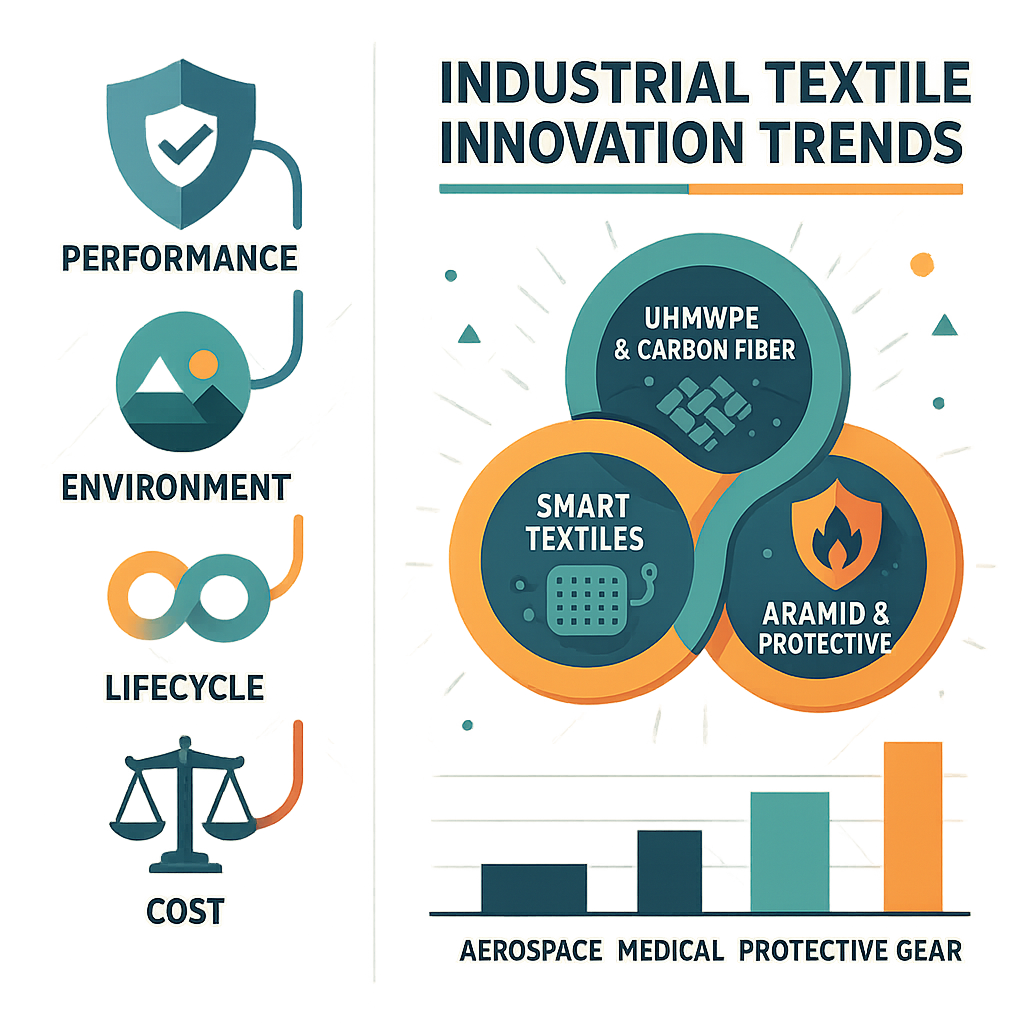
- UHMWPE (Ultra-High Molecular Weight Polyethylene): Known for its exceptional strength-to-weight ratio, UHMWPE is often used in applications requiring high durability and low weight.
- Carbon Fiber: Offers high tensile strength and rigidity, making it ideal for applications in aerospace and automotive industries.
- Aramid Fibers: Renowned for their heat and abrasion resistance, aramid fibers are commonly used in protective clothing and equipment.
In addition to material selection, the structure of the textile plays a crucial role in its performance. For instance, the weave pattern can affect breathability, flexibility, and strength. Similarly, the finishing processes can enhance properties such as water resistance or UV protection.
What Changes the Most from One Application to Another
Different applications impose varying demands on industrial textiles. For example, textiles used in the automotive industry must withstand extreme temperatures and mechanical stress, while those used in medical applications need to be biocompatible and sterilizable. Understanding these specific requirements is essential for making informed decisions about material selection.
Moreover, the integration of smart technologies into textiles introduces additional considerations. For instance, textiles embedded with sensors must not only maintain their structural integrity but also ensure that the electronic components function effectively under different conditions.
Selection Logic: What to Evaluate Before Choosing a Solution
When selecting industrial textiles, several factors should be evaluated to ensure the right fit for the application:
- Performance Requirements: Identify the specific performance metrics that the textile must meet, such as tensile strength, flexibility, or thermal resistance.
- Environmental Conditions: Consider the conditions the textile will be exposed to, including temperature fluctuations, moisture, and chemical exposure.
- Lifecycle Considerations: Evaluate the expected lifespan of the textile in its intended application and any maintenance requirements.
- Cost vs. Performance: Assess the trade-offs between cost and performance to ensure that the selected textile meets both budgetary and functional needs.
Common Trade-Offs to Keep in Mind
Trade-offs are an inherent part of material selection in industrial textiles. For example, while a material may offer superior strength, it might also be heavier or less flexible, which could limit its application in certain scenarios. Similarly, textiles that are highly resistant to chemicals may not be as breathable, impacting comfort in wearable applications.
Understanding these trade-offs requires a careful analysis of the specific needs of the application. Decision-makers should prioritize the most critical performance attributes while being aware of the limitations that may accompany those choices.
Application Examples and Practical Takeaways
To illustrate the impact of industrial textile innovation trends, consider the following examples:
- Aerospace: The use of carbon fiber composites has revolutionized aircraft design, allowing for lighter and more fuel-efficient planes. The trade-off here is often the higher cost of materials and manufacturing processes.
- Medical Textiles: Innovations in biocompatible materials have led to the development of advanced wound dressings that promote healing. However, these materials can be more expensive and require specialized manufacturing techniques.
- Protective Clothing: The integration of smart textiles into personal protective equipment (PPE) allows for real-time monitoring of environmental conditions. The challenge lies in ensuring that these textiles maintain their protective qualities while incorporating electronic components.
These examples highlight the importance of understanding the specific requirements of each application and the implications of material choices. By staying informed about industrial textile innovation trends, decision-makers can make more strategic choices that align with their operational goals.
Conclusion
As industries continue to evolve, the importance of understanding industrial textile innovation trends cannot be overstated. By grasping the complexities of material selection, performance considerations, and application fit, decision-makers can navigate the landscape of advanced industrial textiles more effectively.
Ultimately, the key to successful material selection lies in a thorough evaluation of performance requirements, environmental conditions, and potential trade-offs. By taking a thoughtful approach to these decisions, organizations can leverage the full potential of industrial textiles to enhance their products and operations.
In summary, staying informed about the latest trends and innovations in industrial textiles is not just beneficial; it is essential for maintaining a competitive edge in today’s fast-paced industrial landscape.