
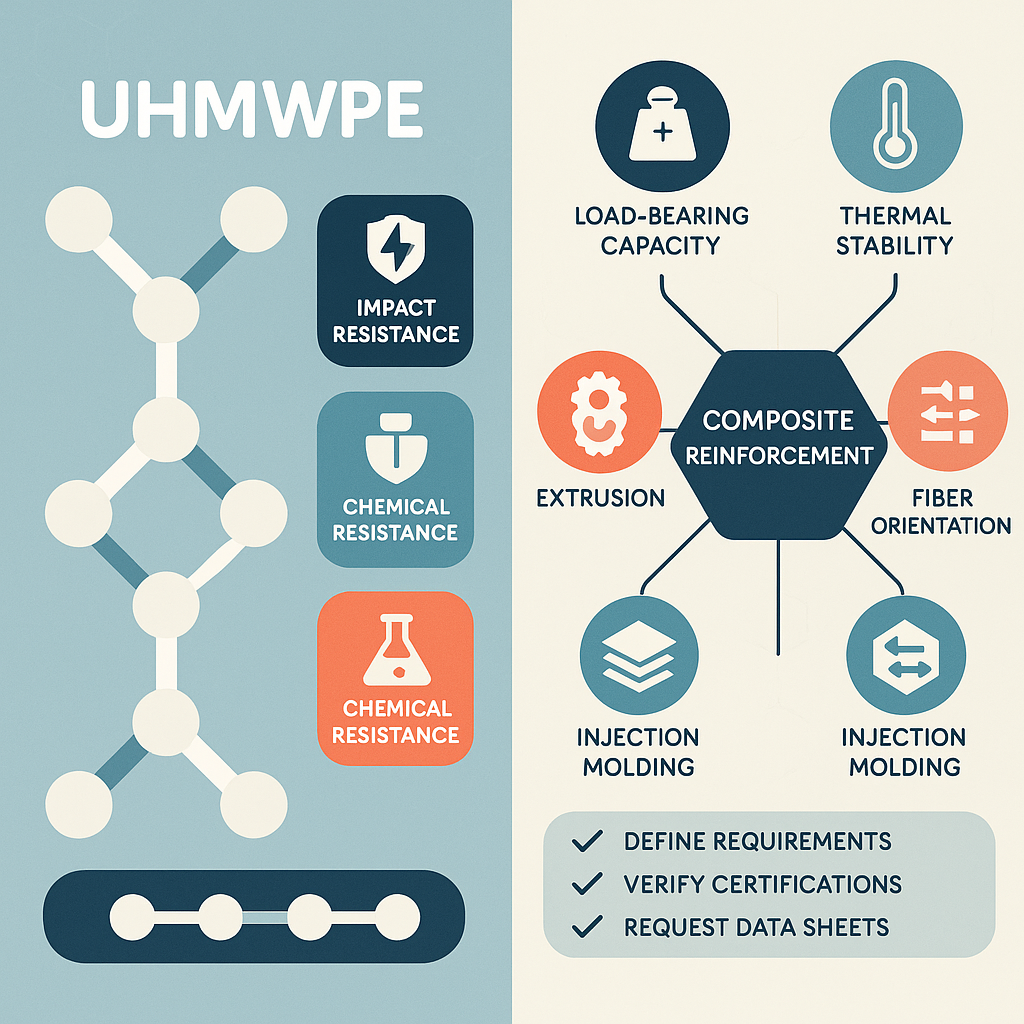
Why UHMWPE is used in composite reinforcement
Ultra-high molecular weight polyethylene (UHMWPE) has gained significant traction in various industrial applications, particularly in composite reinforcement. Its unique properties make it an ideal choice for enhancing the performance of composite materials. Understanding why UHMWPE is utilized in this context can help businesses make informed decisions regarding material selection and application.
Key technical points
- High Strength-to-Weight Ratio: UHMWPE offers exceptional tensile strength while remaining lightweight, making it suitable for applications where weight reduction is critical.
- Impact Resistance: The material exhibits outstanding resistance to impact and abrasion, enhancing the durability of composite structures.
- Chemical Resistance: UHMWPE is resistant to a wide range of chemicals, making it suitable for harsh environments.
Application and sourcing considerations
When considering UHMWPE for composite reinforcement, it is essential to evaluate the specific application requirements. Factors such as environmental conditions, load-bearing needs, and compatibility with other materials should be assessed. Additionally, sourcing UHMWPE from reputable suppliers ensures that the material meets necessary quality standards.
Buyer checklist before sampling
- Define the application requirements clearly.
- Research potential suppliers and their certifications.
- Request material data sheets to understand performance characteristics.
Key performance requirements
Key technical points
Understanding the performance requirements of UHMWPE in composite reinforcement is crucial for ensuring optimal functionality. Key factors include:
- Load-Bearing Capacity: Assess the maximum load the composite will experience to determine the necessary UHMWPE specifications.
- Thermal Stability: Evaluate the thermal properties of UHMWPE to ensure it can withstand operational temperatures.
Application and sourcing considerations
Different applications may demand varying performance characteristics from UHMWPE. For instance, marine applications may prioritize corrosion resistance, while automotive applications may focus on weight reduction. Understanding these nuances will guide sourcing decisions.
Buyer checklist before sampling
- Identify specific performance metrics required for your application.
- Ensure that the supplier can provide relevant testing data.
- Consider potential environmental impacts on material performance.
Material construction and specification options
Key technical points
UHMWPE can be tailored through various construction methods to meet specific application needs. Key considerations include:
- Fiber Orientation: The alignment of fibers can significantly influence the mechanical properties of the composite.
- Layering Techniques: Different layering strategies can enhance strength and flexibility.
Application and sourcing considerations
When selecting UHMWPE for composite reinforcement, consider how the material’s construction will interact with other components in the composite. This ensures compatibility and maximizes performance.
Buyer checklist before sampling
- Review the construction methods available for UHMWPE.
- Assess how these methods align with your application requirements.
- Request samples to evaluate the material’s properties firsthand.
Processing, lamination, or fabrication considerations
Common processing methods
UHMWPE can be processed through various methods, including:
- Extrusion: Suitable for creating continuous shapes.
- Injection Molding: Ideal for producing complex geometries.
Design and fabrication limitations
While UHMWPE offers numerous advantages, there are limitations to consider:
- Difficulty in bonding with other materials may require specialized adhesives.
- Processing temperatures must be carefully controlled to avoid degradation.
Implications for sourcing and customization
Understanding processing limitations can guide sourcing decisions. Suppliers who specialize in UHMWPE may offer tailored solutions that address specific fabrication challenges.
Common standards, testing, or buyer concerns
Relevant test methods
To ensure the quality and performance of UHMWPE, various testing methods are employed, including:
- Tensile testing to assess strength.
- Impact testing to evaluate durability.
Standards buyers often ask about
Buyers frequently inquire about compliance with industry standards, such as ASTM and ISO certifications, which can provide assurance of material quality and performance.
How to verify compliance with suppliers
To verify compliance, buyers should request documentation from suppliers, including test reports and certifications. This ensures that the UHMWPE meets the necessary standards for their specific applications.
How to evaluate samples before bulk order
Key technical points
Evaluating samples of UHMWPE is a critical step before placing bulk orders. Key aspects to consider include:
- Physical properties such as tensile strength and elongation.
- Compatibility with other materials in the composite.
Application and sourcing considerations
When evaluating samples, consider how the material will perform in the intended application. Testing in real-world conditions can provide valuable insights.
Buyer checklist before sampling
- Conduct thorough testing of the samples under expected operational conditions.
- Compare performance metrics against your application requirements.
- Engage with suppliers to discuss any concerns or questions regarding the material.
In conclusion, UHMWPE is a versatile and high-performance material for composite reinforcement. By understanding its properties, performance requirements, and sourcing considerations, businesses can make informed decisions that enhance their applications. Whether you are exploring new materials or optimizing existing composites, a thoughtful approach to evaluating UHMWPE can lead to significant benefits.