
What Sustainable Industrial Textiles Really Covers
Sustainability in the realm of industrial textiles is not merely a trend; it represents a fundamental shift in how materials are sourced, designed, and utilized across various applications. Sustainable industrial textiles encompass a wide range of materials and practices aimed at minimizing environmental impact while maximizing performance and functionality. This includes the use of recycled fibers, bio-based materials, and innovative manufacturing processes that reduce waste and energy consumption.
Moreover, sustainable industrial textiles are increasingly being integrated into high-end industrial textiles and technical textiles, which serve specialized applications in sectors such as automotive, aerospace, and medical. Understanding what constitutes sustainable industrial textiles is crucial for decision-makers who seek to balance performance with environmental responsibility.
How Product Design Changes from One Use Case to Another
The design of industrial textiles varies significantly depending on the specific use case. For instance, textiles used in the automotive industry must withstand extreme temperatures and mechanical stresses, while those in the medical field may require biocompatibility and sterility. This variability necessitates a tailored approach to product design, where the choice of materials and construction techniques are aligned with the intended application.
In the context of sustainable industrial textiles, this means that designers must consider not only the performance characteristics of the materials but also their environmental impact. For example, a high-performance textile made from recycled polyester may offer similar durability to virgin materials but with a significantly lower carbon footprint. Understanding these nuances allows engineers and buyers to make informed decisions that align with both performance requirements and sustainability goals.
Performance Points That Deserve Closer Attention
When evaluating sustainable industrial textiles, several performance points warrant careful consideration:
- Durability: The lifespan of a textile is critical, especially in demanding applications. Sustainable materials should not compromise on durability.
- Moisture Management: Textiles that manage moisture effectively can enhance comfort and performance, particularly in active or outdoor applications.
- Thermal Properties: Understanding how materials perform under varying thermal conditions can influence their suitability for specific applications.
- Mechanical Strength: The tensile strength and flexibility of textiles are essential for applications that require resilience under stress.
- Environmental Impact: Assessing the lifecycle impact of materials—from production to disposal—can guide more sustainable choices.
By focusing on these performance points, buyers and engineers can better assess the trade-offs associated with different materials and make choices that align with both functional and sustainability objectives.
How Buyers and Engineers Evaluate Trade-Offs
The evaluation of trade-offs is a critical component of selecting sustainable industrial textiles. Buyers and engineers must weigh various factors, including cost, performance, and environmental impact. This process often involves a series of questions that guide decision-making:
- What are the specific performance requirements for the application?
- How does the environmental impact of this material compare to alternatives?
- What is the expected lifespan of the textile, and how does that affect overall costs?
- Are there certifications or standards that the material meets to ensure its sustainability?
- What are the potential trade-offs in terms of performance versus sustainability?
By systematically addressing these questions, decision-makers can navigate the complexities of material selection and arrive at solutions that meet both performance and sustainability criteria.
Misconceptions That Lead to Weak Decisions
Despite the growing awareness of sustainability in industrial textiles, several misconceptions persist that can lead to suboptimal decisions:
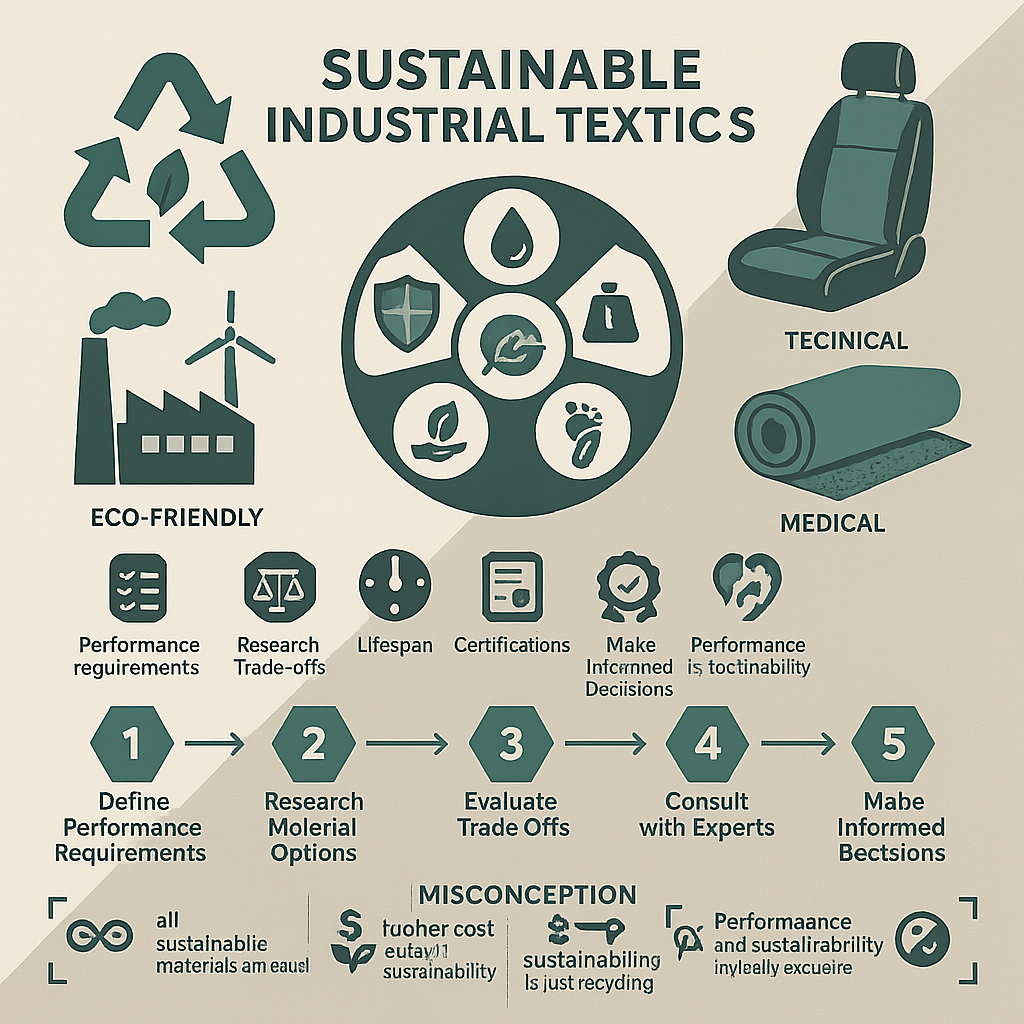
- All Sustainable Materials Are Equal: Not all sustainable textiles offer the same performance characteristics. It’s essential to evaluate each material on its own merits.
- Higher Cost Equals Better Sustainability: While some sustainable materials may be more expensive, others can offer cost-effective solutions without compromising on performance.
- Sustainability Is Just About Recycling: While recycling is important, sustainability also encompasses responsible sourcing, energy-efficient manufacturing, and end-of-life considerations.
- Performance and Sustainability Are Mutually Exclusive: Many sustainable materials can meet or exceed the performance of traditional textiles, dispelling the myth that sustainability necessitates a compromise in quality.
By addressing these misconceptions, buyers and engineers can make more informed choices that align with their sustainability goals without sacrificing performance.
A More Practical Framework for Future Decisions
To navigate the complexities of selecting sustainable industrial textiles, a practical decision-making framework can be invaluable. This framework should include the following steps:
- Define Performance Requirements: Clearly outline the specific performance needs of the application, including durability, strength, and environmental conditions.
- Research Material Options: Investigate various sustainable materials available in the market, considering their properties, certifications, and environmental impact.
- Evaluate Trade-Offs: Assess the trade-offs associated with each material, weighing performance against sustainability and cost.
- Consult with Experts: Engage with material scientists, engineers, and sustainability experts to gain insights into the best options for your specific needs.
- Make Informed Decisions: Use the gathered information to make decisions that align with both performance requirements and sustainability goals.
This framework not only aids in making informed decisions but also fosters a culture of sustainability within organizations, encouraging ongoing evaluation and adaptation as new materials and technologies emerge.
Conclusion
The shift towards sustainable industrial textiles is reshaping the landscape of material selection and product design. By understanding the nuances of sustainable materials, evaluating performance points, and addressing common misconceptions, buyers and engineers can make informed decisions that align with both functional requirements and environmental responsibilities. As sustainability continues to gain prominence in the industrial textiles sector, adopting a practical decision-making framework will be essential for navigating this evolving landscape.
Ultimately, the goal is to foster a more sustainable future while ensuring that industrial textiles meet the rigorous demands of their applications. By prioritizing sustainability in material selection, organizations can contribute to a more responsible and innovative industry.