
What does thread twist mean in sewing thread applications?
Thread twist is a fundamental concept in the world of sewing threads that significantly influences the performance and durability of sewn products. Understanding thread twist is crucial for manufacturers, distributors, and sourcing managers who aim to select the right materials for their specific applications. This article delves into the definition of thread twist, its importance in sewing performance, and how it affects various sewing applications.
Basic definition
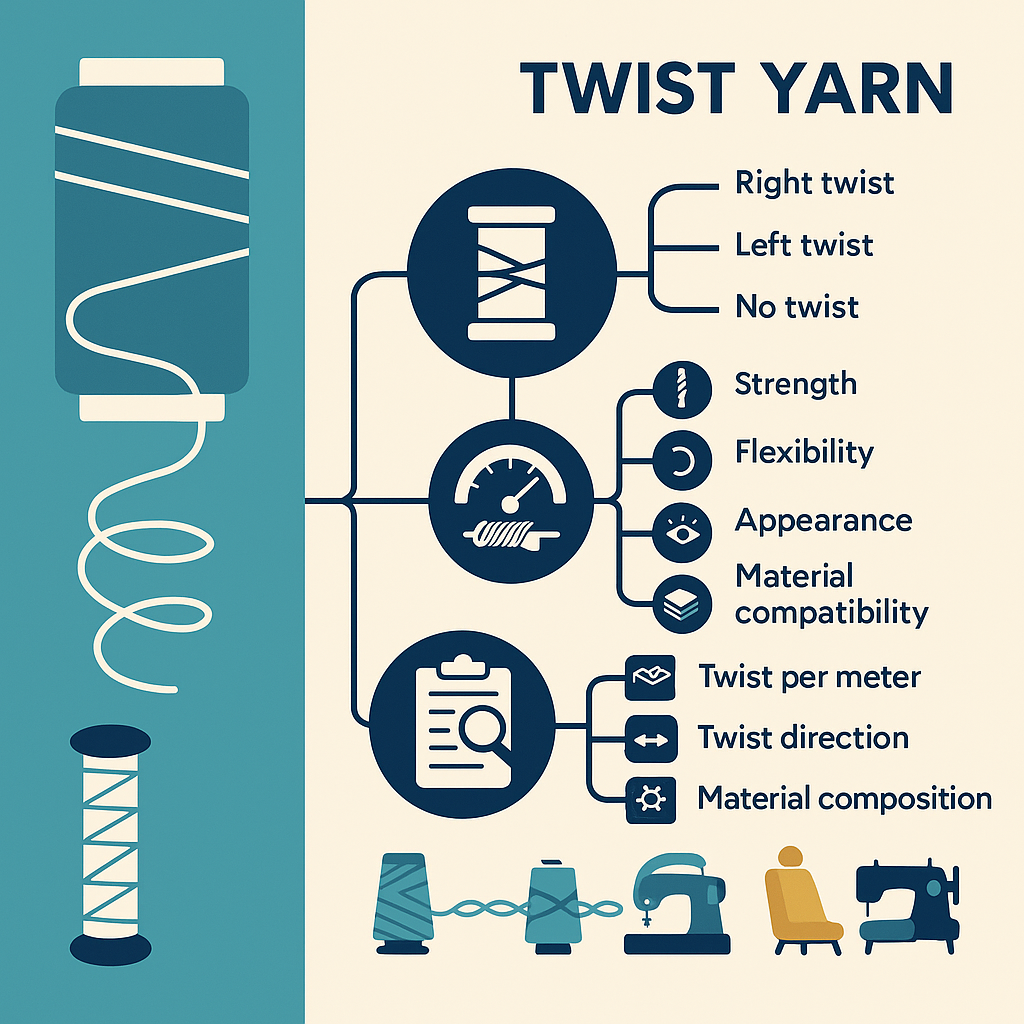
Thread twist refers to the spiral formation of the fibers in a sewing thread. It is created during the spinning process, where fibers are twisted together to form a cohesive strand. The degree of twist can vary, resulting in different types of threads that exhibit unique characteristics. Generally, thread twist is categorized into three types:
- Right twist: Fibers are twisted in a clockwise direction.
- Left twist: Fibers are twisted in a counterclockwise direction.
- No twist: Fibers are laid parallel without any twisting.
Why it matters in sewing performance
The amount and direction of thread twist can significantly impact sewing performance. Here’s why it matters:
- Strength: A higher twist can increase the tensile strength of the thread, making it more resistant to breakage during sewing.
- Flexibility: Threads with less twist tend to be more flexible, which can be beneficial for applications requiring intricate stitching.
- Appearance: The twist can affect the final appearance of the seam, influencing factors like sheen and texture.
- Performance in different materials: The right twist can enhance compatibility with various fabrics, ensuring smooth sewing and reducing issues like puckering.
Where is thread twist used?
Thread twist is utilized across a wide range of sewing applications, influencing the choice of thread in various industries. Understanding where thread twist is commonly applied can help buyers make informed decisions.
Common sewing thread products or applications
Some common applications of thread twist include:
- Apparel manufacturing: Different garments require specific thread twists to accommodate fabric types and sewing techniques.
- Upholstery: Threads used in upholstery often require higher twist levels for added strength and durability.
- Automotive textiles: High tenacity threads with specific twists are essential for automotive applications to withstand wear and tear.
- Technical textiles: Industries such as medical and industrial textiles often require specialized threads with precise twist specifications.
What buyers usually check
When evaluating thread twist for specific applications, buyers typically consider:
- Twist direction: Understanding whether right or left twist is more suitable for their needs.
- Twist level: Determining the optimal twist level for strength versus flexibility.
- Compatibility: Ensuring the thread’s twist aligns with the fabric and sewing technique used.
How to evaluate thread twist
Evaluating thread twist involves examining specifications and understanding common misconceptions. Here’s how to approach it effectively.
Key points on a specification sheet
When reviewing a thread specification sheet, consider the following key points related to thread twist:
- Twist per meter: This indicates how many twists are present in a given length of thread, providing insight into its strength and flexibility.
- Twist direction: Ensure that the direction of twist is clearly stated, as this can affect sewing behavior.
- Material composition: The type of fibers used can influence how twist affects performance.
Common misunderstandings
Several misconceptions surround thread twist that can lead to poor purchasing decisions:
- More twist equals better quality: While higher twist can enhance strength, it may also reduce flexibility, which is not always desirable.
- All threads are interchangeable: Different applications require specific thread types and twists; using the wrong thread can lead to sewing failures.
Practical takeaway for sourcing teams
For sourcing teams, understanding thread twist is essential for making informed decisions that impact the quality and performance of sewn products. Here are some practical takeaways:
When to ask for samples
Requesting samples is advisable when:
- Testing compatibility with specific fabrics or sewing techniques.
- Evaluating the performance of different twist levels in real-world applications.
- Assessing the appearance and feel of the thread in finished products.
When another thread type may fit better
Consider alternative thread types when:
- The application requires a unique combination of strength and flexibility that a different twist cannot provide.
- Specific fabric characteristics necessitate a thread with a different twist direction or level.
- Cost considerations suggest that a less specialized thread may suffice without compromising quality.
In conclusion, understanding thread twist is vital for optimizing sewing performance across various applications. By considering the implications of twist on strength, flexibility, and compatibility, sourcing teams can make informed decisions that enhance the quality of their sewn products. As you evaluate threads for your projects, keep in mind the importance of twist in achieving the desired outcomes.