
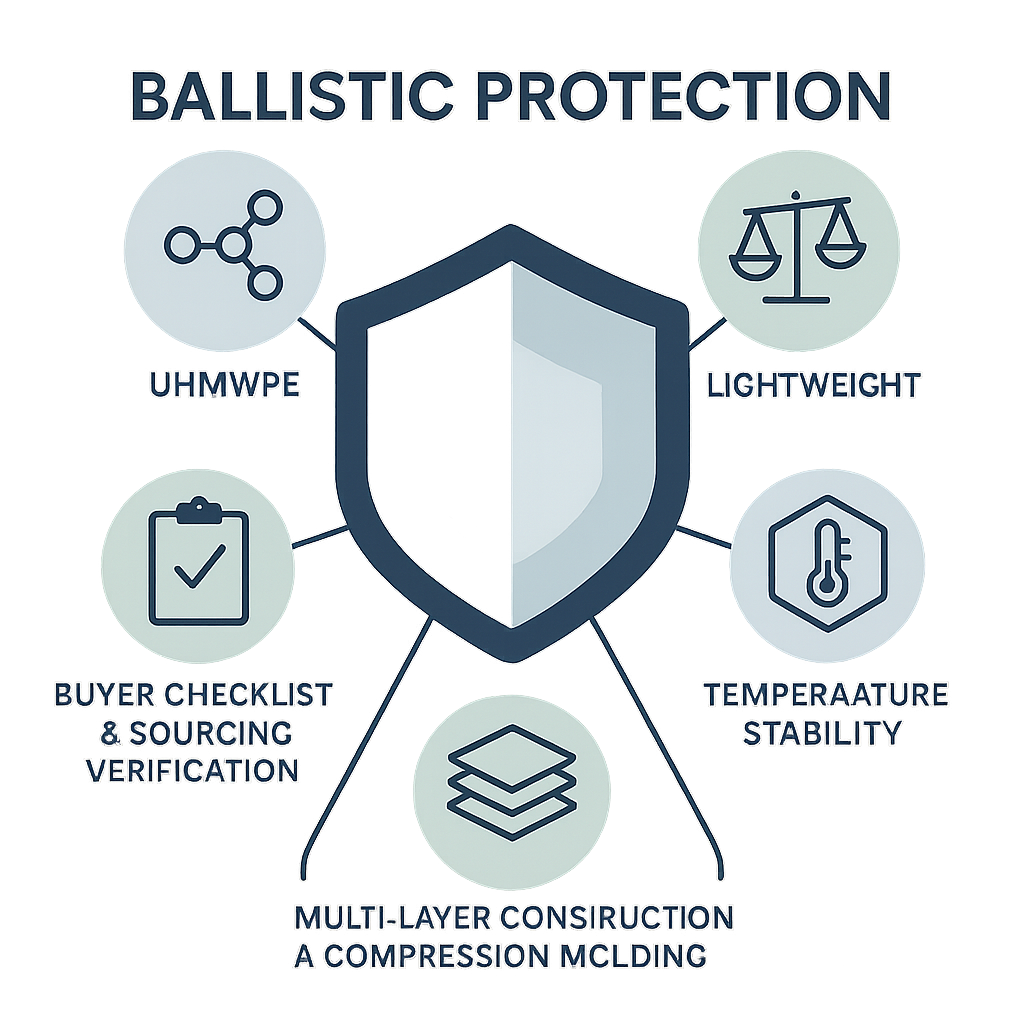
Why UHMWPE is Used in Ballistic Panels
In the realm of protective gear and security applications, the choice of materials is crucial. One material that has gained significant traction in the production of ballistic panels is Ultra-High Molecular Weight Polyethylene (UHMWPE). This article delves into the reasons behind its widespread use, focusing on its performance characteristics, applications, and considerations for sourcing.
Key Technical Points
UHMWPE is renowned for its exceptional strength-to-weight ratio, making it an ideal candidate for ballistic applications. Here are some key technical points:
- High Impact Resistance: UHMWPE can absorb and disperse energy from ballistic impacts, reducing the risk of penetration.
- Lightweight: Compared to traditional materials like steel or Kevlar, UHMWPE offers significant weight savings, enhancing mobility for users.
- Durability: Its resistance to abrasion and chemical exposure ensures longevity, even in harsh environments.
Application and Sourcing Considerations
When considering UHMWPE for ballistic panels, it’s essential to evaluate specific applications and sourcing options:
- End-Use Environment: Assess whether the ballistic panels will be used in military, law enforcement, or civilian applications, as requirements may vary.
- Sourcing Partners: Identify reliable suppliers who specialize in high-performance materials to ensure quality and compliance with standards.
Buyer Checklist Before Sampling
Before requesting samples of UHMWPE for ballistic panels, consider the following checklist:
- Confirm the material’s specifications align with your performance requirements.
- Evaluate the supplier’s reputation and previous projects.
- Request documentation on testing and compliance with relevant standards.
Key Performance Requirements
Understanding the performance requirements of ballistic panels is critical for effective material selection. UHMWPE offers several advantages in this regard.
Key Technical Points
Performance requirements for ballistic panels typically include:
- Ballistic Resistance: Panels must meet specific ballistic standards (e.g., NIJ levels) to ensure adequate protection.
- Weight Considerations: Lighter panels enhance user mobility without compromising safety.
- Temperature Stability: UHMWPE maintains its properties across a wide temperature range, making it suitable for various environments.
Application and Sourcing Considerations
When sourcing UHMWPE for ballistic applications, consider the following:
- Customization Needs: Determine if specific modifications are required for your application.
- Supplier Capabilities: Ensure the supplier can meet your volume and customization needs.
Buyer Checklist Before Sampling
Before proceeding with sampling, ensure you have:
- A clear understanding of the performance standards required for your application.
- Documentation of the supplier’s testing methods and results.
- Information on the material’s lifecycle and maintenance requirements.
Material Construction and Specification Options
Different constructions and specifications of UHMWPE can influence the performance of ballistic panels.
Key Technical Points
Consider the following when evaluating material construction:
- Layering Techniques: Multi-layer constructions can enhance ballistic performance by distributing impact forces.
- Thickness Variations: Thicker panels may offer better protection but can increase weight.
Application and Sourcing Considerations
When selecting material specifications, keep in mind:
- Compatibility with Other Materials: Assess how UHMWPE interacts with other materials in composite constructions.
- Supplier Expertise: Work with suppliers who understand the nuances of ballistic material specifications.
Buyer Checklist Before Sampling
Prior to sampling, verify:
- The proposed construction meets your application’s ballistic standards.
- Supplier capabilities in producing custom specifications.
- Documentation of previous projects using similar constructions.
Processing, Lamination, or Fabrication Considerations
Processing methods can significantly affect the performance of UHMWPE ballistic panels.
Common Processing Methods
Common methods for processing UHMWPE include:
- Compression Molding: Often used for creating complex shapes and ensuring uniform thickness.
- Thermal Lamination: Enhances bonding between layers, improving overall performance.
Design and Fabrication Limitations
Be aware of potential limitations in design and fabrication:
- Complex Shapes: Some designs may be challenging to achieve without compromising performance.
- Thickness Constraints: Increasing thickness can lead to weight issues, affecting usability.
Implications for Sourcing and Customization
When sourcing UHMWPE, consider how processing methods impact customization:
- Discuss your design needs with suppliers to ensure feasibility.
- Evaluate the supplier’s capabilities in processing and fabricating UHMWPE.
Common Standards, Testing, or Buyer Concerns
Understanding relevant standards and testing methods is vital for ensuring the quality of UHMWPE ballistic panels.
Relevant Test Methods
Common testing methods for ballistic panels include:
- NIJ Testing: Ensures compliance with National Institute of Justice standards for ballistic resistance.
- V50 Ballistic Test: Measures the velocity at which a projectile will penetrate the panel.
Standards Buyers Often Ask About
Buyers frequently inquire about:
- NIJ Level IIIA and III standards for soft armor.
- ISO certifications related to material quality and performance.
How to Verify Compliance with Suppliers
To ensure compliance with standards, consider the following steps:
- Request test reports and certifications from suppliers.
- Verify the supplier’s adherence to industry standards through third-party audits.
How to Evaluate Samples Before Bulk Order
Evaluating samples is a critical step before committing to a bulk order of UHMWPE for ballistic panels.
Key Technical Points
When evaluating samples, focus on:
- Physical properties such as weight, thickness, and flexibility.
- Ballistic performance as indicated by testing results.
Application and Sourcing Considerations
Consider how the sample aligns with your specific application needs:
- Assess how the sample performs in simulated conditions relevant to your use case.
- Evaluate the supplier’s responsiveness and support during the sampling process.
Buyer Checklist Before Sampling
Before finalizing your decision, ensure you have:
- A comprehensive understanding of the material’s performance in real-world applications.
- Documentation of the supplier’s compliance with relevant standards.
- Feedback from other users or case studies demonstrating the material’s effectiveness.
In conclusion, UHMWPE is a compelling choice for ballistic panels due to its unique properties and performance characteristics. By understanding the material’s specifications, processing methods, and compliance standards, buyers can make informed decisions that enhance safety and effectiveness in their applications. As you explore options, consider engaging with knowledgeable suppliers who can assist in sourcing the right materials for your needs.