
What is UHMWPE for Cut Resistant Gloves?
Ultra-High Molecular Weight Polyethylene (UHMWPE) is a specialized polymer known for its exceptional strength and durability. In the context of cut-resistant gloves, UHMWPE offers a unique combination of lightweight properties and high cut resistance, making it an ideal choice for various industrial applications. Understanding the core definition, material structure, and key performance characteristics of UHMWPE is essential for making informed decisions in material selection.
Core Definition and Material Structure
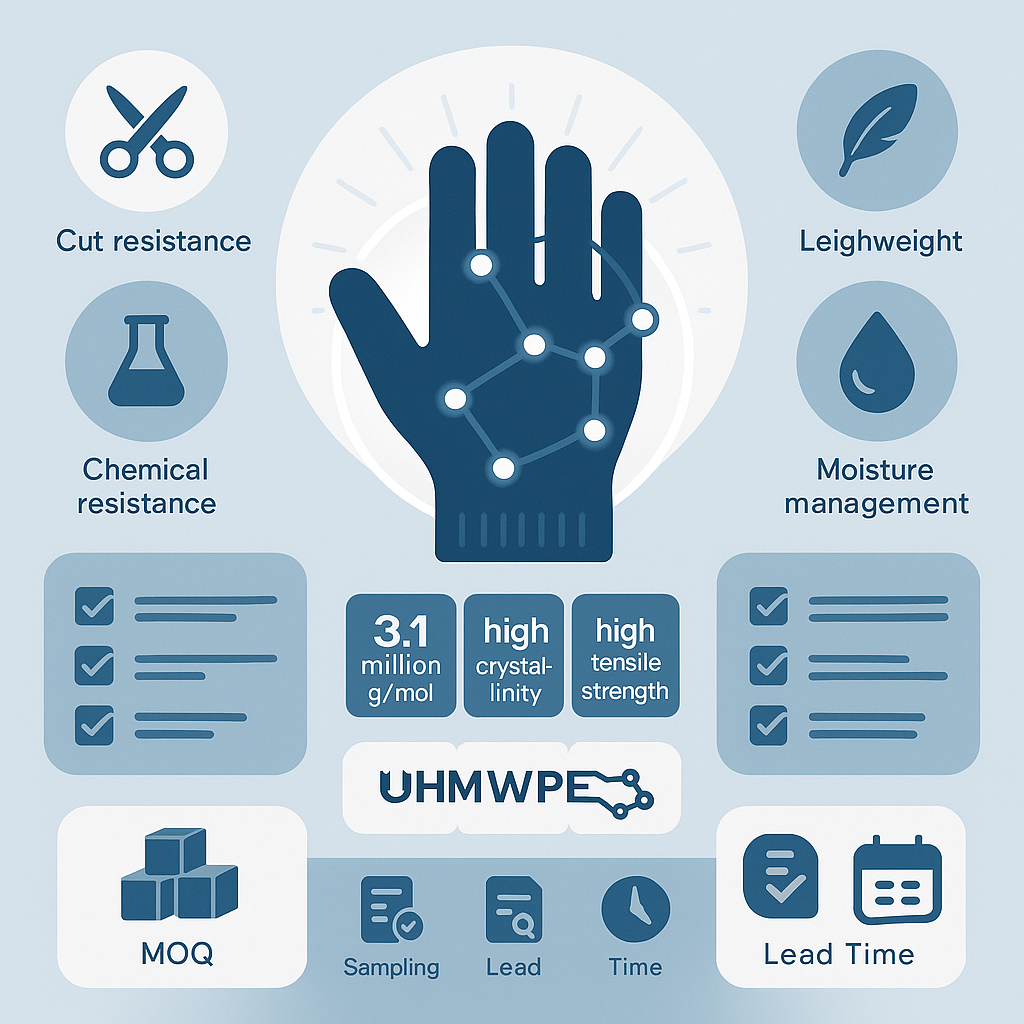
UHMWPE is a subset of polyethylene with a molecular weight exceeding 3.1 million g/mol. This high molecular weight contributes to its remarkable mechanical properties, including tensile strength and impact resistance. The material is characterized by a linear structure, which allows for a high degree of crystallinity, resulting in enhanced strength and resistance to wear.
Key Performance Characteristics
- Cut Resistance: UHMWPE fibers exhibit superior cut resistance compared to traditional materials, making them suitable for high-risk environments.
- Lightweight: The low density of UHMWPE fibers ensures that gloves remain comfortable and easy to wear for extended periods.
- Chemical Resistance: UHMWPE is resistant to various chemicals, enhancing its versatility in different industrial applications.
- Moisture Management: The material’s ability to wick moisture away from the skin helps maintain comfort during use.
Typical Industrial Forms and Specifications
UHMWPE is available in various forms, including fibers, sheets, and films. For cut-resistant gloves, the fiber form is predominantly used. The specifications to consider include fiber denier, tensile strength, and elongation at break. These factors will influence the glove’s performance and suitability for specific applications.
Key Specifications to Confirm Before Ordering
Before placing an order for UHMWPE for cut-resistant gloves, it is crucial to confirm specific technical specifications to ensure the material meets the required performance standards.
Key Technical Points
- Tensile Strength: Assess the tensile strength of the UHMWPE fibers, which should align with the expected use case.
- Cut Resistance Level: Verify the cut resistance level, often classified according to the ASTM or ISO standards.
- Flexibility: Ensure the material maintains flexibility, which is essential for dexterity in cut-resistant gloves.
Application and Sourcing Considerations
Understanding the specific application of the gloves will help in selecting the right UHMWPE specifications. For instance, gloves used in food processing may require additional certifications for safety and hygiene. When sourcing, consider the supplier’s ability to provide consistent quality and compliance with industry standards.
Buyer Checklist Before Sampling
- Confirm the required specifications based on application needs.
- Request samples to evaluate performance in real-world conditions.
- Check for compliance with relevant safety standards.
Performance Factors That Affect End Use
Several performance factors can significantly influence the effectiveness of UHMWPE in cut-resistant gloves. Understanding these factors is essential for making informed decisions.
Key Technical Points
- Environmental Conditions: Consider the environmental conditions in which the gloves will be used, such as temperature and humidity, which can affect material performance.
- Wear and Tear: Evaluate the expected wear and tear based on the specific application to determine the durability required.
Application and Sourcing Considerations
Different industries may have unique requirements for cut-resistant gloves. For example, gloves used in construction may prioritize cut resistance, while those in healthcare may focus on dexterity and chemical resistance. Understanding these nuances will guide sourcing decisions.
Buyer Checklist Before Sampling
- Identify the specific performance factors critical to your application.
- Evaluate potential suppliers based on their expertise in UHMWPE.
- Consider the long-term performance of the gloves in your specific environment.
How to Choose for Cut Resistant Gloves
Choosing the right UHMWPE for cut-resistant gloves involves a systematic approach to ensure that the selected material meets the specific needs of the application.
Key Specification Checklist
- Confirm the cut resistance level according to industry standards.
- Evaluate the tensile strength and flexibility of the fibers.
- Assess the comfort and moisture-wicking properties of the material.
Matching Material to Application Conditions
It is vital to match the UHMWPE specifications to the specific conditions under which the gloves will be used. For instance, gloves used in wet environments may require additional treatments to enhance grip and performance.
Common Mistakes Before Sampling or Bulk Order
- Overlooking specific application requirements, leading to suboptimal performance.
- Failing to request samples for real-world testing.
- Neglecting to verify compliance with safety standards.
MOQ, Sampling, Customization, and Lead Time
Understanding the implications of Minimum Order Quantity (MOQ), sampling, customization, and lead time is essential for effective procurement of UHMWPE for cut-resistant gloves.
What Affects Pricing
Pricing for UHMWPE can vary based on several factors, including the quality of the material, the complexity of the manufacturing process, and market demand. Customization options may also influence pricing, so it is essential to clarify these aspects during discussions with suppliers.
MOQ, Sample, and Lead Time Considerations
Minimum order quantities can vary significantly between suppliers. Understanding these requirements will help in planning your procurement strategy. Additionally, lead times should be discussed upfront to ensure timely delivery, especially for projects with tight deadlines.
What Buyers Should Confirm Before RFQ
- Clarify MOQ and lead time expectations with potential suppliers.
- Confirm the availability of samples for evaluation.
- Discuss customization options and their impact on pricing.
Common Mistakes Buyers Should Avoid
Being aware of common pitfalls can help buyers make more informed decisions when sourcing UHMWPE for cut-resistant gloves.
Key Technical Points
- Not fully understanding the technical specifications required for the intended application.
- Overlooking the importance of supplier reputation and quality assurance processes.
Application and Sourcing Considerations
Buyers should consider the specific needs of their industry and application when selecting materials. This includes understanding the unique challenges faced in different environments.
Buyer Checklist Before Sampling
- Ensure clarity on technical specifications and application requirements.
- Evaluate potential suppliers based on their experience and reliability.
- Request detailed information on the sourcing and quality control processes.
Inquiry Checklist for Suppliers and Trading Companies
When engaging with suppliers or trading companies, having a structured inquiry checklist can facilitate effective communication and ensure that all critical aspects are covered.
Key Technical Points
- Ask for detailed specifications of the UHMWPE material being offered.
- Inquire about compliance with industry standards and certifications.
Application and Sourcing Considerations
Discuss the specific applications for which the gloves will be used to ensure the supplier understands your needs. This will help in sourcing the most suitable material.
Buyer Checklist Before Sampling
- Confirm the supplier’s ability to meet your technical specifications.
- Request information on lead times and customization options.
- Ensure that the supplier has a robust quality assurance process in place.
Conclusion
Choosing UHMWPE for cut-resistant gloves is a multifaceted decision that requires careful consideration of specifications, performance factors, and application needs. By following a structured approach and utilizing the provided checklists, buyers can make informed decisions that enhance safety and performance in their respective industries. Understanding the nuances of material selection and avoiding common pitfalls will lead to more successful procurement outcomes.