
The Bigger Picture Behind Industrial Textiles
Industrial textiles have undergone a remarkable transformation over the past few decades. Initially regarded as niche materials, they have evolved into strategic products that play a crucial role in various industries, from aerospace to automotive, and from construction to healthcare. This evolution is not merely a result of technological advancements; it reflects a broader understanding of the potential applications and performance characteristics of these materials.
Understanding the industrial textiles development history provides valuable insights into how these materials have become integral to modern manufacturing and engineering processes. The shift from traditional textiles to high-end industrial textiles has been driven by the demand for enhanced performance, durability, and adaptability in challenging environments.
How Materials, Structure, and Processing Affect Results
The performance of industrial textiles is heavily influenced by the choice of materials, their structural design, and the processing techniques employed. Each of these factors contributes to the overall functionality and suitability of the textile for specific applications.
Why One Specification Never Tells the Full Story
When evaluating industrial textiles, it is essential to recognize that a single specification often fails to capture the complexity of material performance. For instance, while tensile strength is a critical property, it does not account for other factors such as elongation, abrasion resistance, or chemical compatibility. A comprehensive evaluation should consider:
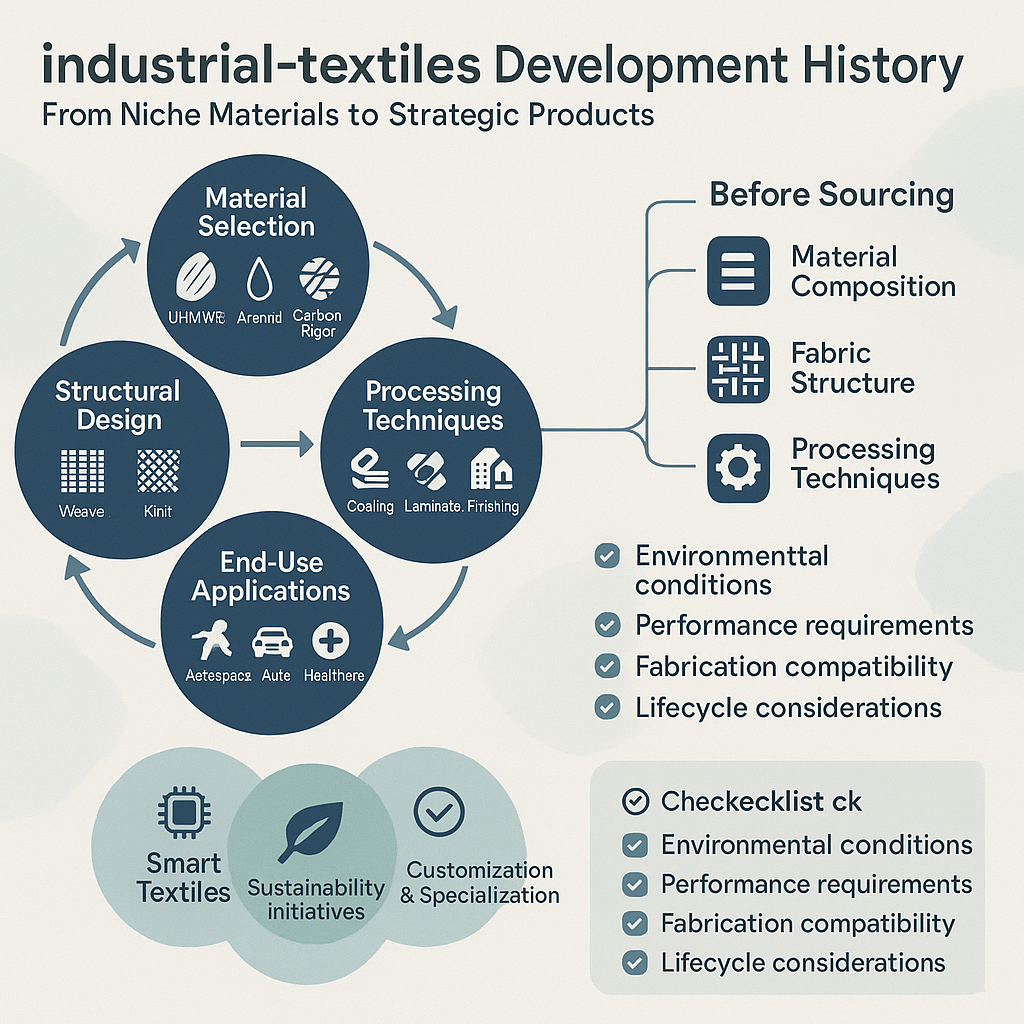
- Material Composition: Different fibers, such as UHMWPE, aramid, or carbon fiber, offer unique properties that can significantly influence performance.
- Fabric Structure: The weave or knit pattern can affect breathability, flexibility, and strength.
- Processing Techniques: Treatments such as coating, laminating, or finishing can enhance specific properties, such as water resistance or UV stability.
Understanding these interdependencies is crucial for making informed decisions about material selection.
How to Compare Options by End-Use Requirements
When sourcing industrial textiles, aligning material properties with end-use requirements is paramount. Different applications demand varying characteristics, and a thorough comparison can help identify the most suitable options.
Questions Worth Asking Before Sourcing
Before making a sourcing decision, consider the following questions:
- What are the environmental conditions? Understanding factors such as temperature, humidity, and exposure to chemicals can guide material selection.
- What are the performance requirements? Identify the critical properties needed for the application, such as strength, flexibility, or resistance to wear.
- How will the textile be processed or fabricated? Consider the compatibility of the textile with manufacturing processes, such as sewing, bonding, or welding.
- What are the lifecycle considerations? Evaluate the durability and maintenance needs of the textile over its intended lifespan.
These questions can help narrow down choices and ensure that the selected material meets both performance and practical requirements.
Examples, Trends, and What to Watch Next
The landscape of industrial textiles is continuously evolving, with new materials and technologies emerging regularly. Some notable trends include:
- Increased Use of Smart Textiles: Integration of sensors and electronics into textiles is enhancing functionality in applications such as healthcare monitoring and smart clothing.
- Sustainability Initiatives: The push for environmentally friendly materials is leading to the development of bio-based and recycled textiles.
- Customization and Specialization: As industries demand more tailored solutions, there is a growing trend towards specialized textiles designed for specific applications.
Keeping an eye on these trends can provide valuable insights into future developments in the industrial textiles sector.
Conclusion
The evolution of industrial textiles from niche materials to strategic products is a testament to the advancements in material science and the increasing demands of various industries. By understanding the industrial textiles development history, material properties, and application fit, decision-makers can navigate the complexities of material selection more effectively.
As you consider sourcing options, remember to evaluate materials based on their performance characteristics, end-use requirements, and emerging trends. This thoughtful approach will not only enhance the effectiveness of your applications but also position your organization to leverage the full potential of advanced industrial textiles.