
What is Hybrid Fabric?
Core definition and material structure
Hybrid fabric is a composite textile that combines different types of fibers, often integrating high-performance materials to achieve specific properties. Typically, hybrid fabrics blend synthetic fibers like polyester or nylon with aramid fibers, enhancing the overall performance while balancing cost and functionality.
Key performance characteristics
- Strength: Hybrid fabrics can offer improved tensile strength due to the combination of materials.
- Weight: They are often lighter than pure aramid fabrics, making them suitable for applications where weight is a critical factor.
- Flexibility: The blend of fibers can provide enhanced flexibility, which is beneficial in applications requiring movement.
Typical industrial forms and specifications
Hybrid fabrics are available in various forms, including woven, knitted, and non-woven structures. Specifications vary widely based on the intended application, with options for different weights, thicknesses, and fiber ratios.
What is Pure Aramid Fabric?
Core definition and material structure
Pure aramid fabric is made entirely from aramid fibers, known for their exceptional strength and thermal stability. These fibers are synthesized from polyamide, resulting in a material that is both lightweight and highly durable.
Key performance characteristics
- Heat resistance: Pure aramid fabrics can withstand high temperatures, making them ideal for applications in extreme environments.
- Chemical resistance: They exhibit excellent resistance to a variety of chemicals, enhancing their durability in industrial settings.
- Low flammability: Aramid fibers are inherently flame-resistant, providing an added layer of safety in hazardous conditions.
Typical industrial forms and specifications
Pure aramid fabrics are commonly produced in woven and non-woven forms. They are often specified for high-performance applications, including aerospace, military, and automotive industries, where their unique properties are critical.
Strength, weight, and durability comparison
Tensile strength and weight differences
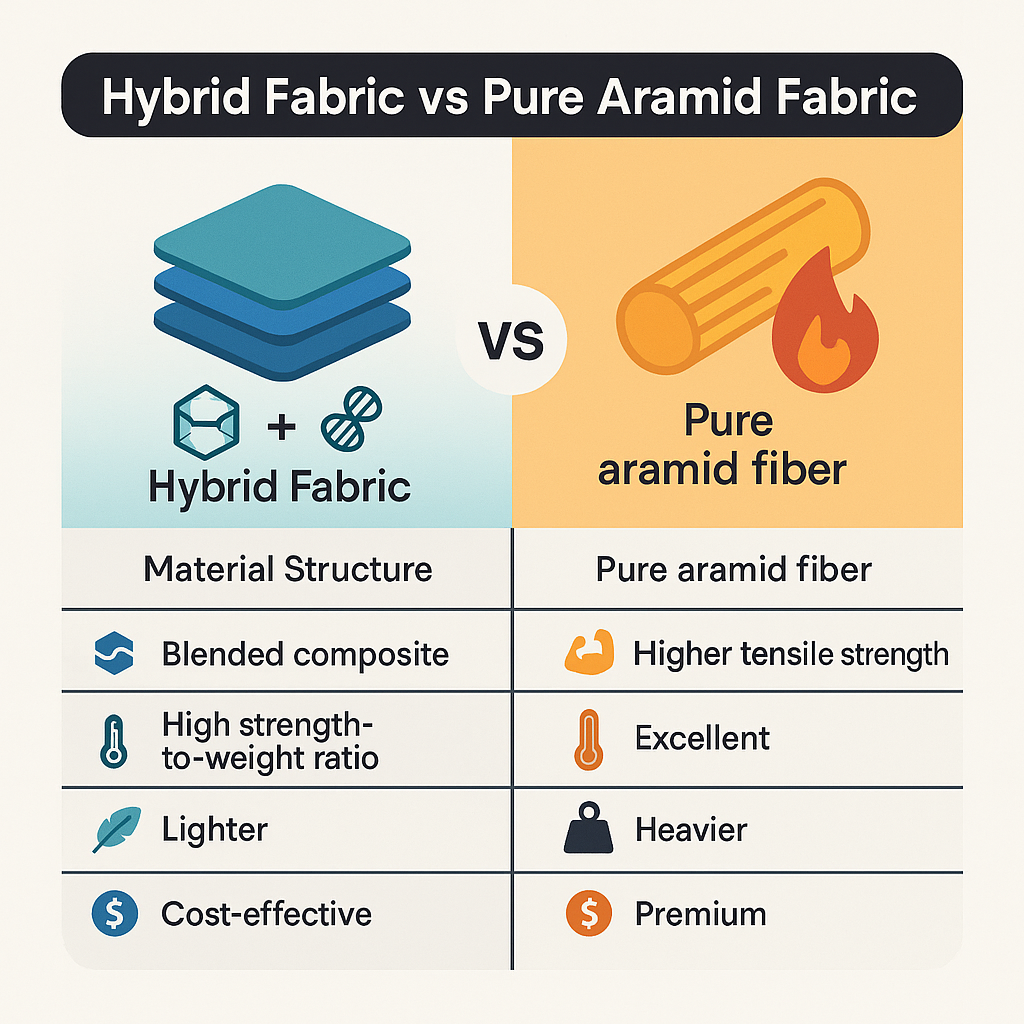
When comparing hybrid fabric vs pure aramid fabric, tensile strength is a crucial factor. Pure aramid fabrics generally exhibit higher tensile strength due to their uniform fiber structure. However, hybrid fabrics can offer a favorable strength-to-weight ratio, making them suitable for applications where both strength and weight are considerations.
Wear, impact, and environmental resistance
Pure aramid fabrics excel in wear and impact resistance, particularly in abrasive environments. Hybrid fabrics, while still durable, may not match the performance of pure aramid in extreme conditions. However, they can provide better overall environmental resistance due to the inclusion of other fibers.
Application suitability by end use
Choosing between hybrid fabric and pure aramid fabric largely depends on the specific application. For instance, industries requiring high thermal resistance and durability, such as aerospace and defense, may prefer pure aramid. Conversely, sectors focused on weight reduction and flexibility, such as sports equipment or automotive interiors, might benefit from hybrid fabrics.
Processing and fabrication differences
Common processing methods
Hybrid fabrics can be processed using various methods, including weaving, knitting, and laminating. Pure aramid fabrics also utilize similar techniques but may require specialized equipment due to their unique fiber properties.
Design and fabrication limitations
Hybrid fabrics may allow for greater design flexibility, enabling the creation of complex structures. However, pure aramid fabrics can be more challenging to work with due to their stiffness and specific handling requirements.
Implications for sourcing and customization
When sourcing these materials, understanding the processing differences is vital. Buyers should consider the capabilities of their suppliers and the potential for customization based on the intended application.
Cost, lead time, and sourcing considerations
What affects pricing
The cost of hybrid fabric vs pure aramid fabric can vary significantly based on factors such as material composition, processing methods, and market demand. Hybrid fabrics often present a more cost-effective solution, while pure aramid fabrics may command a premium due to their specialized properties.
MOQ, sample, and lead time considerations
Minimum order quantities (MOQ) and lead times can differ between the two materials. Hybrid fabrics may offer more flexible sourcing options, while pure aramid fabrics might require longer lead times due to their specialized production processes.
What buyers should confirm before RFQ
Before requesting a quote (RFQ), buyers should confirm the specific performance requirements, application conditions, and any customization needs. Understanding these factors can help ensure the selected material meets the intended use.
Which material fits industrial applications?
Typical industries using this material
Hybrid fabrics are commonly used in automotive, sports, and consumer goods industries, where flexibility and weight are essential. Pure aramid fabrics find their place in aerospace, military, and industrial applications, where strength and heat resistance are paramount.
Why engineers and buyers choose it
Engineers and buyers often choose hybrid fabrics for their versatility and cost-effectiveness. In contrast, pure aramid fabrics are selected for their superior performance in demanding conditions.
When another material may be better
In some cases, other materials may offer better performance for specific applications. For example, if extreme heat resistance is not a priority, alternatives like polyester or nylon may provide sufficient performance at a lower cost.
How to choose the right specification
Key specification checklist
- Identify the primary performance requirements (strength, weight, heat resistance).
- Consider the environmental conditions the material will face.
- Evaluate the processing methods available for your application.
Matching material to application conditions
Understanding the specific application conditions is crucial for selecting the right material. Factors such as exposure to chemicals, temperature extremes, and mechanical stress should guide the decision-making process.
Common mistakes before sampling or bulk order
One common mistake is not thoroughly testing the material under actual application conditions before committing to a bulk order. Additionally, failing to consider long-term performance and maintenance needs can lead to suboptimal material choices.
In conclusion, the choice between hybrid fabric and pure aramid fabric depends on various factors, including performance requirements, application conditions, and cost considerations. By understanding the strengths and limitations of each material, engineers and buyers can make informed decisions that align with their specific industrial needs.