
What does color matching benefits mean in sewing thread applications?
Color matching is a critical aspect of sewing thread manufacturing that ensures the final product meets aesthetic and functional expectations. Understanding the color matching benefits can significantly influence the quality and appeal of sewn products, making it a vital consideration for manufacturers and buyers alike.
Basic definition
At its core, color matching refers to the process of ensuring that the color of the sewing thread aligns with the fabric or material being used. This involves not only matching the hue but also considering factors like brightness, saturation, and finish. The goal is to achieve a seamless visual integration between the thread and the fabric, enhancing the overall appearance of the finished product.
Why it matters in sewing performance
Color matching is not merely an aesthetic choice; it plays a crucial role in sewing performance. Here are a few reasons why:
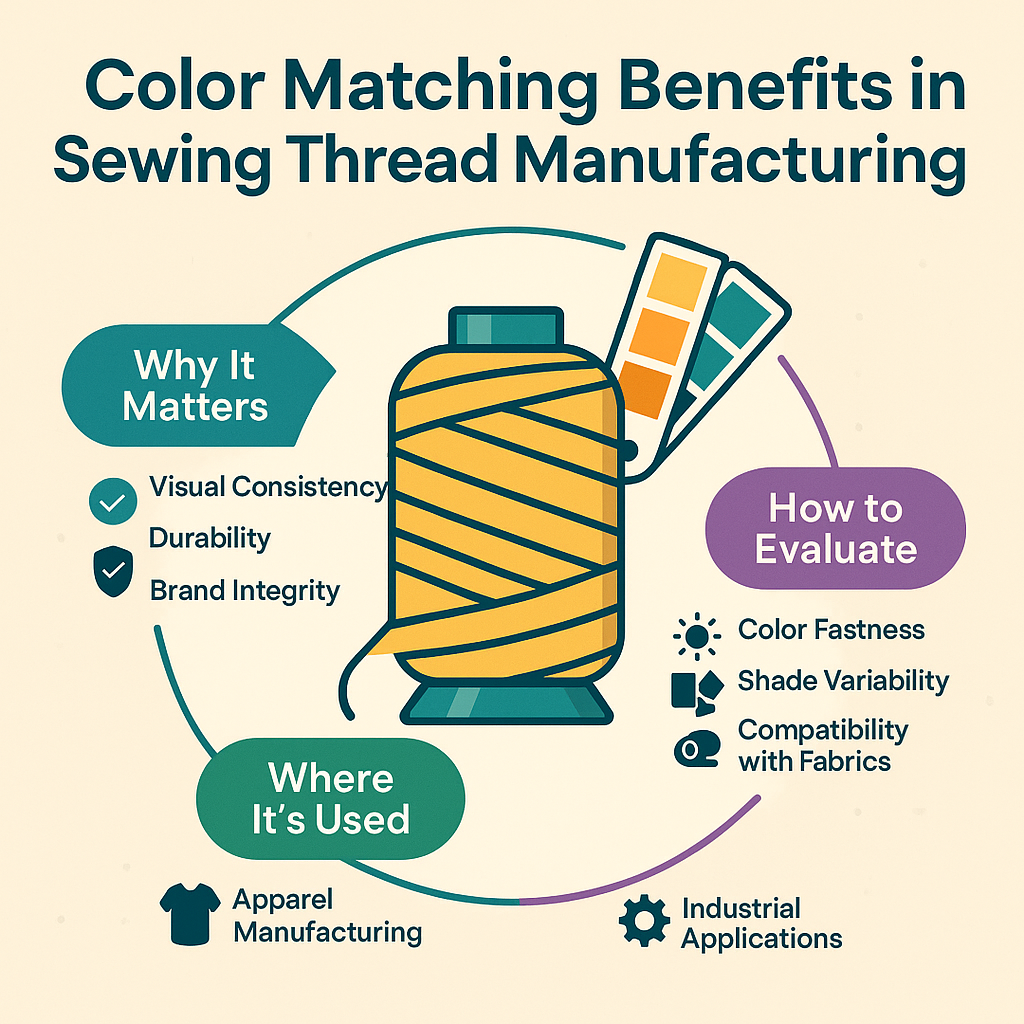
- Visual Consistency: Proper color matching ensures that the thread does not stand out in an undesirable way, which can detract from the design.
- Durability: Threads that are not color matched may fade differently than the fabric, leading to an uneven appearance over time.
- Brand Integrity: For businesses, maintaining consistent color across products is essential for brand recognition and customer satisfaction.
Where is color matching benefits used?
Color matching benefits are utilized across various sewing applications, impacting both the manufacturing process and the end product.
Common sewing thread products or applications
Color matching is particularly important in the following areas:
- Apparel Manufacturing: In clothing, where visual appeal is paramount, color matching ensures that seams and stitching blend seamlessly with the fabric.
- Home Textiles: Products like curtains, upholstery, and bedding require precise color matching to maintain aesthetic harmony.
- Industrial Applications: In sectors such as automotive or aerospace, where safety and durability are critical, color matching can also indicate specific thread types or strengths.
What buyers usually check
When evaluating color matching benefits, buyers often consider:
- Color Fastness: The ability of the thread to retain its color after washing or exposure to light.
- Shade Variability: Ensuring that different batches of thread match consistently.
- Compatibility with Fabrics: Understanding how different materials may affect color perception.
How to evaluate color matching benefits
Evaluating the benefits of color matching requires a systematic approach, focusing on specifications and common misconceptions.
Key points on a specification sheet
When reviewing a specification sheet for sewing threads, consider the following:
- Color Codes: Ensure that the thread color is accurately represented with standardized color codes.
- Test Results: Look for lab results that indicate color fastness and shade consistency.
- Material Composition: Different materials may react differently to dyes, affecting color matching.
Common misunderstandings
Several misconceptions can cloud the evaluation of color matching benefits:
- All Colors Are the Same: Many assume that all shades of a color are interchangeable, but subtle differences can impact the final appearance.
- Only Aesthetic Considerations Matter: While aesthetics are important, the functional aspects of color matching, such as durability, should not be overlooked.
- Samples Are Optional: Some buyers may skip requesting samples, but this can lead to mismatched expectations.
Practical takeaway for sourcing teams
For sourcing teams, understanding the nuances of color matching can streamline the selection process and enhance product quality.
When to ask for samples
Requesting samples is crucial when:
- Evaluating a new supplier’s color matching capabilities.
- Testing how the thread performs with specific fabrics.
- Ensuring that the color remains consistent across different production runs.
When another thread type may fit better
In some cases, it may be beneficial to consider alternative thread types, particularly when:
- The desired color is not available in the preferred thread type.
- Specific performance characteristics are needed that another thread type can better provide.
- Cost considerations make a different thread type more viable without compromising quality.
In conclusion, understanding the color matching benefits in sewing thread manufacturing is essential for achieving both aesthetic and functional excellence in sewn products. By carefully evaluating specifications, requesting samples, and considering alternative thread types when necessary, sourcing teams can make informed decisions that enhance product quality and customer satisfaction.