
What is Hybrid Fabric?
Hybrid fabrics are composite materials that combine different types of fibers to achieve specific performance characteristics. By blending fibers such as carbon, glass, and aramid, hybrid fabrics can offer a balance of strength, weight, and cost-effectiveness, making them suitable for various industrial applications.
Core Definition and Material Structure
Hybrid fabric typically consists of two or more types of fibers woven or stitched together. This structure allows for the optimization of mechanical properties, enabling the material to perform well under different conditions. For example, a combination of carbon and glass fibers can enhance impact resistance while maintaining a lightweight profile.
Key Performance Characteristics
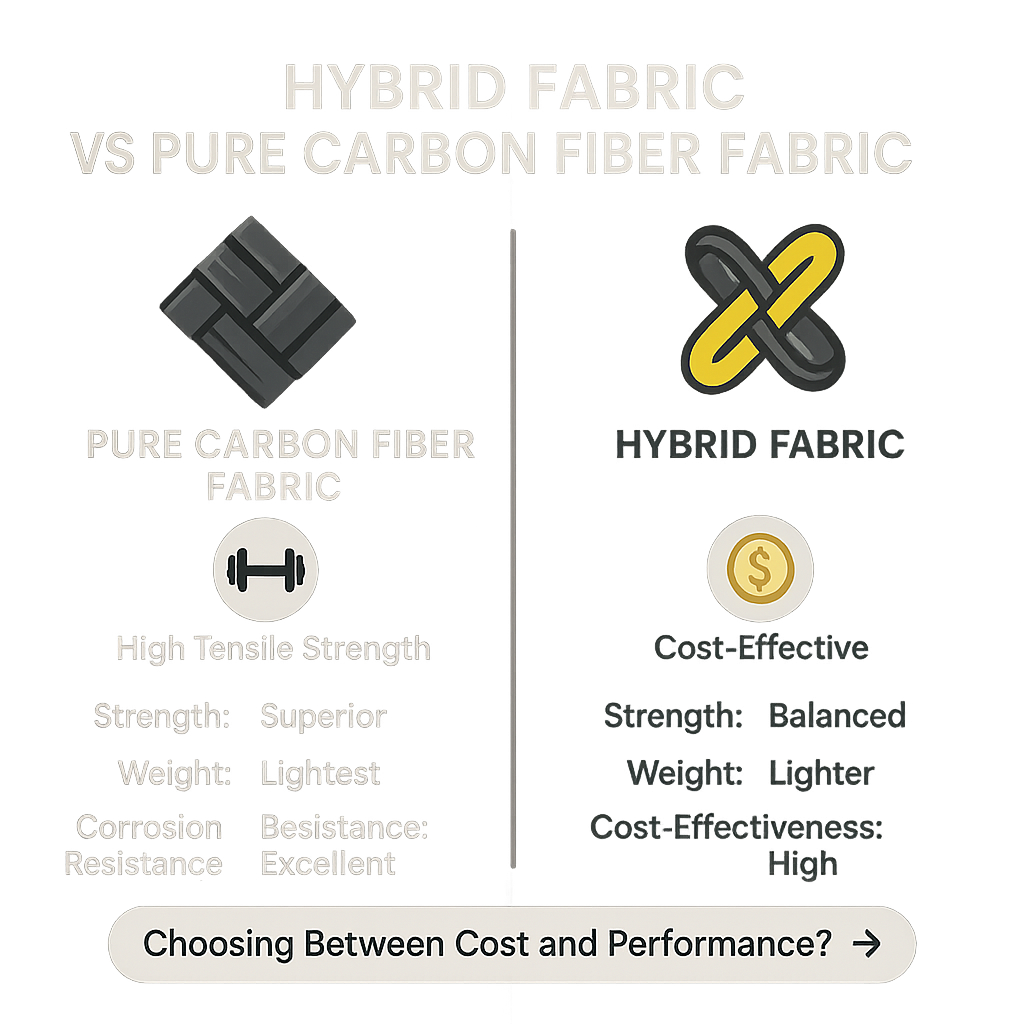
- Strength: Hybrid fabrics can exhibit high tensile strength, depending on the fiber composition.
- Weight: They are generally lighter than pure carbon fiber fabrics, making them easier to handle and apply.
- Cost-Effectiveness: By using a mix of fibers, hybrid fabrics can be more economical than pure carbon fiber.
Typical Industrial Forms and Specifications
Hybrid fabrics are available in various forms, including woven, non-woven, and knitted structures. Specifications can vary widely based on the intended application, with options for different fiber ratios, weights, and finishes.
What is Pure Carbon Fiber Fabric?
Pure carbon fiber fabric is made entirely from carbon fibers, known for their exceptional strength-to-weight ratio and rigidity. This material is often used in high-performance applications where weight savings and structural integrity are critical.
Core Definition and Material Structure
Pure carbon fiber fabric consists solely of carbon fibers arranged in a specific weave pattern. This structure provides high tensile strength and stiffness, making it ideal for applications that require superior mechanical properties.
Key Performance Characteristics
- Tensile Strength: Pure carbon fiber exhibits some of the highest tensile strengths available in textile materials.
- Lightweight: It is one of the lightest materials, making it suitable for applications where weight is a concern.
- Corrosion Resistance: Carbon fiber is resistant to many chemicals and environmental factors, enhancing its longevity.
Typical Industrial Forms and Specifications
Pure carbon fiber fabrics are typically available in woven sheets, often in various weights and weaves, such as plain, twill, or satin. The choice of weave affects the fabric’s flexibility and strength, allowing for tailored solutions based on specific requirements.
Strength, Weight, and Durability Comparison
Tensile Strength and Weight Differences
When comparing hybrid fabric vs pure carbon fiber fabric, tensile strength is a significant differentiator. Pure carbon fiber generally offers superior tensile strength, while hybrid fabrics can provide a balance of strength and weight, depending on their fiber composition. For applications where maximum strength is paramount, pure carbon fiber may be the preferred choice.
Wear, Impact, and Environmental Resistance
Hybrid fabrics often excel in wear and impact resistance due to the inclusion of multiple fiber types. For instance, adding aramid fibers can improve toughness and abrasion resistance. In contrast, pure carbon fiber, while strong, may be more susceptible to impact damage if not properly reinforced.
Application Suitability by End Use
Choosing between hybrid fabric and pure carbon fiber fabric depends largely on the specific application. Hybrid fabrics are often favored in applications requiring a balance of cost and performance, such as automotive components or sporting goods. Pure carbon fiber is typically used in aerospace, high-end automotive, and other applications where performance is critical.
Processing and Fabrication Differences
Common Processing Methods
Both hybrid and pure carbon fiber fabrics can be processed using similar techniques, including weaving, laminating, and molding. However, the presence of different fibers in hybrid fabrics may require specialized handling to maintain performance characteristics.
Design and Fabrication Limitations
While pure carbon fiber offers high performance, it can be more challenging to work with due to its rigidity and cost. Hybrid fabrics, on the other hand, may allow for more flexibility in design but could compromise on certain performance metrics.
Implications for Sourcing and Customization
When sourcing these materials, it’s essential to consider the specific requirements of your application. Customization options may vary significantly between hybrid and pure carbon fiber fabrics, impacting lead times and costs.
Cost, Lead Time, and Sourcing Considerations
What Affects Pricing
The pricing of hybrid fabric vs pure carbon fiber fabric can vary based on factors such as fiber type, weave complexity, and production volume. Generally, pure carbon fiber tends to be more expensive due to its specialized manufacturing processes.
MOQ, Sample, and Lead Time Considerations
Minimum order quantities (MOQ) and lead times can differ significantly between these materials. Hybrid fabrics may offer more flexibility in smaller orders, while pure carbon fiber could have longer lead times due to its manufacturing complexity.
What Buyers Should Confirm Before RFQ
Before requesting a quote (RFQ), buyers should confirm the specific performance characteristics required for their application, as well as any customization needs. Understanding the differences between hybrid and pure carbon fiber fabrics can help in making informed decisions.
Which Material Fits Industrial Applications?
Typical Industries Using This Material
Both hybrid and pure carbon fiber fabrics find applications across various industries, including:
- Aerospace
- Automotive
- Marine
- Sporting Goods
- Construction
Why Engineers and Buyers Choose It
Engineers and buyers often choose hybrid fabrics for their versatility and cost-effectiveness, while pure carbon fiber is selected for its unmatched performance in critical applications. Understanding the specific requirements of each project is essential for making the right choice.
When Another Material May Be Better
In some cases, other materials may be more suitable than hybrid or pure carbon fiber fabrics. For example, if cost is a primary concern, traditional fiberglass may offer a more economical solution, albeit with lower performance characteristics.
How to Choose the Right Specification
Key Specification Checklist
When selecting between hybrid fabric and pure carbon fiber fabric, consider the following specifications:
- Tensile strength requirements
- Weight constraints
- Environmental exposure factors
- Cost limitations
Matching Material to Application Conditions
It’s crucial to match the material to the specific conditions of the application. For example, if the end product will face high impact or abrasion, a hybrid fabric may be more suitable than pure carbon fiber.
Common Mistakes Before Sampling or Bulk Order
Some common mistakes include not fully understanding the performance requirements, overlooking environmental factors, and failing to consider the implications of material choice on overall project costs. Taking the time to evaluate these aspects can lead to more successful outcomes.
In conclusion, the choice between hybrid fabric and pure carbon fiber fabric hinges on a variety of factors, including performance requirements, cost considerations, and application suitability. By understanding the strengths and limitations of each material, engineers and buyers can make informed decisions that align with their project goals.