
What is Carbon Fiber?
Core Definition and Material Structure
Carbon fiber is a lightweight, high-strength material composed of thin strands of carbon atoms. These fibers are often woven together to form a fabric, which can then be combined with a resin to create a composite material. The unique structure of carbon fiber gives it remarkable tensile strength and stiffness, making it a popular choice in various industrial applications.
Key Performance Characteristics
- Lightweight: Carbon fiber is significantly lighter than metals, which can lead to reduced energy consumption in applications where weight is critical.
- High Strength-to-Weight Ratio: This material offers exceptional strength without the bulk, making it ideal for high-performance applications.
- Corrosion Resistance: Carbon fiber is resistant to many chemicals and environmental factors, enhancing its longevity.
Typical Industrial Forms and Specifications
Carbon fiber is available in various forms, including sheets, rods, and pre-preg materials. Specifications can vary widely based on the intended application, with different fiber orientations and resin systems tailored to specific performance requirements.
What is Titanium?
Core Definition and Material Structure
Titanium is a metallic element known for its high strength, low density, and excellent corrosion resistance. It is often alloyed with other metals to enhance its properties further. The atomic structure of titanium contributes to its unique combination of strength and lightweight characteristics.
Key Performance Characteristics
- High Strength: Titanium exhibits impressive tensile strength, making it suitable for demanding applications.
- Corrosion Resistance: This metal is highly resistant to corrosion, particularly in harsh environments, which extends its service life.
- Biocompatibility: Titanium is often used in medical applications due to its compatibility with human tissue.
Typical Industrial Forms and Specifications
Titanium is available in various forms, including sheets, bars, and tubes. Common specifications include grades that indicate the alloy composition and mechanical properties, which are crucial for ensuring performance in specific applications.
Strength, Weight, and Durability Comparison
Tensile Strength and Weight Differences
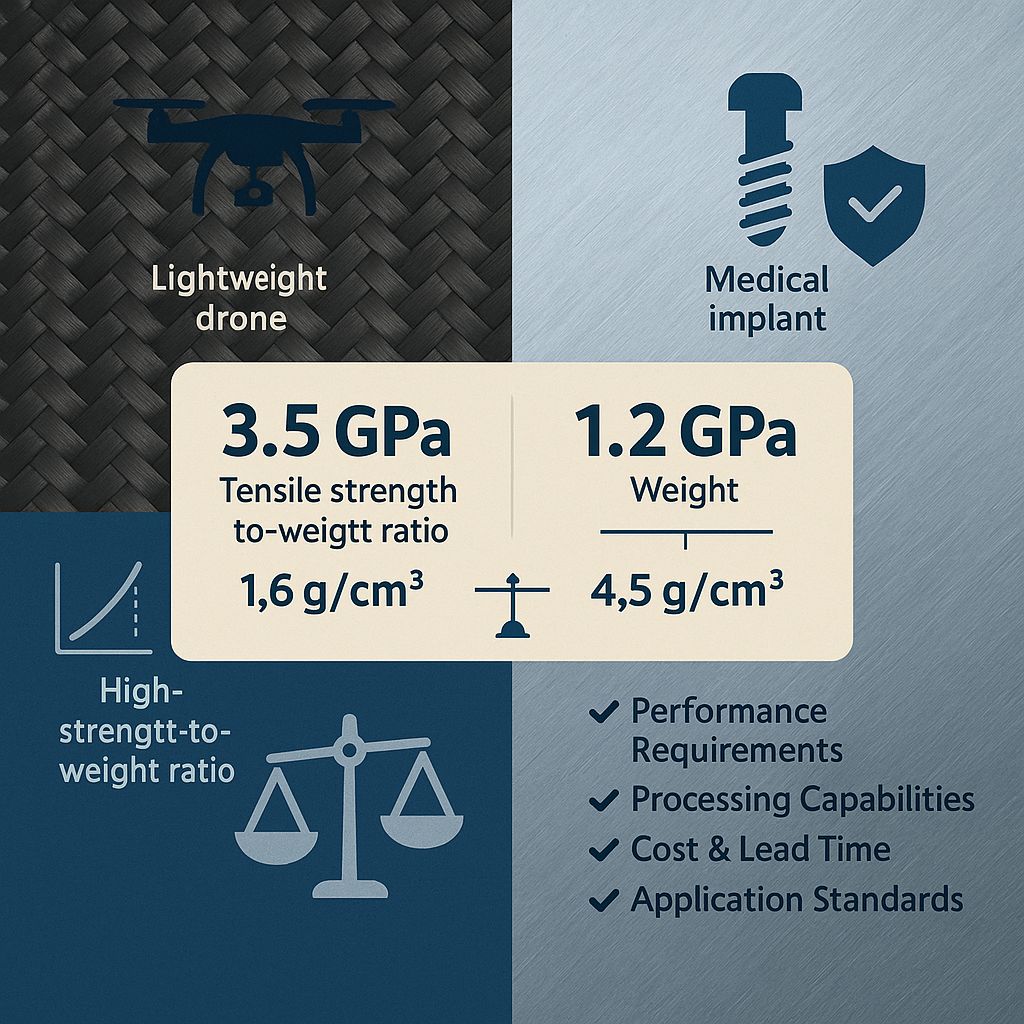
When comparing carbon fiber vs titanium, one of the most significant differences lies in their tensile strength and weight. Carbon fiber generally has a higher strength-to-weight ratio than titanium, making it a preferred choice in applications where weight savings are critical. However, titanium’s overall strength can be advantageous in certain high-load applications.
Wear, Impact, and Environmental Resistance
Carbon fiber excels in wear resistance and is less prone to deformation under stress, while titanium offers superior impact resistance. In environments where exposure to chemicals or extreme temperatures is a concern, both materials provide excellent resistance, but the choice may depend on specific conditions.
Application Suitability by End Use
Carbon fiber is often used in aerospace, automotive, and sporting goods due to its lightweight and high strength. In contrast, titanium is commonly found in aerospace, medical implants, and marine applications, where its corrosion resistance and strength are critical.
Processing and Fabrication Differences
Common Processing Methods
Carbon fiber is typically processed through methods like layup, filament winding, and resin transfer molding. These techniques allow for the creation of complex shapes and structures. Titanium, on the other hand, is often machined, forged, or welded, requiring specialized equipment due to its hardness and strength.
Design and Fabrication Limitations
While carbon fiber can be molded into intricate designs, it may have limitations in terms of temperature resistance compared to titanium. Titanium’s fabrication can be more challenging due to its tendency to react with oxygen at high temperatures, necessitating controlled environments during processing.
Implications for Sourcing and Customization
Understanding the processing differences is crucial for sourcing decisions. Carbon fiber may offer more flexibility in design, while titanium’s strength may necessitate more stringent sourcing criteria to ensure quality and performance.
Cost, Lead Time, and Sourcing Considerations
What Affects Pricing
The cost of carbon fiber vs titanium can vary significantly based on factors such as raw material sourcing, processing complexity, and market demand. Carbon fiber tends to be more expensive due to its manufacturing processes, while titanium prices can fluctuate based on the cost of raw titanium and alloying elements.
MOQ, Sample, and Lead Time Considerations
Minimum order quantities (MOQ) and lead times can differ between the two materials. Carbon fiber often requires longer lead times due to the complexity of its manufacturing, while titanium may have more predictable lead times depending on the form and specifications required.
What Buyers Should Confirm Before RFQ
Before requesting a quote (RFQ), buyers should confirm specifications, including material grades, dimensions, and any specific performance requirements. Understanding these details can help streamline the sourcing process and ensure that the right material is selected for the application.
Which Material Fits Industrial Applications?
Typical Industries Using This Material
Both carbon fiber and titanium find applications across various industries. Carbon fiber is prevalent in aerospace, automotive, and sports equipment, while titanium is widely used in aerospace, medical, and marine sectors.
Why Engineers and Buyers Choose It
Engineers and buyers often choose carbon fiber for its lightweight and high strength, which can lead to improved performance and efficiency. Titanium is favored for its durability and corrosion resistance, making it suitable for applications where longevity is critical.
When Another Material May Be Better
In some cases, alternative materials may be more suitable. For example, aluminum may be a better choice for applications requiring lower costs and moderate strength, while steel could be preferred for applications needing high toughness and impact resistance.
How to Choose the Right Specification
Key Specification Checklist
When selecting between carbon fiber vs titanium, consider the following checklist:
- Performance requirements (strength, weight, corrosion resistance)
- Processing capabilities and limitations
- Cost constraints and lead time
- Application-specific standards and certifications
Matching Material to Application Conditions
Understanding the specific conditions under which the material will be used is crucial. For instance, if the application involves exposure to harsh chemicals, titanium may be the better choice due to its superior corrosion resistance.
Common Mistakes Before Sampling or Bulk Order
One common mistake is not thoroughly evaluating the application requirements before sampling or placing bulk orders. Ensure that the chosen material meets all performance criteria and consider testing samples in real-world conditions before making a large commitment.
In conclusion, the decision between carbon fiber vs titanium hinges on a variety of factors, including performance characteristics, processing capabilities, and application suitability. By understanding the strengths and limitations of each material, engineers and buyers can make informed decisions that align with their specific industrial needs.