
What does stitch density properties mean in sewing thread applications?
Basic definition
Stitch density properties refer to the number of stitches per unit length in a sewing application. This measurement is crucial as it directly influences the strength, appearance, and durability of the finished product. In essence, stitch density can be viewed as a key indicator of how tightly or loosely fabric pieces are joined together, impacting both functionality and aesthetics.
Why it matters in sewing performance
The significance of stitch density properties extends beyond mere numbers. A higher stitch density typically results in a stronger seam, which is essential for applications requiring durability, such as in outdoor gear or heavy-duty textiles. Conversely, a lower stitch density may be preferable for lightweight fabrics, allowing for flexibility and ease of movement. Understanding these dynamics helps in selecting the appropriate sewing thread for specific applications.
Where is stitch density properties used?
Common sewing thread products or applications
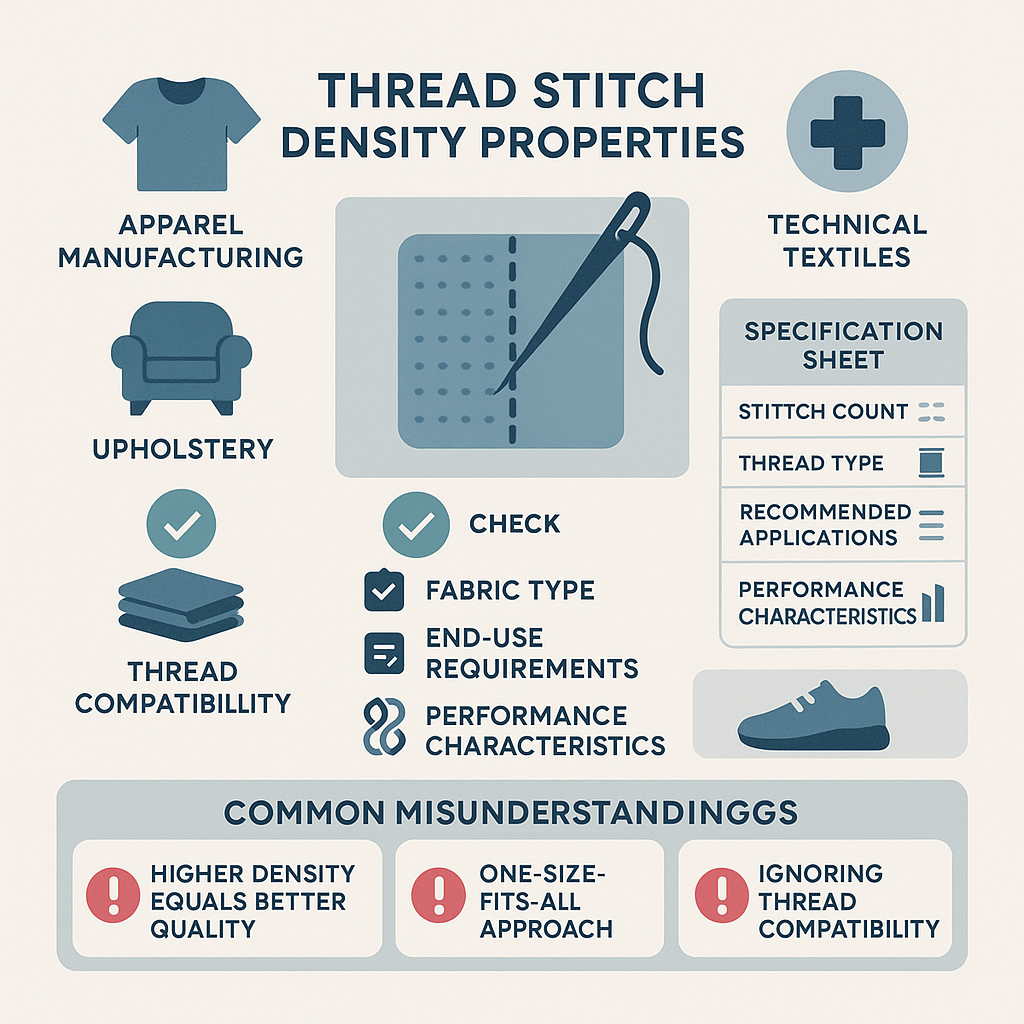
Stitch density properties are relevant across various sewing applications, including but not limited to:
- Apparel manufacturing: Different garments require varying stitch densities based on fabric type and intended use.
- Upholstery: Durable seams are crucial for furniture and automotive upholstery, where wear and tear are significant concerns.
- Technical textiles: Industries such as medical and automotive rely on precise stitch densities for performance and safety.
- Footwear: The stitching in shoes must balance durability with comfort, often requiring specific stitch density properties.
What buyers usually check
When evaluating stitch density properties, buyers typically consider:
- Fabric type: Different materials may require different stitch densities for optimal performance.
- End-use requirements: Understanding the final application helps determine the necessary stitch density.
- Thread compatibility: Ensuring that the selected thread can perform well at the desired stitch density is critical.
How to evaluate stitch density properties
Key points on a specification sheet
A well-structured specification sheet should include the following key points related to stitch density properties:
- Stitch count: The number of stitches per inch or centimeter, which provides a direct measure of density.
- Thread type: Information on whether the thread is spun, filament, or bonded, as this affects performance at different densities.
- Recommended applications: Guidance on suitable uses based on the stitch density and thread type.
- Performance characteristics: Details on tensile strength, elongation, and abrasion resistance at specified stitch densities.
Common misunderstandings
Several misconceptions can arise regarding stitch density properties:
- Higher density equals better quality: While higher stitch density can enhance seam strength, it may not always be suitable for every application. Flexibility and comfort are also vital considerations.
- One-size-fits-all approach: Different fabrics and applications require tailored stitch densities. A uniform approach can lead to suboptimal performance.
- Ignoring thread compatibility: Not all threads perform equally well at every stitch density. It’s essential to consider the thread’s characteristics in relation to the chosen density.
Practical takeaway for sourcing teams
When to ask for samples
Requesting samples is advisable when:
- Testing new fabric types or applications where stitch density properties are critical.
- Evaluating the performance of different threads at specific stitch densities.
- Confirming compatibility between the chosen thread and fabric under real-world conditions.
When another thread type may fit better
In some cases, it may be beneficial to consider alternative thread types if:
- The required stitch density is not achievable with the selected thread.
- Performance issues arise during testing, indicating that a different thread type may better suit the application.
- Cost considerations necessitate a reevaluation of thread choices without compromising quality.
In conclusion, understanding stitch density properties is essential for making informed decisions in sewing thread selection. By considering the specific requirements of each application, evaluating the relevant specifications, and being aware of common misunderstandings, sourcing teams can enhance their procurement strategies and ensure optimal performance in their sewing projects.