
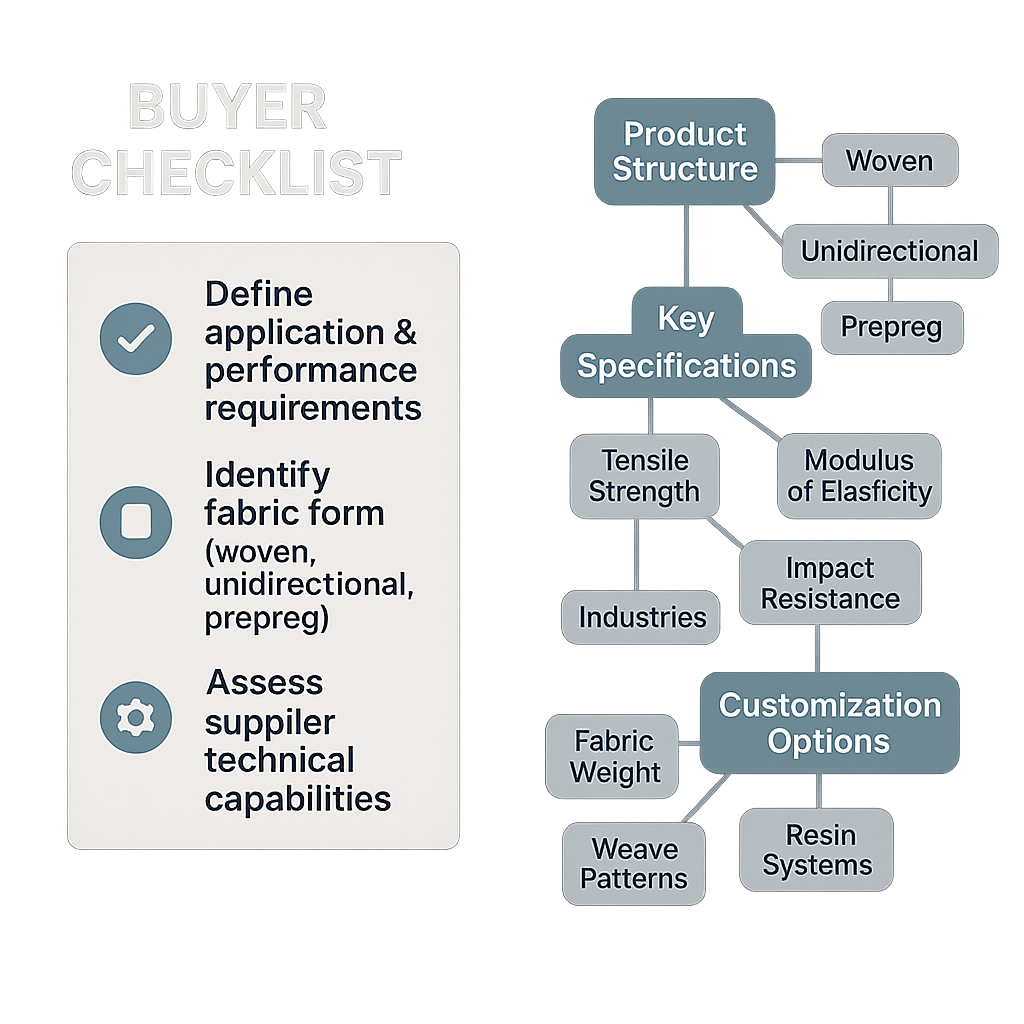
Product Structure and Available Forms
Understanding the structure and available forms of carbon fiber fabric is crucial for effective export packaging. Carbon fiber fabric is typically composed of woven strands of carbon fibers, which are known for their high strength-to-weight ratio and exceptional stiffness. This material can be found in various forms, including:
- Woven Fabrics: These are the most common forms, available in different weaves such as plain, twill, and satin.
- Unidirectional Fabrics: These fabrics have fibers aligned in a single direction, providing enhanced strength along that axis.
- Prepregs: Pre-impregnated with resin, these fabrics are designed for specific applications requiring precise control over fiber and resin ratios.
Key Technical Points
When considering carbon fiber fabric for export, it is essential to evaluate the following technical aspects:
- Weight: The weight of the fabric can influence shipping costs and handling.
- Thickness: Different thicknesses can affect the fabric’s performance in various applications.
- Weave Type: The choice of weave can impact the fabric’s flexibility and strength.
Application and Sourcing Considerations
Different applications may require specific types of carbon fiber fabric. For instance, aerospace applications may demand lightweight, high-strength fabrics, while automotive applications might prioritize durability and impact resistance. Understanding these requirements is key to effective sourcing.
Buyer Checklist Before Sampling
- Define the specific application and performance requirements.
- Identify the required fabric form (woven, unidirectional, prepreg).
- Assess the supplier’s ability to meet your technical specifications.
Key Specifications and Test Items
Before finalizing a purchase, it is vital to understand the key specifications and test items associated with carbon fiber fabric. These specifications can significantly impact the fabric’s performance in real-world applications.
Key Technical Points
- Tensile Strength: This measures the fabric’s ability to withstand tension without breaking.
- Modulus of Elasticity: This indicates how much the fabric will deform under stress.
- Impact Resistance: Essential for applications where the fabric may face sudden forces.
Application and Sourcing Considerations
Different industries may require varying specifications. For example, the aerospace sector often demands higher tensile strength and lower weight, while the marine industry may prioritize corrosion resistance.
Buyer Checklist Before Sampling
- Review the technical specifications relevant to your application.
- Request test data from the supplier to validate performance claims.
- Consider the environmental conditions the fabric will be exposed to.
Common End Uses and Industries
Carbon fiber fabric is utilized across a range of industries, each with unique requirements and applications. Understanding these can help buyers make informed decisions.
Typical Industries Using This Material
- Aerospace: Lightweight and high-strength materials are critical for aircraft components.
- Automotive: Used in high-performance vehicles for weight reduction and improved fuel efficiency.
- Sports Equipment: Commonly found in bicycles, tennis rackets, and other performance gear.
Why Engineers and Buyers Choose It
Engineers and buyers often opt for carbon fiber fabric due to its superior strength-to-weight ratio, corrosion resistance, and versatility in design. These properties make it ideal for applications where performance is paramount.
When Another Material May Be Better
While carbon fiber has many advantages, there are scenarios where alternative materials may be more suitable. For example, if cost is a primary concern, fiberglass may provide a more economical solution, albeit with lower performance characteristics.
Customization Options
Customization is often necessary to meet specific application needs. Understanding the available options can help buyers tailor their selections effectively.
Key Technical Points
- Fabric Weight: Custom weights can be specified based on application requirements.
- Weave Patterns: Different weaves can be developed for specific performance characteristics.
- Resin Systems: Custom resin formulations can enhance properties like UV resistance or fire retardancy.
Application and Sourcing Considerations
When considering customization, it is essential to communicate clearly with suppliers about your specific needs. This ensures that the final product aligns with your application requirements.
Buyer Checklist Before Sampling
- Identify the specific customization needs for your application.
- Discuss potential options with your supplier to understand feasibility.
- Review any additional costs associated with customization.
Sampling, Qualification, and Order Workflow
Understanding the workflow for sampling and qualification is crucial for ensuring that the selected carbon fiber fabric meets all necessary standards before full-scale production.
Key Technical Points
- Sampling Process: Ensure that samples are representative of the final product.
- Qualification Testing: Conduct necessary tests to validate performance against specifications.
- Order Workflow: Establish clear communication with suppliers regarding timelines and expectations.
Application and Sourcing Considerations
Different applications may require different testing protocols. It is essential to align your qualification process with industry standards relevant to your sector.
Buyer Checklist Before Sampling
- Define the sampling requirements based on your application.
- Ensure that the supplier can provide the necessary documentation for testing.
- Establish a timeline for sampling and qualification to avoid delays.
How to Compare Offers from Different Suppliers
When evaluating offers from various suppliers, a structured approach can help ensure that you select the best option for your needs.
Key Technical Points
- Performance Specifications: Compare technical data sheets to assess performance metrics.
- Customization Capabilities: Evaluate each supplier’s ability to meet your specific requirements.
- Lead Times: Consider delivery timelines and their impact on your project schedule.
Application and Sourcing Considerations
Different suppliers may have varying strengths in specific applications. Understanding these can help you align your needs with the right supplier.
Buyer Checklist Before Sampling
- Gather technical data from each supplier for comparison.
- Assess the supplier’s reputation and experience in your industry.
- Consider the total cost of ownership, including shipping and potential tariffs.
Conclusion
In conclusion, navigating the complexities of carbon fiber fabric export packaging requires a thorough understanding of material properties, application fit, and sourcing considerations. By following the outlined buyer checklists and evaluating key specifications, decision-makers can make informed choices that align with their project requirements. This guide serves as a comprehensive resource for those looking to delve deeper into the world of carbon fiber fabric, ensuring that they are well-equipped to navigate their sourcing journey effectively.