
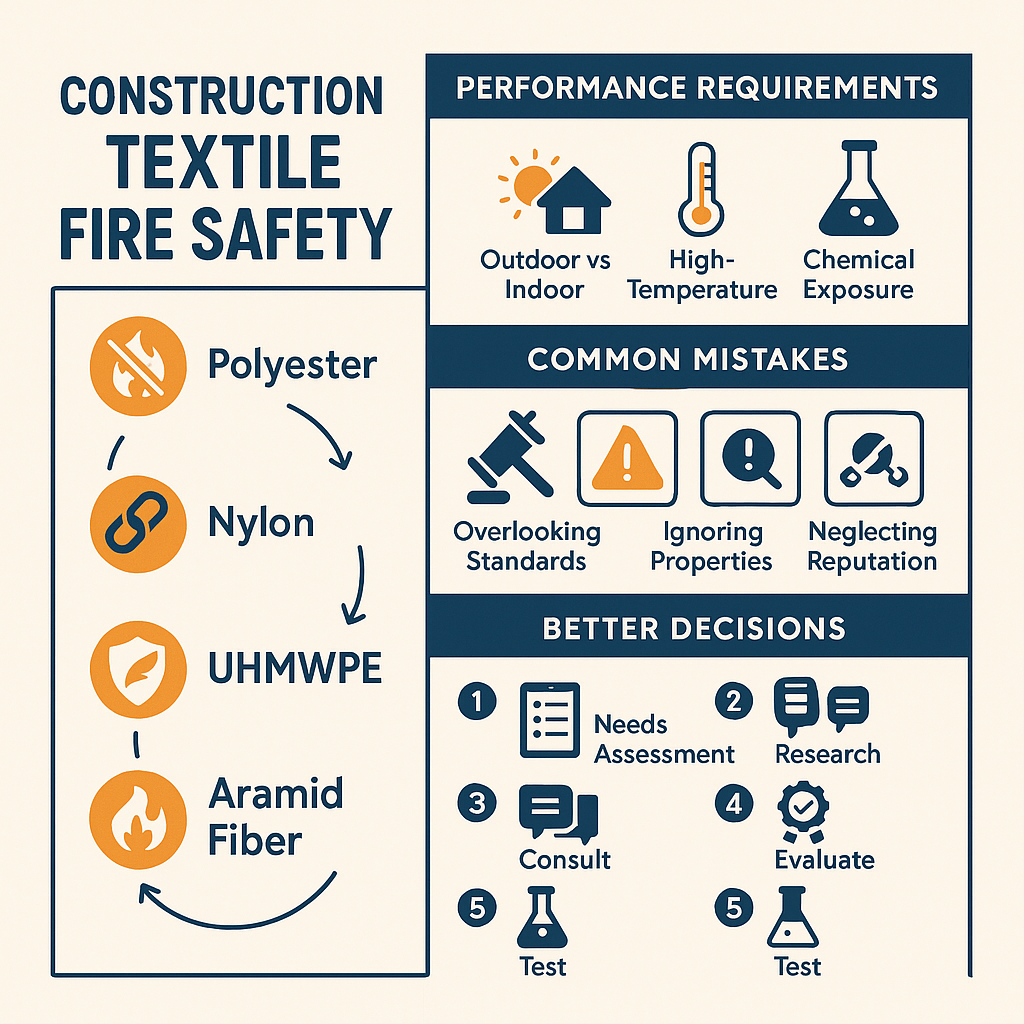
A Practical Way to Understand the Construction Textile Fire Safety
In the construction industry, safety is paramount. As projects become more complex and regulations tighten, understanding how safety expectations shape material choices is essential. Construction textile fire safety is a critical aspect that influences not only compliance with legal standards but also the overall safety of workers and the longevity of structures.
This article aims to provide a comprehensive guide to construction textiles, focusing on fire safety considerations. We will explore various materials, their applications, performance requirements, and common mistakes made in the selection process. By the end, readers will have a clearer understanding of how to make informed decisions regarding construction textiles.
Materials and Construction Options
When it comes to construction textiles, a variety of materials are available, each with unique properties that affect fire safety. Understanding these materials is crucial for selecting the right textile for specific applications.
Where Each Option Tends to Fit Best
- Polyester: Known for its durability and resistance to UV light, polyester is often used in temporary structures and scaffolding. However, its flammability can be a concern, necessitating the use of flame-retardant treatments.
- Nylon: This material offers excellent strength and abrasion resistance, making it suitable for high-stress applications. While inherently more fire-resistant than polyester, it still requires careful consideration regarding fire safety.
- UHMWPE (Ultra-High-Molecular-Weight Polyethylene): This advanced material is lightweight yet incredibly strong. Its fire resistance is notable, but it is often used in specialized applications where performance outweighs cost.
- Aramid Fibers: Renowned for their exceptional fire resistance, aramid fibers are commonly used in protective gear and high-risk environments. They are more expensive but provide superior safety.
Each material has its strengths and weaknesses, and understanding these trade-offs is essential for making informed choices.
Performance Requirements That Matter Most
Performance requirements for construction textiles extend beyond mere fire resistance. Factors such as tensile strength, durability, and environmental resistance also play a significant role in material selection.
How Environment and Use Conditions Change the Decision
The environment in which the textile will be used can dramatically alter the decision-making process. For example:
- Outdoor vs. Indoor Use: Textiles used outdoors must withstand UV exposure and moisture, while indoor textiles may prioritize aesthetics and comfort.
- High-Temperature Environments: In settings where high temperatures are prevalent, materials with higher thermal stability, such as aramid fibers, may be necessary.
- Exposure to Chemicals: In environments where chemicals are present, selecting textiles that resist chemical degradation is crucial.
Understanding these performance requirements helps ensure that the selected material meets the specific needs of the application, ultimately enhancing safety and longevity.
Common Mistakes in Selection or Sourcing
Even experienced professionals can make errors when selecting construction textiles. Here are some common pitfalls to avoid:
- Overlooking Fire Safety Standards: Failing to consider relevant fire safety regulations can lead to costly compliance issues.
- Ignoring Material Properties: Not fully understanding the properties of the chosen textile can result in inadequate performance under specific conditions.
- Focusing Solely on Cost: While budget constraints are important, prioritizing cost over quality can compromise safety and durability.
- Neglecting Supplier Reputation: Partnering with suppliers who lack a strong track record in fire safety can lead to subpar material choices.
By being aware of these common mistakes, decision-makers can take proactive steps to ensure a more effective selection process.
What Better Decisions Look Like in Practice
Making informed decisions regarding construction textile fire safety involves a systematic approach. Here are some steps to consider:
- Conduct a Thorough Needs Assessment: Evaluate the specific requirements of the project, including environmental factors and safety regulations.
- Research Material Options: Investigate various materials and their properties, focusing on fire resistance and other relevant performance metrics.
- Consult with Experts: Engage with material specialists or engineers who can provide insights into the best textile options for the application.
- Evaluate Supplier Credentials: Ensure that suppliers have a proven track record in providing high-quality, compliant materials.
- Test and Validate: Whenever possible, conduct tests to validate the performance of the selected textiles under real-world conditions.
By following these steps, professionals can enhance their decision-making process, leading to safer and more effective outcomes in construction projects.
Conclusion
Understanding construction textile fire safety is vital for ensuring the safety and longevity of structures. By carefully considering material options, performance requirements, and common pitfalls, decision-makers can make informed choices that align with safety expectations. A systematic approach to material selection not only enhances compliance with regulations but also contributes to the overall success of construction projects.
As the industry continues to evolve, staying informed about advancements in construction textiles will be crucial for maintaining safety standards and achieving optimal performance.