
What does spun thread uses mean in sewing thread applications?
Understanding spun thread uses is essential for anyone involved in the sewing industry, whether you are a manufacturer, distributor, or sourcing manager. Spun threads are made from staple fibers that are twisted together, creating a versatile and widely used option in various sewing applications. This article will delve into the significance of spun thread, its common applications, and how to evaluate its performance.
Basic definition
Spun thread is created by twisting together short lengths of fiber, resulting in a thread that is softer and more flexible than filament threads. This construction allows for better handling and sewing performance, making it suitable for a range of applications. The fibers used can vary, but polyester and cotton are the most common materials.
Why it matters in sewing performance
The choice of spun thread can significantly impact the quality and durability of the final product. Here are a few reasons why spun thread is important in sewing performance:
- Flexibility: Spun threads can easily adapt to different fabric types, providing a smooth sewing experience.
- Strength: While softer than filament threads, spun threads still offer adequate tensile strength for most applications.
- Compatibility: Spun threads work well with various sewing machines, making them a go-to choice for many manufacturers.
Where is spun thread uses used?
Spun thread is utilized in numerous sewing applications across different industries. Understanding where these threads are commonly applied can help in selecting the right type for specific needs.
Common sewing thread products or applications
Here are some of the most common applications for spun thread:
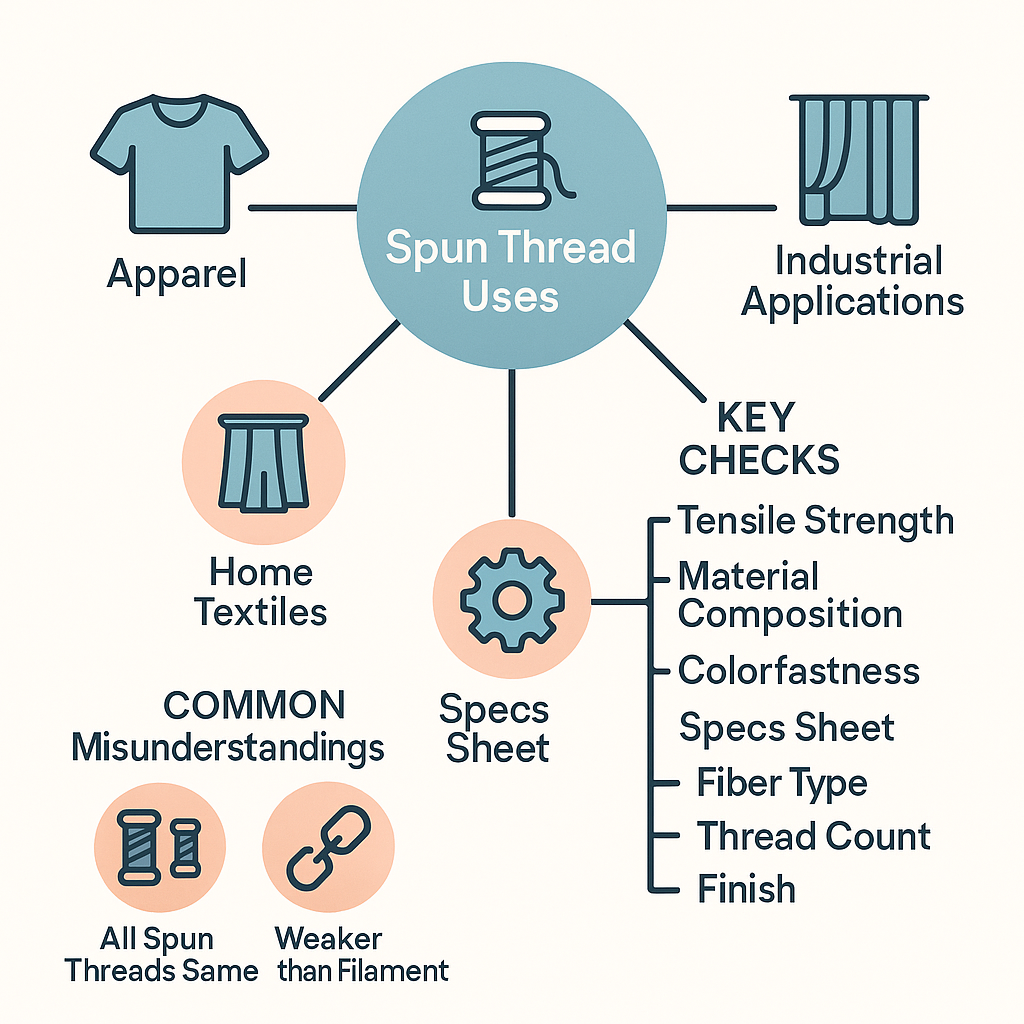
- Apparel: Used in the construction of garments, spun thread is favored for its comfort and flexibility.
- Home textiles: From curtains to upholstery, spun threads provide the necessary durability and aesthetic appeal.
- Industrial applications: Certain spun threads are designed for heavy-duty use in automotive and other industrial sectors.
What buyers usually check
When sourcing spun threads, buyers typically consider several factors:
- Material composition: Polyester and cotton blends are popular, but the choice depends on the specific application.
- Tensile strength: This is crucial for ensuring that the thread can withstand the stresses of sewing and use.
- Colorfastness: Especially important in apparel, buyers need to ensure that the thread will maintain its color over time.
How to evaluate spun thread uses
Evaluating spun thread requires a careful look at various specifications and performance indicators. Here are some key points to consider:
Key points on a specification sheet
A well-prepared specification sheet should include:
- Fiber type: Identify whether the thread is made from polyester, cotton, or a blend.
- Thread count: This indicates the thickness and strength of the thread.
- Finish: Look for any treatments that enhance performance, such as anti-fraying or lubrication.
Common misunderstandings
There are several misconceptions about spun thread that can lead to poor purchasing decisions:
- All spun threads are the same: Variations in fiber type and construction can lead to significant differences in performance.
- Spun threads are weaker than filament threads: While they may be softer, spun threads can still offer adequate strength for many applications.
Practical takeaway for sourcing teams
For sourcing teams, understanding spun thread uses can lead to better decision-making and product quality. Here are some practical tips:
When to ask for samples
Requesting samples is advisable when:
- You are unsure about the thread’s performance in a specific application.
- You need to compare different materials or finishes.
When another thread type may fit better
While spun threads are versatile, there are instances where other thread types may be more suitable:
- Heavy-duty applications: For tasks requiring extra strength, consider high tenacity polyester or nylon threads.
- Specialized fabrics: Some fabrics may require specific thread types to ensure optimal performance.
In conclusion, understanding the common uses of spun thread in sewing applications is crucial for making informed decisions in the textile industry. By evaluating spun thread specifications and performance characteristics, sourcing teams can select the right materials for their specific needs, ultimately leading to better product quality and customer satisfaction.