
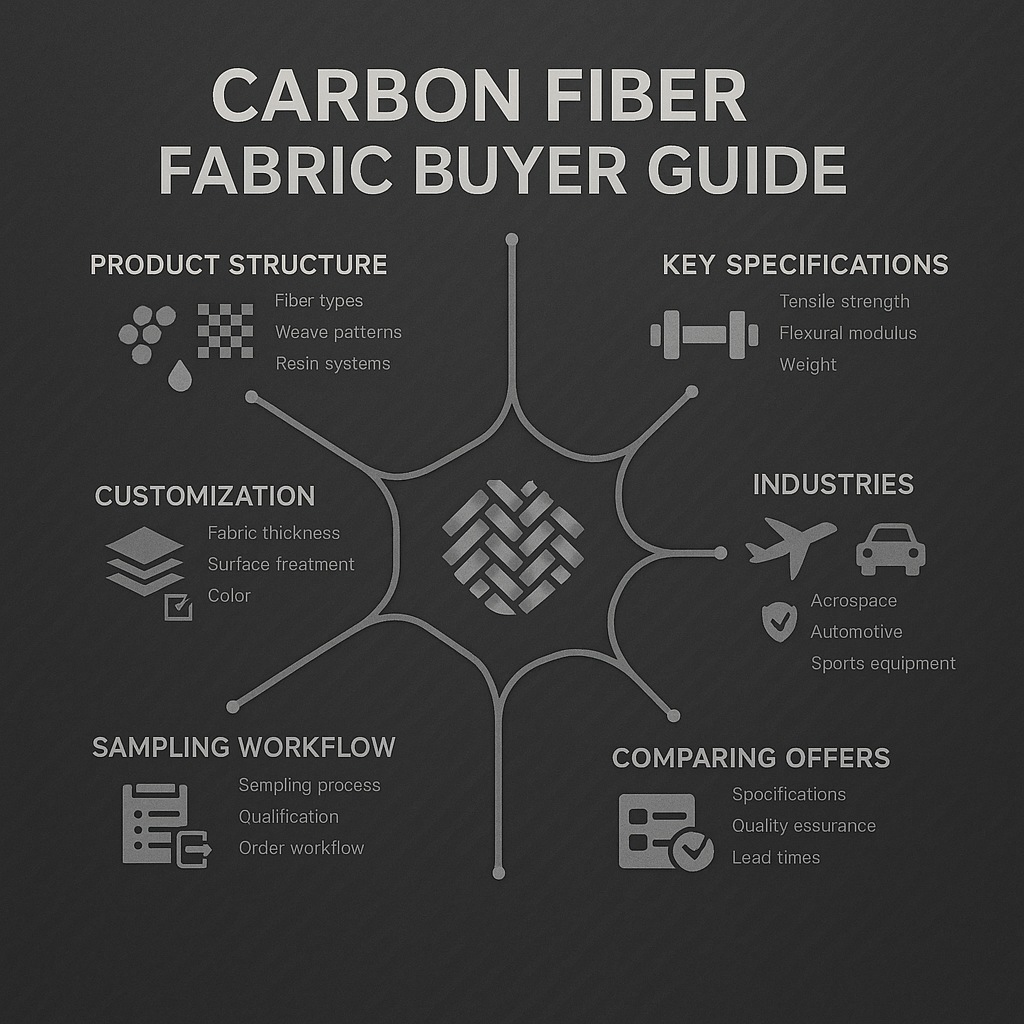
Product Structure and Available Forms
Understanding the structure of carbon fiber fabric is crucial for making informed purchasing decisions. Carbon fiber is composed of long, thin strands of carbon atoms, which are tightly bonded together to form a material that is both lightweight and incredibly strong. This unique structure gives carbon fiber its high tensile strength and rigidity, making it a popular choice in various industrial applications.
Key Technical Points
- Fiber Types: Carbon fiber fabrics can be categorized into different types based on their modulus and tensile strength. High-modulus fibers offer greater stiffness, while intermediate-modulus fibers provide a balance of strength and flexibility.
- Weave Patterns: The weave pattern of the fabric (e.g., plain, twill, satin) affects its mechanical properties and suitability for specific applications. For instance, twill weaves provide better drapability, making them ideal for complex shapes.
- Resin Systems: The choice of resin used in conjunction with carbon fiber can significantly impact the final product’s performance. Epoxy resins are commonly used for their superior adhesion and mechanical properties.
Application and Sourcing Considerations
When sourcing carbon fiber fabric, it is essential to consider the specific requirements of your application. Factors such as environmental exposure, load-bearing needs, and the intended use of the final product should guide your selection process. Additionally, understanding the supply chain and the reliability of potential suppliers can mitigate risks associated with material quality and availability.
Buyer Checklist Before Sampling
- Define the mechanical properties required for your application.
- Identify the appropriate weave pattern based on design needs.
- Consider compatibility with resin systems and other materials.
- Research potential suppliers and their track record in delivering quality materials.
Key Specifications and Test Items
Before finalizing your choice of carbon fiber fabric, it is vital to understand the key specifications and test items that will influence its performance in your application.
Key Technical Points
- Tensile Strength: This is a critical measure of how much force the fabric can withstand before breaking. It is essential for applications where the fabric will be subjected to high loads.
- Flexural Modulus: This property indicates how much the fabric will bend under load. A higher flexural modulus indicates a stiffer material, which may be necessary for certain structural applications.
- Weight: The weight of the fabric can affect the overall performance of the final product, particularly in aerospace and automotive applications where weight savings are crucial.
Application and Sourcing Considerations
As you evaluate specifications, consider how they align with your application requirements. For instance, if weight is a critical factor, you may prioritize lighter fabrics with adequate strength. Additionally, ensure that your supplier can provide detailed test results and certifications to validate the material’s performance.
Buyer Checklist Before Sampling
- Request detailed specifications and test data from suppliers.
- Evaluate how the fabric’s properties align with your application needs.
- Consider the environmental conditions the fabric will face.
Common End Uses and Industries
Carbon fiber fabric is utilized across various industries due to its unique properties. Understanding the common applications can help you identify potential uses for your projects.
Typical Industries Using This Material
- Aerospace: Carbon fiber is widely used in aircraft components due to its high strength-to-weight ratio.
- Automotive: The automotive industry employs carbon fiber for lightweighting and improving fuel efficiency.
- Sports Equipment: High-performance sports gear, such as bicycles and tennis rackets, often incorporates carbon fiber for enhanced performance.
Why Engineers and Buyers Choose It
Engineers and buyers often prefer carbon fiber fabric for its superior mechanical properties, including high tensile strength, low weight, and resistance to corrosion. These attributes make it an ideal choice for applications requiring durability and performance.
When Another Material May Be Better
While carbon fiber offers numerous advantages, it may not always be the best choice. For instance, in applications where cost is a significant concern, alternatives like fiberglass may provide adequate performance at a lower price point. Additionally, if flexibility is a priority, materials like aramid fibers might be more suitable.
Customization Options
Customization can enhance the performance of carbon fiber fabric for specific applications. Understanding the available options is crucial for making informed decisions.
Key Technical Points
- Fabric Thickness: Thicker fabrics may offer increased strength but can also add weight, which may not be desirable in all applications.
- Surface Treatment: Surface treatments can improve adhesion with resins and enhance durability.
- Color and Finish: Custom colors and finishes can be specified for aesthetic purposes or branding.
Application and Sourcing Considerations
When considering customization, evaluate how these options align with your project requirements. Discuss potential modifications with your supplier to ensure that the final product meets your specifications.
Buyer Checklist Before Sampling
- Identify any specific customization needs for your application.
- Discuss potential modifications with suppliers to understand feasibility.
- Request samples of customized options to evaluate performance.
Sampling, Qualification, and Order Workflow
Establishing a clear workflow for sampling and qualification is essential for ensuring that the carbon fiber fabric meets your requirements.
Key Technical Points
- Sampling Process: Request samples based on your defined specifications to evaluate performance in real-world conditions.
- Qualification Testing: Conduct tests to ensure the fabric meets your technical requirements before full-scale production.
- Order Workflow: Establish a clear process for placing orders, including lead times and delivery expectations.
Application and Sourcing Considerations
During the sampling and qualification phase, maintain open communication with your supplier to address any concerns or adjustments needed. This collaboration can help ensure that the final product aligns with your expectations.
Buyer Checklist Before Sampling
- Define the sampling criteria and testing methods.
- Communicate your expectations clearly to the supplier.
- Document the results of qualification tests for future reference.
How to Compare Offers from Different Suppliers
When evaluating offers from various suppliers, a systematic approach can help you make informed decisions.
Key Technical Points
- Specifications Comparison: Compare the technical specifications of the fabrics offered by different suppliers to ensure they meet your requirements.
- Quality Assurance: Investigate the quality assurance processes of each supplier to understand how they maintain material integrity.
- Lead Times and Availability: Assess the lead times and availability of materials to ensure they align with your project timelines.
Application and Sourcing Considerations
Consider not only the price but also the overall value offered by each supplier. Factors such as reliability, customer service, and technical support can significantly impact your experience and the success of your project.
Buyer Checklist Before Sampling
- Compile a list of specifications for comparison.
- Evaluate each supplier’s quality assurance practices.
- Consider the total cost of ownership, including potential support and service.
Conclusion
In summary, navigating the complexities of sourcing carbon fiber fabric requires a thorough understanding of its properties, applications, and the nuances of supplier relationships. By following the outlined buyer guide, you can make informed decisions that align with your project needs. Remember to prioritize specifications, quality assurance, and supplier reliability as you evaluate your options. This approach will not only enhance the performance of your final product but also contribute to the overall success of your projects.