
What does spool type selection benefits mean in sewing thread applications?
In the world of sewing thread manufacturing, the selection of spool types plays a pivotal role in determining the effectiveness and efficiency of sewing operations. Understanding the spool type selection benefits is essential for manufacturers, distributors, and sourcing managers who aim to optimize sewing performance and application fit.
Basic definition
Spool type selection refers to the process of choosing the appropriate spool design and material for different sewing threads. Spools can vary in size, shape, and material, each influencing how the thread is dispensed during sewing. The right spool type can enhance thread tension, reduce breakage, and improve overall sewing efficiency.
Why it matters in sewing performance
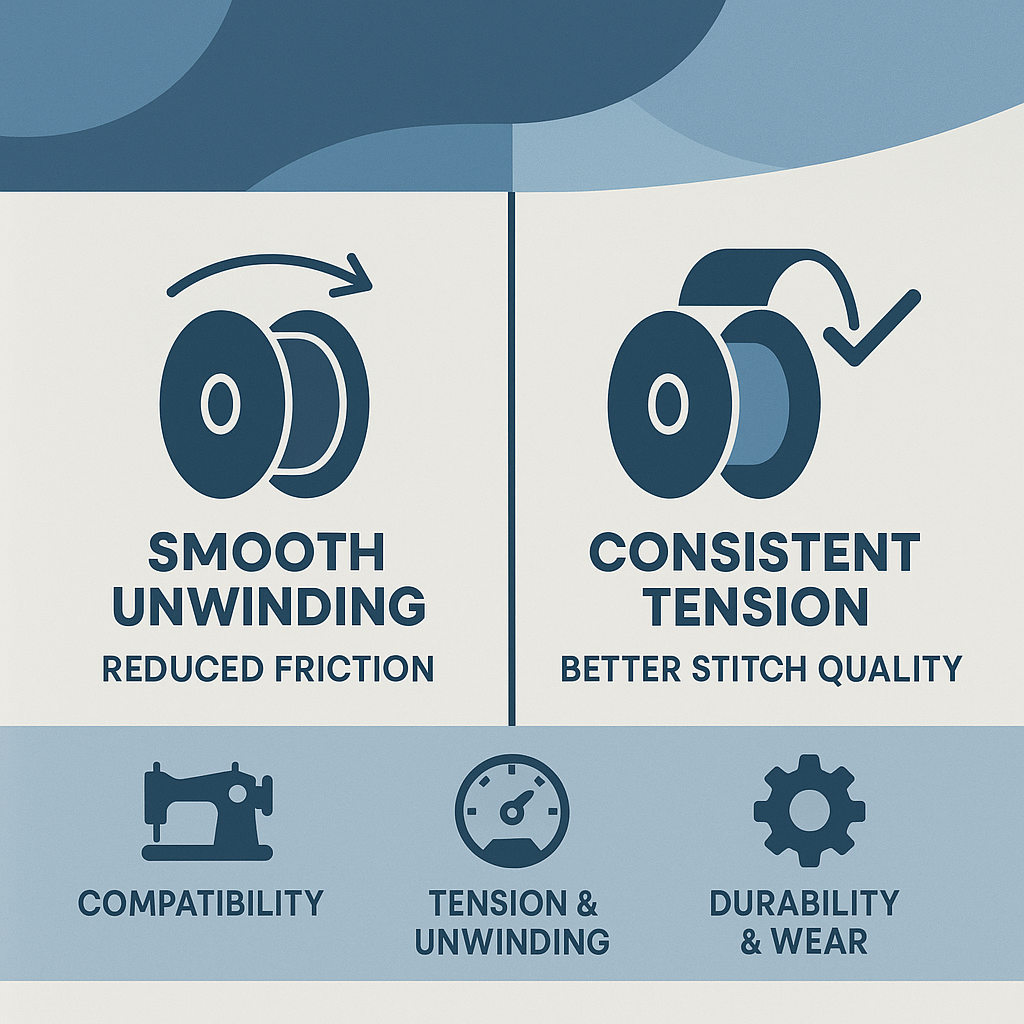
The choice of spool type can significantly impact sewing performance. For instance, a spool that allows for smooth thread unwinding can minimize friction, which in turn reduces the chances of thread breakage. Additionally, the right spool can help maintain consistent tension, leading to better stitch quality. Understanding these benefits is crucial for ensuring that sewing applications meet quality standards.
Where is spool type selection benefits used?
Spool type selection benefits are applicable across various sewing thread products and applications. Knowing where these benefits are most relevant can guide buyers in making informed decisions.
Common sewing thread products or applications
- Industrial sewing threads: Used in high-speed sewing machines, these threads require spools that can handle rapid unwinding without tangling.
- Bonded yarns: Often used in heavy-duty applications, the spool type must support the thread’s strength and durability.
- Corespun yarns: These threads benefit from spools that provide stable tension, ensuring consistent performance during sewing.
What buyers usually check
When evaluating spool types, buyers typically consider:
- Compatibility with sewing machines
- Thread tension and unwinding characteristics
- Material durability and resistance to wear
- Size and weight of the spool
How to evaluate spool type selection benefits
Evaluating spool type selection benefits involves a careful examination of specifications and performance characteristics. Here are key points to consider:
Key points on a specification sheet
- Spool dimensions: Ensure that the spool size is compatible with the sewing machine.
- Material type: Different materials can affect thread tension and durability.
- Unwinding characteristics: Look for specifications that indicate how smoothly the thread unwinds from the spool.
Common misunderstandings
There are several misconceptions regarding spool type selection:
- All spools are interchangeable: In reality, the spool type can significantly affect sewing performance.
- Material choice is secondary: The material of the spool can influence thread tension and durability, making it a critical factor in selection.
Practical takeaway for sourcing teams
For sourcing teams, understanding the benefits of spool type selection can lead to more informed purchasing decisions. Here are some practical considerations:
When to ask for samples
Requesting samples is advisable when:
- Testing new thread types for specific applications
- Evaluating spool compatibility with existing sewing machines
- Assessing performance under different sewing conditions
When another thread type may fit better
Sometimes, a different thread type may be more suitable for a specific application. Consider alternatives if:
- The current spool type causes frequent thread breakage
- Inconsistent stitch quality is observed
- The application demands higher durability than the current thread can provide
In conclusion, understanding the spool type selection benefits is crucial for optimizing sewing thread performance and ensuring that sewing applications meet quality standards. By evaluating spool types carefully and considering their impact on sewing operations, sourcing teams can make informed decisions that enhance overall efficiency and product quality.