
Product Structure and Available Forms
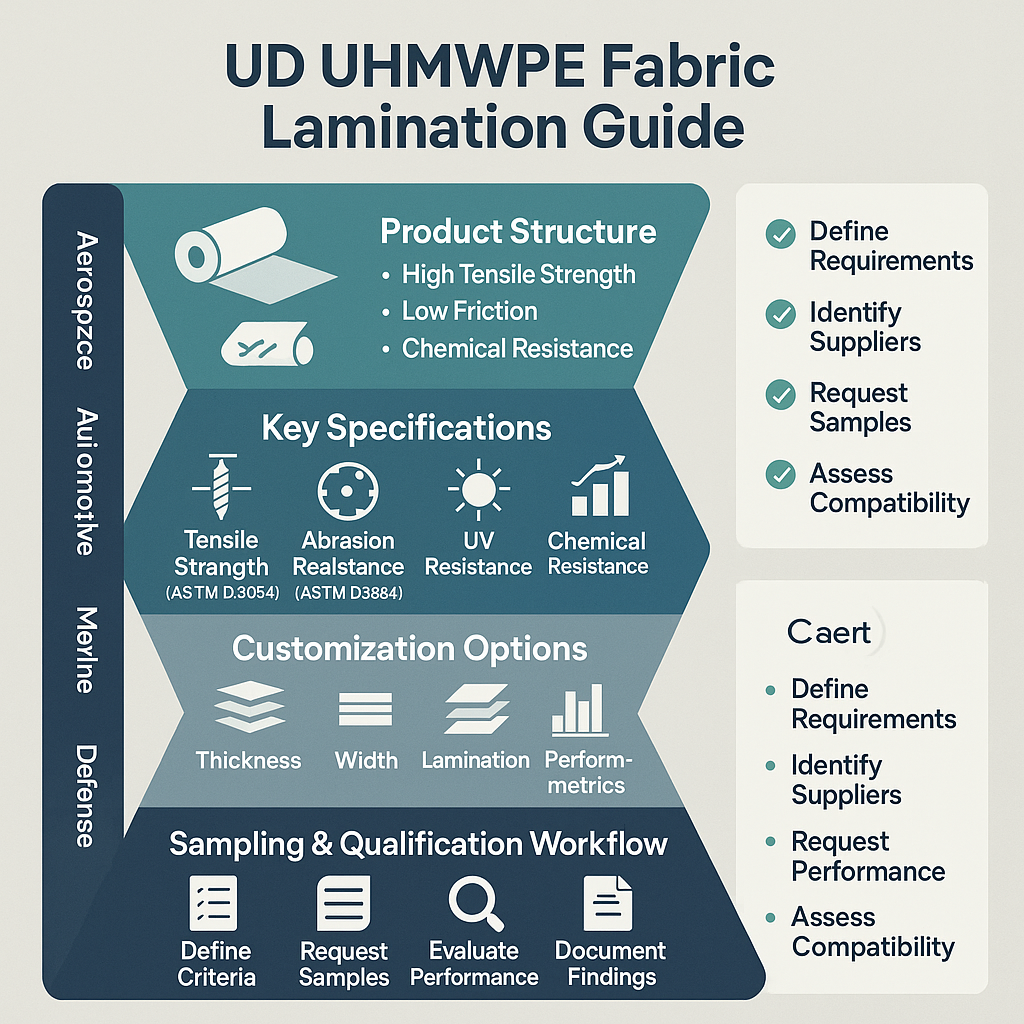
Understanding the structure of UD UHMWPE (Ultra-High Molecular Weight Polyethylene) fabric is crucial for its effective application and lamination. This material is characterized by its high tensile strength, low friction, and excellent chemical resistance, making it suitable for various industrial applications.
Key Technical Points
UD UHMWPE fabric is typically available in various forms, including sheets, rolls, and custom-cut pieces. Its unidirectional structure enhances its tensile properties, allowing for superior performance in demanding environments. The fabric can be laminated with other materials to improve its functionality, such as adding abrasion resistance or enhancing its thermal properties.
Application and Sourcing Considerations
When considering UD UHMWPE fabric for lamination, it’s essential to evaluate the specific requirements of your application. Factors such as load-bearing capacity, environmental exposure, and compatibility with other materials should be assessed. Sourcing from a reliable UD UHMWPE fabric supplier can ensure that the material meets the necessary specifications for your project.
Buyer Checklist Before Sampling
- Define the specific application and performance requirements.
- Identify potential suppliers and their certifications.
- Request samples to evaluate the fabric’s properties.
- Consider the lamination process and compatibility with other materials.
Key Specifications and Test Items
To ensure that UD UHMWPE fabric meets the required standards for your application, understanding its key specifications and test items is essential.
Key Technical Points
Key specifications include tensile strength, elongation at break, and abrasion resistance. Testing methods such as ASTM D5034 for tensile strength and ASTM D3884 for abrasion resistance can provide valuable insights into the fabric’s performance under real-world conditions.
Application and Sourcing Considerations
Different applications may require varying specifications. For instance, marine applications may prioritize UV resistance, while industrial uses may focus on chemical resistance. Understanding these nuances can guide sourcing decisions and ensure optimal performance.
Buyer Checklist Before Sampling
- Review the specifications relevant to your application.
- Confirm testing certifications and compliance with industry standards.
- Assess the supplier’s ability to provide consistent quality.
- Evaluate the availability of technical support for material selection.
Common End Uses and Industries
UD UHMWPE fabric finds applications across various industries due to its unique properties.
Typical Industries Using This Material
Industries such as aerospace, automotive, marine, and defense frequently utilize UD UHMWPE fabric. Its lightweight yet strong characteristics make it ideal for applications ranging from ballistic protection to high-performance components in vehicles.
Why Engineers and Buyers Choose It
Engineers and buyers often select UD UHMWPE fabric for its exceptional strength-to-weight ratio and durability. Its ability to withstand harsh environmental conditions while maintaining performance makes it a preferred choice for critical applications.
When Another Material May Be Better
While UD UHMWPE fabric offers numerous advantages, there are scenarios where alternative materials may be more suitable. For instance, if high-temperature resistance is a priority, materials like aramid fibers may be a better fit. Understanding the specific requirements of your application is essential for making informed decisions.
Customization Options
Customization can enhance the performance of UD UHMWPE fabric in specific applications.
Key Technical Points
Customization options may include varying thicknesses, widths, and lamination with other materials to achieve desired properties. These modifications can significantly impact the fabric’s performance characteristics, such as flexibility and durability.
Application and Sourcing Considerations
When considering customization, it’s important to communicate your specific needs to potential suppliers. They can provide insights into the feasibility of your requirements and suggest suitable modifications.
Buyer Checklist Before Sampling
- Clearly define the desired properties and performance metrics.
- Discuss customization options with suppliers to understand capabilities.
- Request samples of customized options to evaluate performance.
- Assess the impact of customization on lead times and costs.
Sampling, Qualification, and Order Workflow
A structured approach to sampling and qualification is vital for ensuring that the UD UHMWPE fabric meets your project requirements.
Key Technical Points
Establishing a clear workflow for sampling and qualification can streamline the decision-making process. This includes defining criteria for evaluation, such as performance metrics and compliance with industry standards.
Application and Sourcing Considerations
Consider the implications of your sampling process on project timelines. Engaging with suppliers early in the process can help align expectations and facilitate a smoother workflow.
Buyer Checklist Before Sampling
- Define evaluation criteria for samples.
- Communicate timelines and expectations with suppliers.
- Document findings from sample evaluations for future reference.
- Ensure that the qualification process aligns with project milestones.
How to Compare Offers from Different Suppliers
When evaluating offers from various UD UHMWPE fabric suppliers, a systematic approach can help you make informed decisions.
Key Technical Points
Consider aspects such as material specifications, pricing, lead times, and supplier reputation. A comprehensive comparison should also take into account the supplier’s ability to provide technical support and customization options.
Application and Sourcing Considerations
Understanding the nuances of each supplier’s offering can help you identify the best fit for your project. Engage in discussions to clarify any uncertainties regarding material properties or sourcing capabilities.
Buyer Checklist Before Sampling
- Compile a list of key specifications and requirements for comparison.
- Evaluate supplier reputation and customer feedback.
- Consider the total cost of ownership, including shipping and handling.
- Assess the supplier’s responsiveness and willingness to collaborate.
Conclusion
In summary, understanding the nuances of UD UHMWPE fabric lamination is essential for making informed decisions in material selection. By considering the product structure, key specifications, common applications, and supplier comparisons, engineers and buyers can navigate the complexities of sourcing effectively. A thorough approach to sampling and qualification will further ensure that the chosen material meets the specific needs of your project.
As you move forward, keep in mind the importance of aligning your material choices with application requirements and performance expectations. This thoughtful approach will ultimately lead to successful outcomes in your projects.