
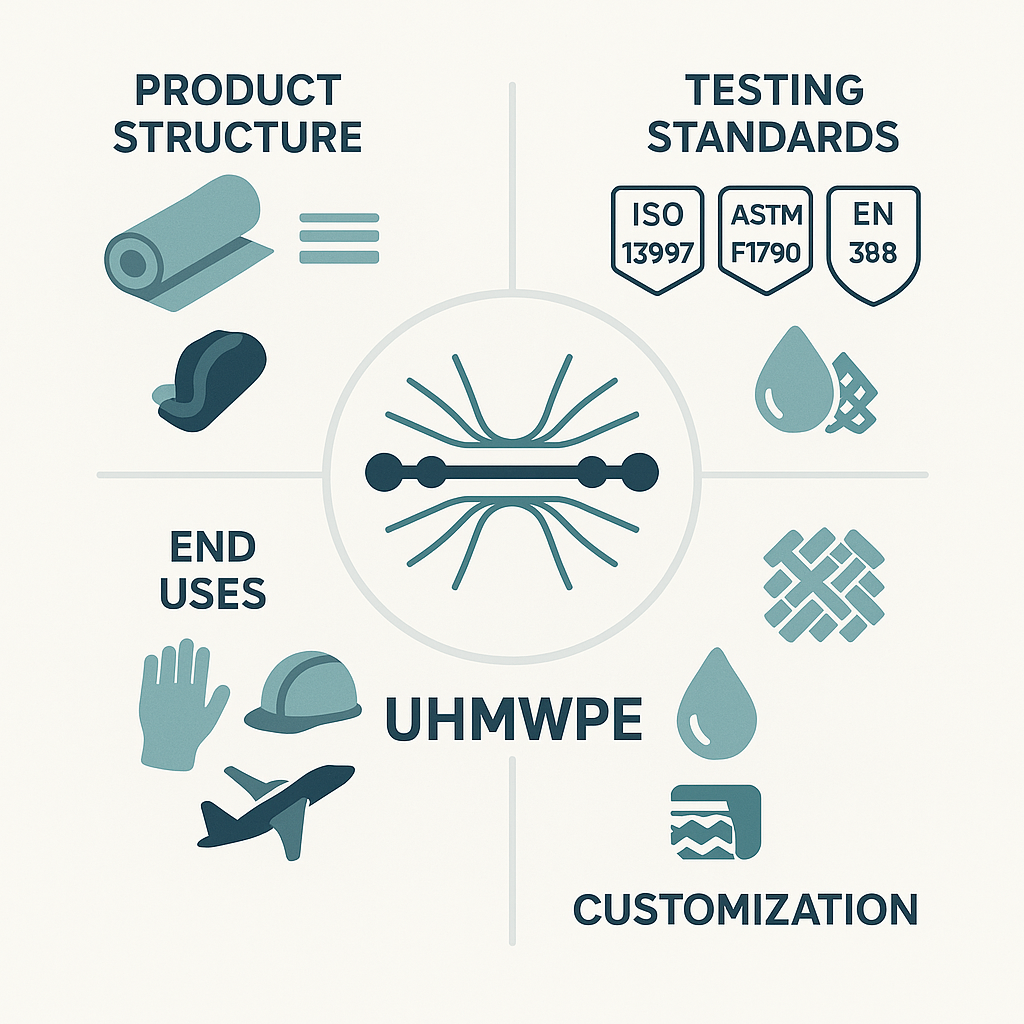
Product Structure and Available Forms
UHMWPE (Ultra High Molecular Weight Polyethylene) cut resistant fabric is a high-performance material known for its exceptional strength-to-weight ratio and resistance to abrasion and cuts. Understanding its structure and available forms is essential for making informed decisions regarding its applications.
Key Technical Points
UHMWPE fibers are characterized by their long molecular chains, which contribute to their impressive mechanical properties. The fabric can be woven or knitted, and it is often treated with additional coatings to enhance its performance in specific environments. Key technical points include:
- Fiber Density: UHMWPE fibers have a low density, making them lightweight yet strong.
- Cut Resistance: The fabric’s cut resistance is influenced by the fiber’s orientation and the weave pattern.
- Moisture Resistance: UHMWPE is inherently resistant to moisture, which helps maintain its integrity in wet conditions.
Application and Sourcing Considerations
When sourcing UHMWPE cut resistant fabric, it is crucial to consider the specific application requirements. Factors such as environmental conditions, required durability, and compliance with industry standards should guide material selection. Additionally, understanding the supply chain dynamics can help ensure timely availability and quality assurance.
Buyer Checklist Before Sampling
- Define the specific application and performance requirements.
- Research potential suppliers and their certifications.
- Request samples to evaluate fabric properties in real-world conditions.
- Consider the supplier’s ability to meet lead times and quality standards.
Key Specifications and Test Items
Understanding the key specifications and test items for UHMWPE cut resistant fabric is vital for ensuring that the material meets the necessary safety and performance standards.
Key Technical Points
Testing standards for UHMWPE cut resistant fabric typically include:
- ISO 13997: This test measures the cut resistance of materials using a straight blade.
- ASTM F1790: This standard evaluates the cut resistance of protective clothing materials.
- EN 388: A European standard that assesses the mechanical risks of protective gloves and clothing.
Application and Sourcing Considerations
Different applications may require specific testing standards. For instance, fabrics used in medical applications may need to meet additional biocompatibility tests, while those used in industrial settings may focus more on abrasion resistance. Understanding these nuances can help buyers make better-informed decisions.
Buyer Checklist Before Sampling
- Identify the relevant testing standards for your application.
- Ensure that the supplier can provide documentation of compliance.
- Evaluate the testing methods used and their relevance to your specific needs.
Common End Uses and Industries
UHMWPE cut resistant fabric is utilized across various industries due to its unique properties. Understanding the common end uses can help buyers identify suitable applications for their needs.
Typical Industries Using This Material
- Medical: Used in surgical gowns and gloves for their cut resistance and sterility.
- Construction: Employed in protective gear for workers to minimize injury risks.
- Aerospace: Utilized in lightweight, durable components that require cut resistance.
Why Engineers and Buyers Choose It
Engineers and buyers often select UHMWPE cut resistant fabric for its combination of lightweight properties and high strength. Its versatility allows it to be used in various applications, making it a preferred choice in safety-critical environments.
When Another Material May Be Better
While UHMWPE offers numerous advantages, there are situations where alternative materials may be more appropriate. For instance, if extreme heat resistance is required, aramid fibers may be a better choice. Understanding the specific requirements of an application can help guide material selection.
Customization Options
Customization can enhance the performance of UHMWPE cut resistant fabric for specific applications. Buyers should consider the available options when sourcing this material.
Key Technical Points
Customization options may include:
- Coatings: Additional coatings can improve water resistance or add chemical protection.
- Weave Patterns: Different weave patterns can enhance cut resistance and flexibility.
- Color and Finish: Custom colors and finishes can be specified for branding or aesthetic purposes.
Application and Sourcing Considerations
When considering customization, it is important to communicate specific requirements to suppliers. This ensures that the final product aligns with the intended application and performance standards.
Buyer Checklist Before Sampling
- Determine the necessary customization features for your application.
- Discuss options with potential suppliers to understand feasibility and costs.
- Request samples of customized fabrics to evaluate performance.
Sampling, Qualification, and Order Workflow
The process of sampling, qualification, and ordering UHMWPE cut resistant fabric is crucial for ensuring that the selected material meets all necessary specifications.
Key Technical Points
Key steps in this workflow include:
- Initial Sampling: Obtain samples to assess material properties and performance.
- Qualification Testing: Conduct necessary tests to verify compliance with standards.
- Order Placement: Finalize specifications and place orders based on qualified samples.
Application and Sourcing Considerations
Each step in the workflow should be approached with careful consideration of the application requirements and supplier capabilities. This ensures that the final product meets the intended use.
Buyer Checklist Before Sampling
- Outline the sampling and testing process with potential suppliers.
- Ensure that all necessary tests are conducted before finalizing orders.
- Communicate any specific requirements to ensure alignment with application needs.
How to Compare Offers from Different Suppliers
When evaluating offers from different suppliers of UHMWPE cut resistant fabric, a systematic approach can help ensure that the best choice is made.
Key Technical Points
Consider the following factors when comparing offers:
- Material Specifications: Ensure that the specifications meet your application requirements.
- Testing Compliance: Verify that suppliers provide documentation for relevant testing standards.
- Customization Options: Assess the flexibility of suppliers in meeting specific needs.
Application and Sourcing Considerations
Understanding the nuances of each supplier’s offering can help in making an informed decision. Consider factors such as lead times, quality assurance processes, and customer support.
Buyer Checklist Before Sampling
- Compile a comparison matrix of supplier offers based on key criteria.
- Engage in discussions with suppliers to clarify any uncertainties.
- Evaluate the overall value proposition of each offer, not just the price.
Conclusion
Understanding UHMWPE cut resistant fabric testing standards is essential for making informed decisions in material selection. By considering the technical specifications, application requirements, and supplier capabilities, buyers can ensure that they select the right fabric for their needs. A systematic approach to sampling, qualification, and comparison will further enhance the decision-making process, leading to successful outcomes in various industrial applications.