
Introduction
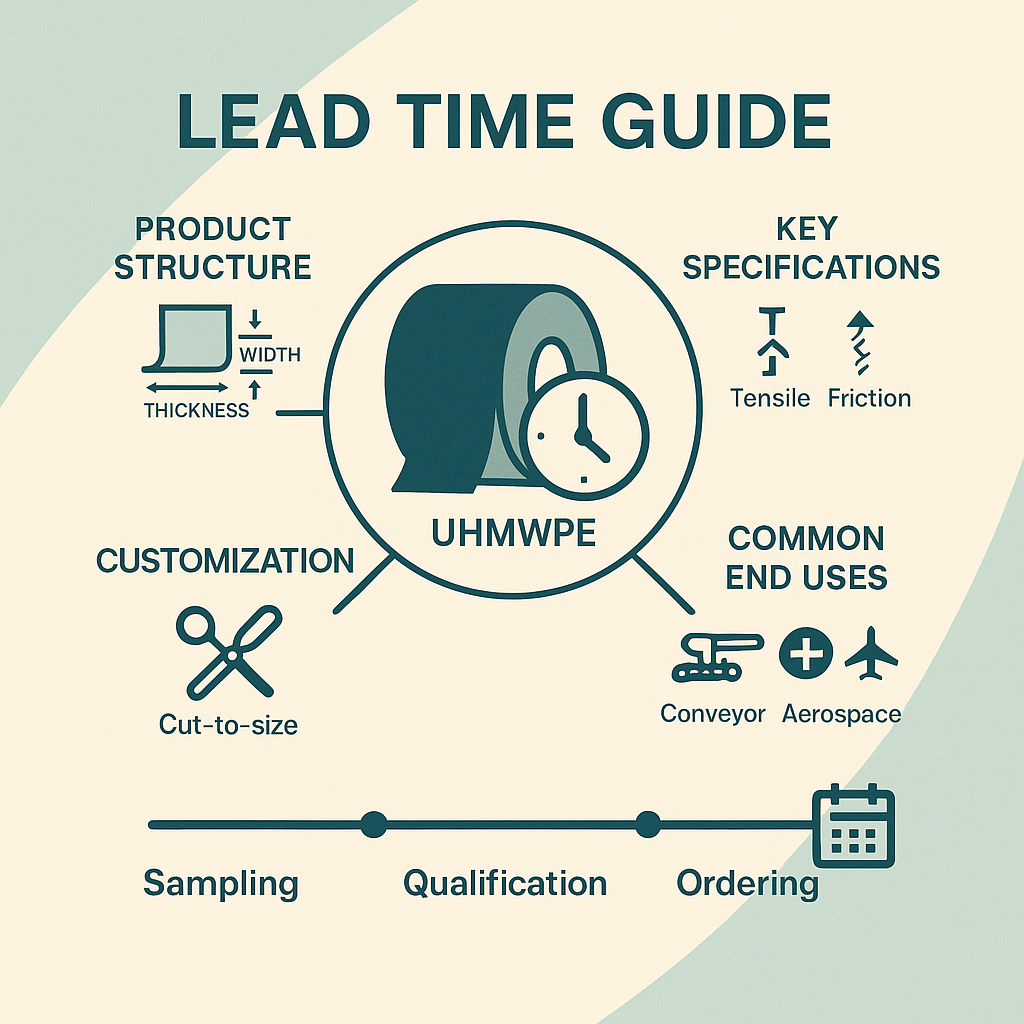
Understanding the lead time for UHMWPE tape is crucial for effective project planning and material sourcing. As a high-performance textile material, UHMWPE (Ultra-High Molecular Weight Polyethylene) tape is increasingly utilized across various industries due to its exceptional properties, including high abrasion resistance, low friction, and excellent chemical stability. This UHMWPE tape lead time guide aims to provide insights into the factors influencing lead times, application considerations, and how to effectively source this versatile material.
Product Structure and Available Forms
Key Technical Points
UHMWPE tape is typically available in various widths and thicknesses, allowing for customization based on specific application requirements. The material’s structure contributes to its unique properties, such as:
- High tensile strength: UHMWPE tape exhibits a tensile strength significantly higher than that of steel, making it ideal for demanding applications.
- Low coefficient of friction: This characteristic allows UHMWPE tape to reduce wear and tear in moving parts, enhancing the longevity of machinery.
- Chemical resistance: UHMWPE is resistant to a wide range of chemicals, making it suitable for use in harsh environments.
Application and Sourcing Considerations
When sourcing UHMWPE tape, it is essential to consider the specific applications for which it will be used. Common applications include:
- Conveyor systems
- Wear strips and pads
- Sealing and insulation
- Medical devices
Understanding the end-use will help in selecting the appropriate specifications and sourcing options. Additionally, working with a knowledgeable UHMWPE tape supplier can streamline the sourcing process.
Buyer Checklist Before Sampling
- Define the application requirements clearly.
- Identify the necessary specifications (e.g., width, thickness, adhesive properties).
- Research potential suppliers and their lead times.
- Request samples to evaluate performance in real-world conditions.
Key Specifications and Test Items
Key Technical Points
When evaluating UHMWPE tape, several key specifications and test items should be considered:
- Tensile strength: This is critical for applications requiring high load-bearing capabilities.
- Elongation at break: A measure of flexibility, which can be important in dynamic applications.
- Coefficient of friction: Essential for applications involving movement and wear.
- Chemical resistance tests: To ensure compatibility with the intended environment.
Application and Sourcing Considerations
Understanding the specifications relevant to your application will aid in sourcing the right UHMWPE tape. For instance, if the tape will be used in a high-friction environment, selecting a product with a low coefficient of friction is paramount.
Buyer Checklist Before Sampling
- Gather detailed specifications required for your application.
- Ensure the supplier can provide test data for the specifications.
- Consider the environmental conditions the tape will be exposed to.
- Evaluate the supplier’s ability to meet lead time requirements.
Common End Uses and Industries
Typical Industries Using This Material
UHMWPE tape is utilized in various industries, including:
- Aerospace
- Automotive
- Food processing
- Medical
- Mining and construction
Why Engineers and Buyers Choose It
Engineers and buyers often opt for UHMWPE tape due to its unique combination of properties, which include:
- Durability and longevity, reducing the need for frequent replacements.
- Cost-effectiveness over time, despite potentially higher initial costs.
- Versatility across multiple applications.
When Another Material May Be Better
While UHMWPE tape offers numerous advantages, there are scenarios where alternative materials may be more suitable:
- If the application requires extreme temperature resistance, other materials may outperform UHMWPE.
- In applications where cost is the primary concern, lower-cost alternatives may be considered.
- For applications requiring specific electrical properties, other materials may be more appropriate.
Customization Options
Key Technical Points
Customization of UHMWPE tape can significantly enhance its performance in specific applications. Options include:
- Custom widths and lengths to fit specific machinery or components.
- Adhesive backing tailored to the surface it will adhere to.
- Color coding for easy identification in complex systems.
Application and Sourcing Considerations
When considering customization, it is essential to communicate your specific needs to the supplier. This ensures that the final product meets the intended application requirements.
Buyer Checklist Before Sampling
- Determine the specific customization needs for your application.
- Discuss potential lead times for customized orders with suppliers.
- Request prototypes to evaluate the effectiveness of custom features.
Sampling, Qualification, and Order Workflow
Key Technical Points
The process of sampling, qualification, and ordering UHMWPE tape involves several critical steps:
- Sampling: Request samples to assess performance in your specific application.
- Qualification: Conduct tests to ensure the tape meets required specifications.
- Ordering: Place orders based on qualified samples and agreed specifications.
Application and Sourcing Considerations
Understanding the workflow from sampling to ordering can streamline the procurement process. Clear communication with suppliers about expectations and timelines is essential.
Buyer Checklist Before Sampling
- Define the testing criteria for the samples.
- Establish a timeline for qualification and ordering.
- Maintain open communication with suppliers throughout the process.
How to Compare Offers from Different Suppliers
Key Technical Points
When evaluating offers from different UHMWPE tape suppliers, consider the following:
- Specifications: Ensure that the technical specifications match your requirements.
- Lead times: Compare the lead times offered by different suppliers to ensure they align with your project timelines.
- Quality assurance: Investigate the quality control measures each supplier employs.
Application and Sourcing Considerations
Comparing offers involves not just looking at price but also evaluating the overall value each supplier brings to the table. Consider factors such as reliability, customer service, and technical support.
Buyer Checklist Before Sampling
- Compile a list of key specifications and requirements.
- Request detailed quotes from multiple suppliers.
- Evaluate the overall value proposition, not just the price.
Conclusion
Understanding the nuances of UHMWPE tape, including its lead time, applications, and sourcing considerations, is essential for making informed decisions. By considering the factors outlined in this guide, buyers can better navigate the complexities of sourcing this high-performance material. Whether you are an engineer, buyer, or decision-maker, having a clear framework for evaluating UHMWPE tape will enhance your procurement process and ensure that you select the right material for your needs.