
Introduction
In the realm of modern construction, the integration of textile materials has become increasingly vital, particularly in the context of waterproofing and moisture control. As buildings face diverse environmental challenges, the selection of appropriate textile waterproofing for buildings is essential for ensuring structural integrity and occupant comfort. This article aims to provide a comprehensive understanding of how textile layers contribute to waterproofing and moisture management, exploring material options, performance requirements, and common pitfalls in selection.
A Practical Way to Understand the Construction Textiles
Construction textiles encompass a wide range of materials designed to enhance the performance of buildings. These textiles serve various functions, from providing structural support to acting as barriers against moisture and contaminants. To grasp the significance of textile waterproofing, it is crucial to understand the various types of construction textiles available and their specific applications.
Materials and Construction Options
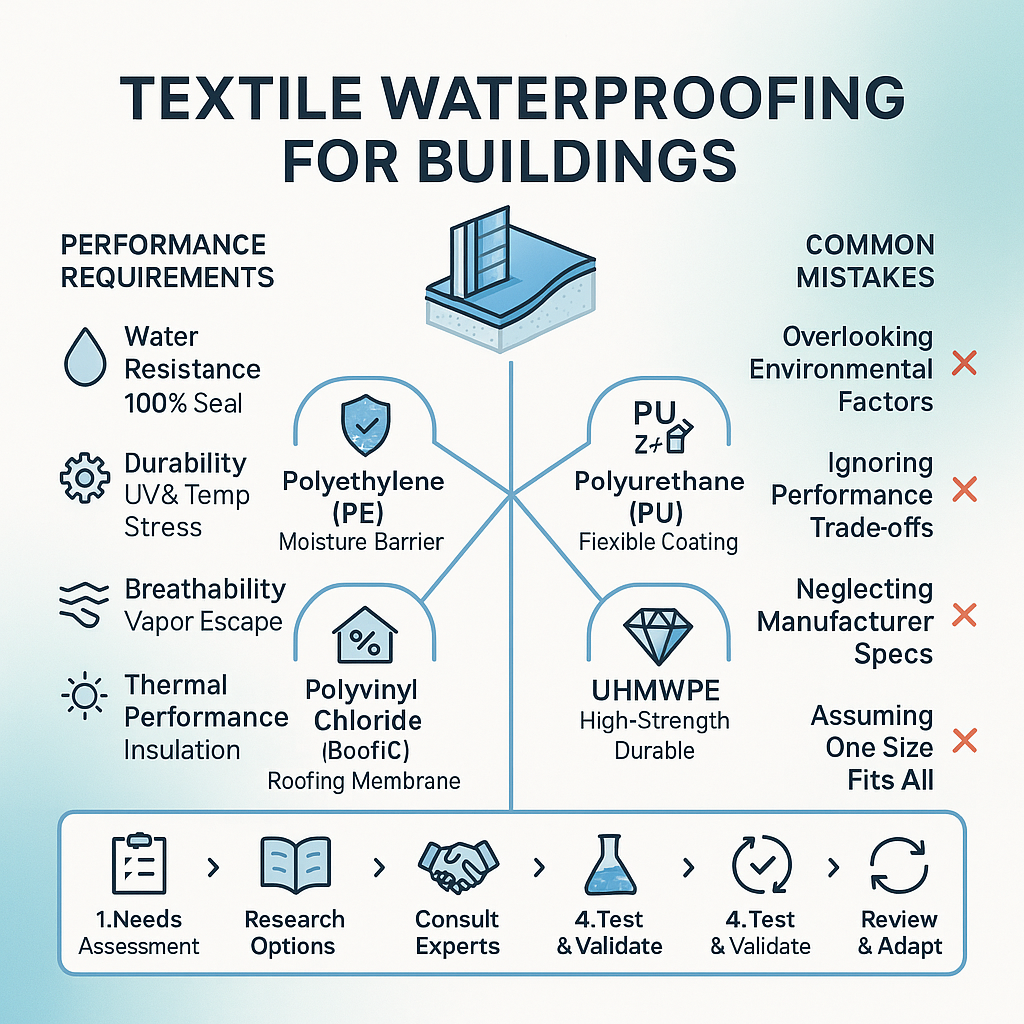
The selection of materials for textile waterproofing is influenced by several factors, including the intended application, environmental conditions, and performance requirements. Here are some common materials used in textile waterproofing:
- Polyethylene (PE): Known for its excellent moisture resistance, PE is often used in membranes and barriers.
- Polypropylene (PP): Lightweight and durable, PP is frequently employed in geotextiles and drainage applications.
- Polyurethane (PU): This versatile material offers flexibility and durability, making it suitable for various waterproofing applications.
- Polyvinyl Chloride (PVC): PVC is commonly used in roofing membranes due to its robustness and resistance to UV degradation.
- UHMWPE (Ultra-High Molecular Weight Polyethylene): Known for its high strength-to-weight ratio, UHMWPE is ideal for applications requiring exceptional durability.
Where Each Option Tends to Fit Best
Understanding where each material fits best is crucial for effective decision-making. For instance, while PE is excellent for moisture barriers, it may not offer the same level of durability as UHMWPE in high-stress applications. Similarly, PVC is a strong candidate for roofing but may not be suitable for areas exposed to extreme temperatures. Evaluating the specific conditions and requirements of the project will guide the selection of the most appropriate textile material.
Performance Requirements That Matter Most
When considering textile waterproofing for buildings, several performance requirements must be assessed:
- Water Resistance: The primary function of waterproofing textiles is to prevent water ingress. Materials must be evaluated for their ability to withstand prolonged exposure to moisture.
- Durability: Textiles should maintain their integrity under various environmental conditions, including UV exposure, temperature fluctuations, and mechanical stress.
- Breathability: While preventing water ingress, textiles should also allow moisture vapor to escape, reducing the risk of mold and mildew.
- Thermal Performance: Some textiles can provide insulation, contributing to energy efficiency in buildings.
How Environment and Use Conditions Change the Decision
The environment in which a building is situated significantly influences the choice of textile waterproofing. For instance, coastal areas may require materials that resist saltwater corrosion, while regions with heavy rainfall necessitate textiles with superior water resistance. Additionally, the intended use of the building—whether residential, commercial, or industrial—will dictate specific performance requirements. Understanding these nuances is essential for making informed decisions.
Common Mistakes in Selection or Sourcing
Even experienced professionals can fall prey to common mistakes when selecting or sourcing textile waterproofing materials. Here are some pitfalls to avoid:
- Overlooking Environmental Factors: Failing to consider the specific environmental conditions can lead to material failure and increased maintenance costs.
- Ignoring Performance Trade-offs: Each material has its strengths and weaknesses. A focus solely on water resistance may overlook other critical factors such as durability and breathability.
- Neglecting Manufacturer Specifications: Not adhering to the manufacturer’s guidelines can result in suboptimal performance and potential liability issues.
- Assuming One Size Fits All: Different applications require tailored solutions. A textile that works well in one context may not be suitable in another.
What Better Decisions Look Like in Practice
Making informed decisions regarding textile waterproofing involves a systematic approach. Here are some steps to consider:
- Conduct a Thorough Needs Assessment: Evaluate the specific requirements of the project, including environmental conditions and intended use.
- Research Material Options: Investigate various textile materials and their performance characteristics to identify suitable candidates.
- Consult with Experts: Engage with industry professionals or consultants who can provide insights into material selection and sourcing.
- Test and Validate: Whenever possible, conduct tests to validate the performance of selected materials under real-world conditions.
- Review and Adapt: After implementation, monitor the performance of the materials and be prepared to make adjustments as necessary.
Conclusion
Textile waterproofing for buildings plays a crucial role in ensuring the longevity and performance of structures. By understanding the various materials available, their performance characteristics, and the common pitfalls in selection, decision-makers can make informed choices that enhance moisture control and waterproofing. A systematic approach to material selection, grounded in an understanding of environmental conditions and application requirements, will lead to better outcomes in construction projects. As the industry continues to evolve, staying informed about advancements in construction textiles will be key to maintaining a competitive edge.