
What does cone winding uses mean in sewing thread applications?
Basic definition
Cone winding refers to the process of winding sewing thread onto a cone-shaped spool, which is a common practice in the textile industry. This method is particularly beneficial for industrial sewing threads, as it allows for efficient storage and easy dispensing during the sewing process. The cone shape facilitates a smooth unwinding of the thread, reducing the risk of tangling and ensuring consistent tension during sewing operations.
Why it matters in sewing performance
The way thread is wound can significantly impact sewing performance. Cone winding uses help maintain thread integrity, ensuring that the thread unwinds smoothly and evenly. This is crucial for achieving high-quality stitches and reducing the likelihood of thread breakage or uneven tension, which can lead to defects in the final product. Additionally, proper cone winding can enhance the durability of the thread, making it more suitable for various sewing applications.
Where is cone winding uses used?
Common sewing thread products or applications
Cone winding is prevalent in several sewing thread products, including:
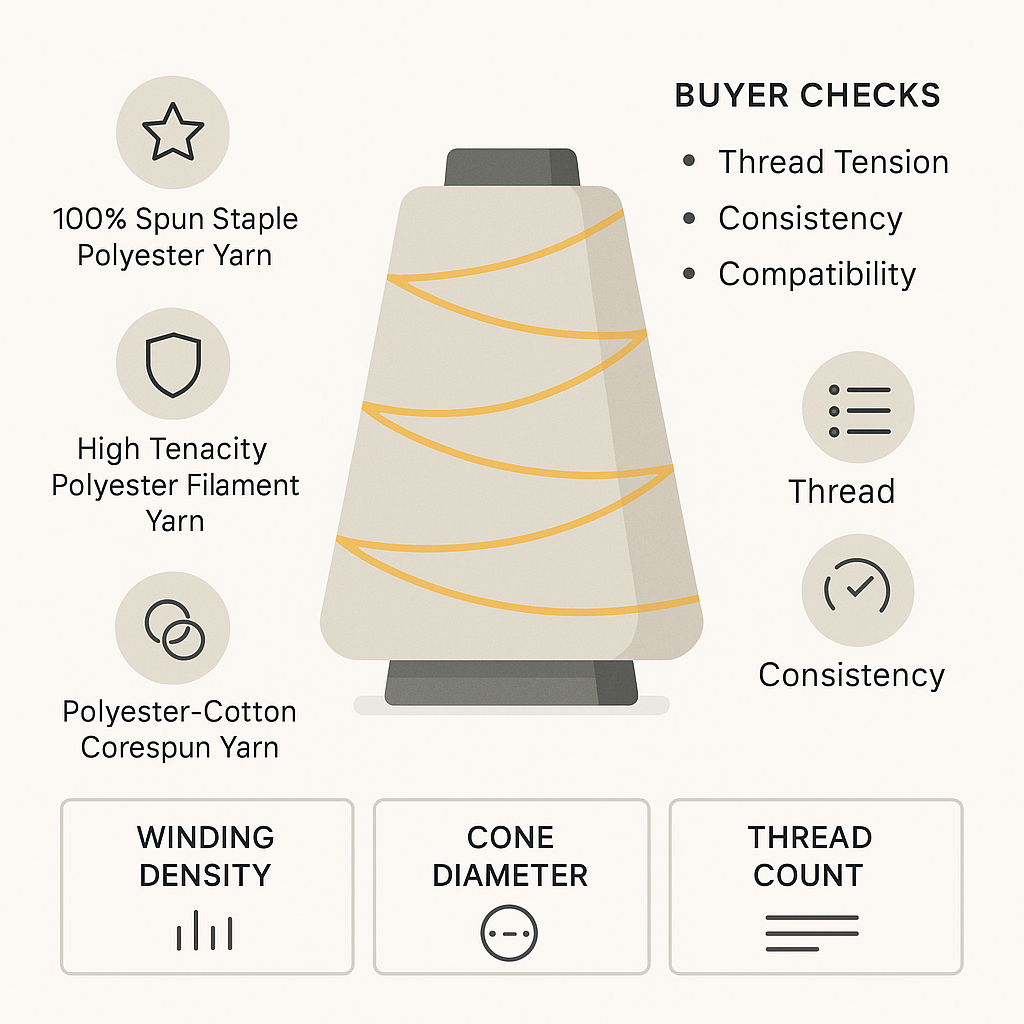
- 100% spun staple polyester yarn: Known for its versatility and strength, this type of thread is commonly used in apparel and home textiles.
- High tenacity polyester filament yarn: Ideal for heavy-duty applications, this thread is often used in upholstery and outdoor fabrics.
- Polyester-cotton corespun yarn: This blend combines the benefits of both fibers, making it suitable for a wide range of sewing tasks.
- Nylon 66 inner bonded yarn: Used in applications requiring high abrasion resistance, such as automotive and industrial textiles.
These products benefit from cone winding as it allows for efficient handling and application in various sewing environments.
What buyers usually check
When considering cone winding uses, buyers typically evaluate several factors:
- Thread tension: Ensuring that the thread unwinds smoothly without excessive tension is critical for maintaining sewing quality.
- Consistency: Uniform winding is essential for preventing issues such as thread breakage and uneven feeding.
- Compatibility: Buyers often check if the cone winding method aligns with their specific sewing machines and applications.
How to evaluate cone winding uses
Key points on a specification sheet
When reviewing a specification sheet for cone-wound threads, consider the following key points:
- Winding density: A higher density may indicate better thread stability and reduced risk of tangling.
- Diameter of the cone: This affects how the thread feeds through the sewing machine and can impact overall performance.
- Thread count: Understanding the thread count can help determine the suitability for specific applications.
These specifications provide valuable insights into the thread’s performance characteristics and help in making informed purchasing decisions.
Common misunderstandings
There are several common misunderstandings regarding cone winding uses:
- All cone-wound threads are the same: Different materials and winding techniques can lead to significant variations in performance.
- Winding method does not affect quality: The winding process can greatly influence thread tension and overall sewing quality.
- Only certain machines can use cone-wound threads: While some machines are designed specifically for cones, many can accommodate them with the right adjustments.
Practical takeaway for sourcing teams
When to ask for samples
It is advisable for sourcing teams to request samples of cone-wound threads before making bulk purchases. Testing the thread in real-world applications can provide insights into its performance, compatibility with sewing machines, and overall quality. This step is crucial for ensuring that the selected thread meets the specific needs of the intended sewing applications.
When another thread type may fit better
While cone winding uses are beneficial for many applications, there are instances where other thread types may be more suitable. For example, if a project requires a finer thread for delicate fabrics, a spool-wound thread might be a better choice. Additionally, for applications that involve high-speed sewing, specialized threads designed for such conditions may outperform standard cone-wound options.
Conclusion
Understanding cone winding uses in sewing thread applications is essential for making informed decisions in the textile industry. By recognizing the importance of winding techniques, evaluating specifications, and considering practical applications, sourcing teams can select the most suitable threads for their needs. This knowledge not only enhances sewing performance but also contributes to the overall quality of the finished products.