
Product Structure and Available Forms
Understanding the structure and available forms of UHMWPE (Ultra High Molecular Weight Polyethylene) yarn is crucial for ensuring that the material meets the specific needs of various applications. This section delves into the characteristics of UHMWPE yarn, its forms, and the technical points that buyers should consider.
Key Technical Points
UHMWPE yarn is known for its exceptional strength-to-weight ratio, chemical resistance, and low friction properties. These characteristics make it suitable for a wide range of applications, from marine ropes to ballistic protection. Key technical points to consider include:
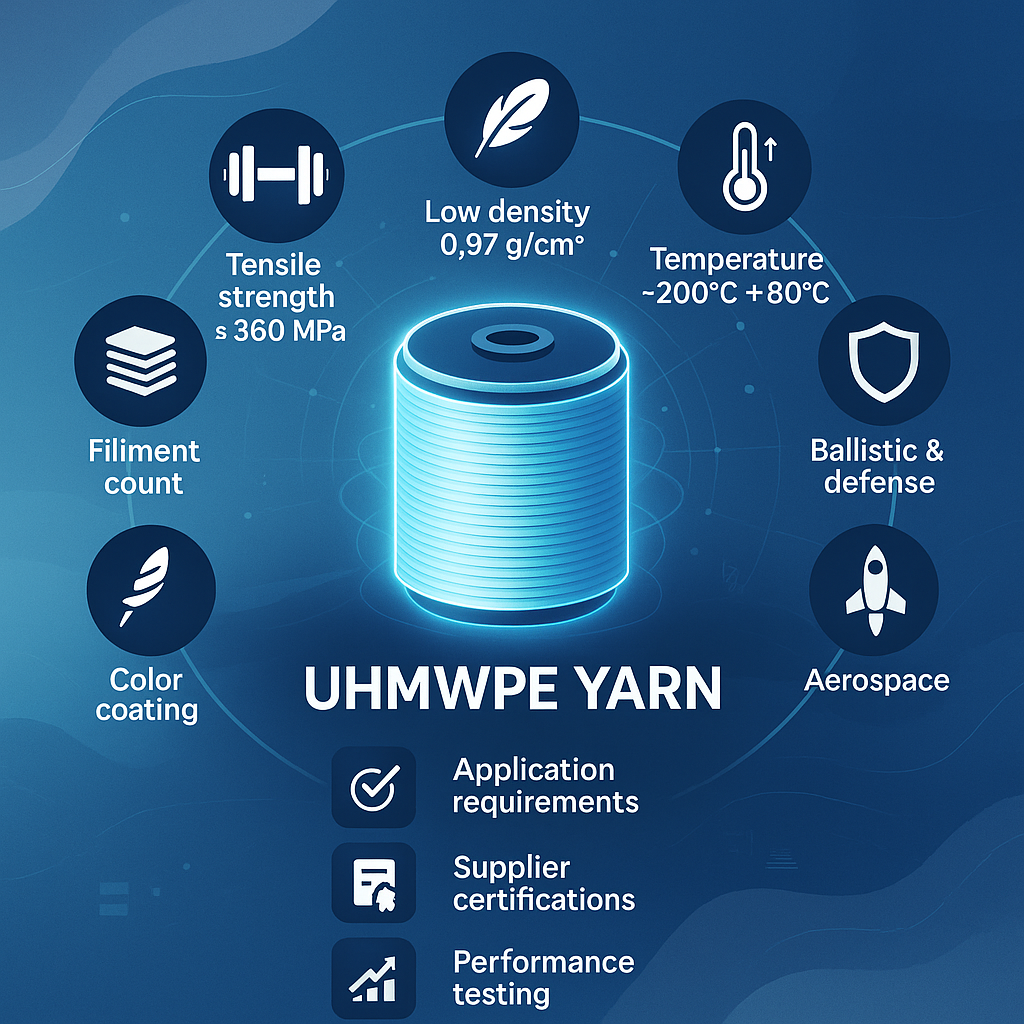
- Tensile Strength: UHMWPE yarn can exhibit tensile strengths exceeding 3,600 MPa, making it one of the strongest fibers available.
- Low Density: With a density of approximately 0.97 g/cm³, UHMWPE yarn is lightweight, which is advantageous in applications where weight savings are critical.
- Temperature Resistance: It maintains its properties over a wide temperature range, typically from -200°C to +80°C.
Application and Sourcing Considerations
When sourcing UHMWPE yarn, it’s essential to consider the specific application requirements. Different applications may necessitate variations in yarn construction, such as filament count or twist. Additionally, sourcing from a reputable supplier ensures that the material meets industry standards and specifications.
Buyer Checklist Before Sampling
- Define the application requirements clearly.
- Verify the supplier’s certifications and quality control processes.
- Request samples to evaluate the material’s performance in real-world conditions.
Key Specifications and Test Items
Before finalizing a purchase, understanding the key specifications and test items associated with UHMWPE yarn is vital. This section outlines the essential specifications and the testing methods that can validate the yarn’s performance.
Key Technical Points
Specifications for UHMWPE yarn typically include:
- Breaking Load: The maximum load the yarn can withstand before failure.
- Elongation at Break: The degree to which the yarn can stretch before breaking, which impacts its performance in dynamic applications.
- Moisture Absorption: UHMWPE yarn is hydrophobic, which means it does not absorb moisture, making it suitable for wet environments.
Application and Sourcing Considerations
Different applications may require specific tests to ensure that the UHMWPE yarn meets performance expectations. For instance, marine applications may necessitate testing for UV resistance, while industrial applications may focus on abrasion resistance.
Buyer Checklist Before Sampling
- Identify the necessary specifications for your application.
- Ensure that the supplier can provide test results for the relevant specifications.
- Consider conducting independent testing to validate performance claims.
Common End Uses and Industries
UHMWPE yarn is utilized across various industries due to its unique properties. Understanding these applications can help buyers make informed decisions about material selection.
Typical Industries Using This Material
- Marine: Used in ropes and nets due to its strength and resistance to saltwater.
- Aerospace: Employed in lightweight components and safety gear.
- Defense: Utilized in ballistic vests and protective gear.
Why Engineers and Buyers Choose It
Engineers and buyers often opt for UHMWPE yarn due to its combination of strength, durability, and lightweight characteristics. These attributes enable the development of high-performance products that can withstand extreme conditions.
When Another Material May Be Better
While UHMWPE yarn offers numerous advantages, there are scenarios where alternative materials may be more suitable. For instance, in applications requiring high-temperature resistance beyond 80°C, materials like aramid fibers may be preferable.
Customization Options
Customization can play a significant role in meeting specific application requirements for UHMWPE yarn. This section discusses the various customization options available and their implications.
Key Technical Points
Customization options for UHMWPE yarn may include:
- Filament Count: Adjusting the number of filaments can enhance strength or flexibility.
- Twist Rate: The twist of the yarn can affect its strength and abrasion resistance.
- Color and Coating: Custom colors or coatings can be applied for aesthetic or functional purposes.
Application and Sourcing Considerations
When considering customization, it’s important to collaborate closely with suppliers to ensure that the modifications align with performance requirements. Customization may also impact lead times and costs.
Buyer Checklist Before Sampling
- Determine the specific customization needs for your application.
- Discuss potential impacts on performance with your supplier.
- Evaluate any additional costs associated with customization.
Sampling, Qualification, and Order Workflow
Understanding the sampling and qualification process is essential for ensuring that the selected UHMWPE yarn meets your application requirements. This section outlines the workflow for effective sampling and qualification.
Key Technical Points
The sampling process typically involves:
- Initial Sample Request: Requesting samples based on defined specifications.
- Testing and Evaluation: Conducting tests to assess performance against application requirements.
- Feedback Loop: Providing feedback to the supplier for any necessary adjustments.
Application and Sourcing Considerations
It’s crucial to establish a clear communication channel with suppliers during the sampling process. This ensures that any issues can be addressed promptly, and adjustments can be made as needed.
Buyer Checklist Before Sampling
- Clearly define the testing criteria for the samples.
- Establish a timeline for testing and feedback.
- Document all findings for future reference.
How to Compare Offers from Different Suppliers
When evaluating offers from various UHMWPE yarn suppliers, a systematic approach can help ensure that you make an informed decision. This section provides insights into comparing supplier offers effectively.
Key Technical Points
Consider the following factors when comparing offers:
- Specifications: Ensure that the specifications align with your application requirements.
- Quality Assurance: Investigate the supplier’s quality control processes and certifications.
- Lead Times: Assess the lead times for delivery, especially if your project has tight deadlines.
Application and Sourcing Considerations
Different suppliers may offer varying levels of support and service. Consider the supplier’s ability to provide technical assistance and their responsiveness to inquiries.
Buyer Checklist Before Sampling
- Compile a comparison matrix to evaluate different offers.
- Engage with suppliers to clarify any uncertainties.
- Consider long-term relationships and support beyond the initial order.
Conclusion
In summary, understanding the nuances of UHMWPE yarn export packaging is essential for making informed decisions in sourcing and application. By considering the product structure, specifications, common applications, and supplier comparisons, buyers can navigate the complexities of this high-performance material effectively. A thoughtful approach to sampling and qualification, along with a clear checklist, can further streamline the decision-making process.
As you explore your options, remember that careful evaluation of technical specifications and supplier capabilities will ultimately lead to better outcomes in your projects involving UHMWPE yarn.