
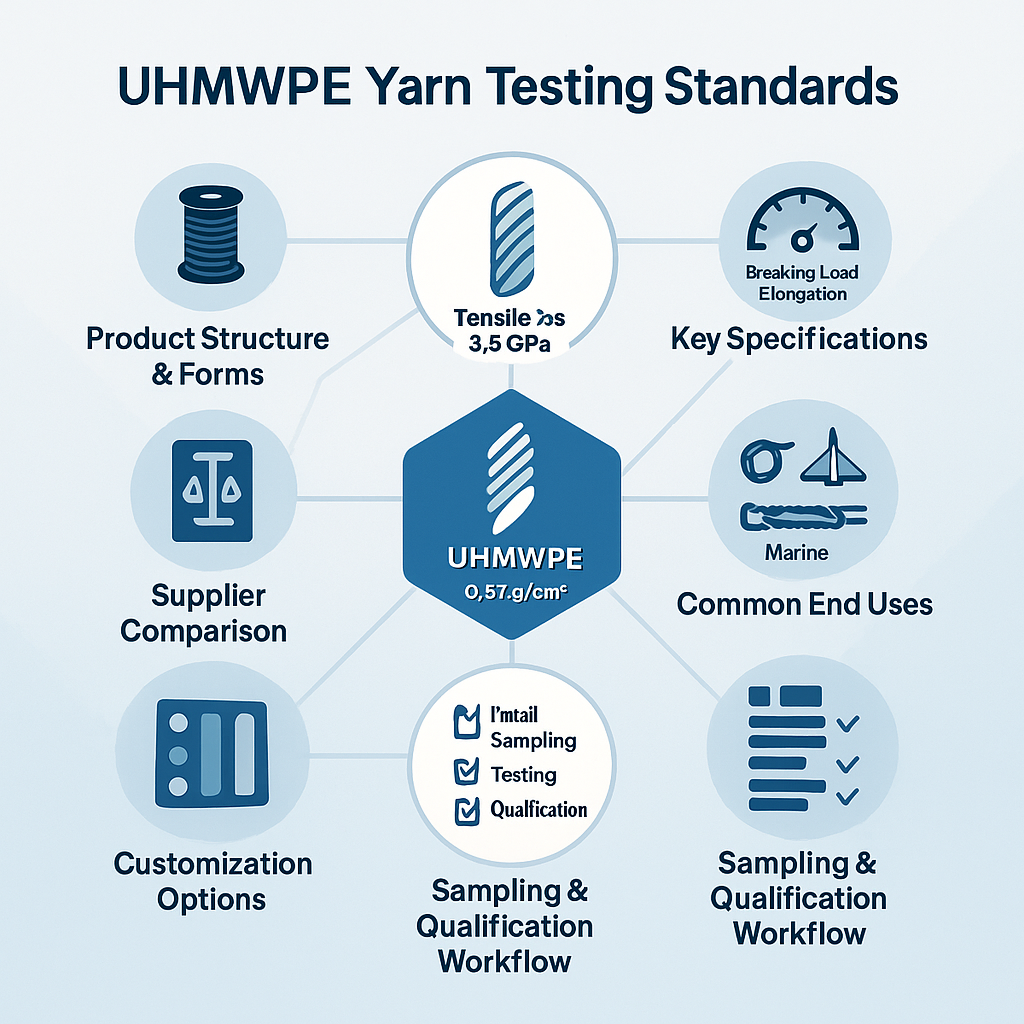
Product Structure and Available Forms
UHMWPE (Ultra High Molecular Weight Polyethylene) yarn is a high-performance material known for its exceptional strength-to-weight ratio and resistance to abrasion and chemicals. Understanding its structure and the forms in which it is available is essential for making informed decisions regarding its applications.
Key Technical Points
UHMWPE yarn is produced through a process that aligns the polymer chains, resulting in a material that exhibits remarkable tensile strength and low friction properties. The yarn can be manufactured in various denier sizes, allowing for flexibility in application. Key technical points to consider include:
- Tensile Strength: UHMWPE yarn can have tensile strengths exceeding 3.5 GPa, making it suitable for demanding applications.
- Low Density: With a density of approximately 0.97 g/cm³, UHMWPE yarn is lightweight, which is advantageous in applications where weight is a critical factor.
- Chemical Resistance: The yarn is resistant to a wide range of chemicals, enhancing its usability in harsh environments.
Application and Sourcing Considerations
When considering UHMWPE yarn for specific applications, it’s important to evaluate the operational environment and the mechanical requirements. Factors such as temperature, exposure to chemicals, and mechanical loads should be assessed. Additionally, sourcing considerations include:
- Supplier Reliability: Ensure that the supplier adheres to recognized testing standards.
- Material Certification: Request certifications that validate the yarn’s performance characteristics.
Buyer Checklist Before Sampling
Before requesting samples, buyers should prepare a checklist to ensure they are considering all relevant factors:
- Define the specific application and performance requirements.
- Identify potential suppliers and their testing capabilities.
- Request documentation of testing standards and results.
Key Specifications and Test Items
Understanding the key specifications and test items for UHMWPE yarn is vital for ensuring that the material meets the necessary performance criteria for its intended application.
Key Technical Points
Specifications for UHMWPE yarn typically include:
- Breaking Load: This indicates the maximum load the yarn can withstand before failure.
- Elongation at Break: A measure of how much the yarn can stretch before breaking, which is crucial for applications requiring flexibility.
- UV Resistance: Important for outdoor applications, as prolonged UV exposure can degrade materials.
Application and Sourcing Considerations
Different applications may require specific testing standards. For instance, marine applications may necessitate additional tests for saltwater resistance. When sourcing, consider whether the supplier can provide documentation for these tests.
Buyer Checklist Before Sampling
Before sampling, ensure that you have:
- Clarified the performance requirements specific to your application.
- Requested detailed specifications from potential suppliers.
- Inquired about the testing methods used for quality assurance.
Common End Uses and Industries
UHMWPE yarn is utilized across various industries due to its unique properties. Understanding these applications can help in making informed sourcing decisions.
Typical Industries Using This Material
- Marine: Used in ropes and nets due to its strength and resistance to saltwater.
- Aerospace: Employed in lightweight composite materials.
- Medical: Used in surgical sutures and other medical devices.
Why Engineers and Buyers Choose It
Engineers and buyers often select UHMWPE yarn for its high performance and reliability. Its ability to withstand extreme conditions while maintaining integrity makes it a preferred choice in critical applications.
When Another Material May Be Better
While UHMWPE yarn has many advantages, there are scenarios where alternative materials may be more suitable. For instance, if cost is a primary concern, other synthetic fibers may offer a more economical solution, albeit with reduced performance characteristics.
Customization Options
Customization can play a significant role in optimizing UHMWPE yarn for specific applications. Understanding the available options can enhance performance and fit.
Key Technical Points
Customization options may include:
- Denier Size: Adjusting the denier can affect the yarn’s strength and flexibility.
- Color and Coating: Custom colors and coatings can enhance visibility and provide additional protection.
Application and Sourcing Considerations
When considering customization, evaluate how these changes may affect the yarn’s performance in your specific application. Discuss these options with potential suppliers to ensure they can meet your requirements.
Buyer Checklist Before Sampling
Prior to sampling customized options, ensure you have:
- Defined the specific customization needs based on application requirements.
- Discussed potential impacts on performance with suppliers.
- Requested samples of customized products to evaluate performance.
Sampling, Qualification, and Order Workflow
Understanding the workflow for sampling and qualification is crucial for ensuring that the selected UHMWPE yarn meets your application needs.
Key Technical Points
The workflow typically involves:
- Initial Sampling: Request samples based on defined specifications.
- Testing: Conduct necessary tests to verify performance against specifications.
- Qualification: Evaluate the yarn in real-world conditions to ensure it meets application requirements.
Application and Sourcing Considerations
Consider how the sampling and qualification process aligns with your project timelines. Ensure that suppliers can meet your testing and qualification requirements within your schedule.
Buyer Checklist Before Sampling
Before initiating the sampling process, ensure you have:
- Clarified your testing requirements and timelines.
- Identified key performance indicators for evaluation.
- Established a communication plan with suppliers for feedback and adjustments.
How to Compare Offers from Different Suppliers
Comparing offers from different suppliers requires a systematic approach to ensure that you choose the best option for your needs.
Key Technical Points
When comparing offers, consider:
- Specifications: Ensure that the specifications meet your application requirements.
- Testing Standards: Verify that suppliers adhere to recognized testing standards.
- Lead Times: Evaluate the supplier’s ability to meet your timelines.
Application and Sourcing Considerations
Consider how each supplier’s offerings align with your specific application needs. Look for suppliers who provide transparency in their testing and quality assurance processes.
Buyer Checklist Before Sampling
Before finalizing your supplier choice, ensure you have:
- Compared specifications and performance data from multiple suppliers.
- Checked references or reviews from other clients.
- Clarified any uncertainties regarding testing and quality assurance.
Conclusion
Understanding UHMWPE yarn testing standards is essential for making informed decisions in sourcing and application. By considering the technical specifications, application fit, and supplier reliability, engineers and buyers can ensure they select the right material for their needs. A thorough evaluation process, including a well-defined checklist, can facilitate effective decision-making and lead to successful project outcomes.