
A Practical Way to Understand the Geotextiles for Roads
In the realm of civil engineering and infrastructure development, the durability and stability of roadways are paramount. Geotextiles for roads have emerged as a vital component in this context, providing solutions that enhance performance and longevity. These synthetic fabrics serve multiple functions, including separation, filtration, reinforcement, and drainage, which are essential for maintaining road integrity under various environmental conditions.
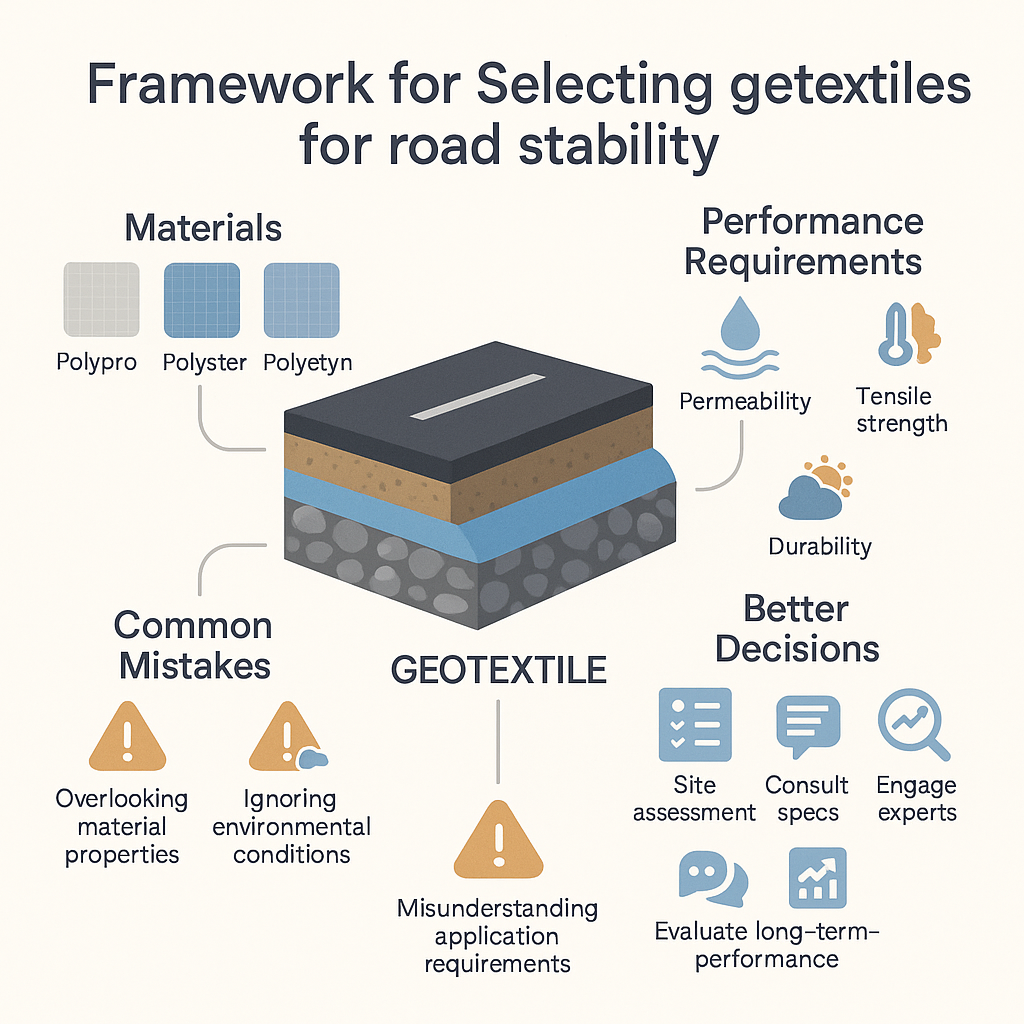
This article aims to provide a comprehensive understanding of geotextiles, focusing on their materials, performance requirements, common mistakes in selection, and what better decision-making looks like in practice. By the end, readers will have a clearer framework for evaluating geotextiles for their specific road applications.
Materials and Construction Options
Geotextiles are typically made from synthetic polymers, with the most common materials being polypropylene, polyester, and polyethylene. Each of these materials has unique properties that affect their performance in road applications.
Where Each Option Tends to Fit Best
- Polypropylene: Known for its excellent chemical resistance and durability, polypropylene geotextiles are often used in applications where soil interaction is critical, such as in subgrade stabilization.
- Polyester: With a higher tensile strength and lower elongation compared to polypropylene, polyester geotextiles are ideal for applications requiring significant load-bearing capacity, such as in reinforced earth structures.
- Polyethylene: While less common, polyethylene geotextiles can be beneficial in specific drainage applications due to their water-resistant properties.
Understanding the material properties is crucial for selecting the right geotextile for a given project. Factors such as soil type, expected load, and environmental conditions should guide the choice of material.
Performance Requirements That Matter Most
The performance of geotextiles in road applications is influenced by several key requirements, including tensile strength, permeability, and durability. Each of these factors plays a significant role in ensuring that the geotextile performs effectively over the life of the road.
How Environment and Use Conditions Change the Decision
Environmental conditions, such as moisture levels, temperature fluctuations, and soil characteristics, can dramatically affect the performance of geotextiles. For instance:
- Moisture Levels: In areas with high moisture, geotextiles must have adequate drainage capabilities to prevent water accumulation, which can lead to road failure.
- Temperature Fluctuations: In regions with extreme temperature variations, the thermal stability of the geotextile material becomes critical to prevent degradation.
- Soil Characteristics: The type of soil (e.g., clay, sand, silt) will influence the selection of geotextiles, as different soils interact with geotextiles in various ways.
Understanding these environmental factors is essential for making informed decisions about geotextile selection, ensuring that the chosen material will perform optimally under specific conditions.
Common Mistakes in Selection or Sourcing
Even experienced engineers can make mistakes when selecting geotextiles for roads. Some common pitfalls include:
- Overlooking Material Properties: Failing to consider the specific properties of the geotextile material can lead to inadequate performance. For example, selecting a geotextile with insufficient tensile strength for a high-load application can result in premature failure.
- Ignoring Environmental Conditions: Not accounting for local environmental factors can compromise the effectiveness of the geotextile. For instance, using a geotextile that is not resistant to UV degradation in a sunny climate can lead to rapid deterioration.
- Misunderstanding Application Requirements: Each application has unique requirements, and a one-size-fits-all approach can lead to suboptimal performance. Understanding the specific needs of the project is crucial.
Being aware of these common mistakes can help decision-makers avoid costly errors and ensure that the selected geotextile meets the project’s requirements.
What Better Decisions Look Like in Practice
Making informed decisions about geotextiles for roads involves a systematic approach. Here are some practical steps to consider:
- Conduct a Thorough Site Assessment: Evaluate the soil conditions, moisture levels, and environmental factors that will affect the performance of the geotextile.
- Define Performance Criteria: Establish clear performance criteria based on the specific application, including load-bearing requirements, drainage needs, and expected lifespan.
- Consult Technical Specifications: Refer to technical specifications and guidelines for geotextiles to ensure compliance with industry standards and best practices.
- Engage with Experts: Collaborate with geotechnical engineers or specialists who can provide insights into material selection and application fit.
- Evaluate Long-term Performance: Consider the long-term implications of the geotextile choice, including maintenance needs and potential for future repairs.
By following these steps, decision-makers can enhance their understanding of geotextiles and make choices that lead to improved road stability and extended pavement life.
Conclusion
Geotextiles for roads are a critical component in modern infrastructure, offering solutions that enhance stability and longevity. By understanding the materials, performance requirements, and common pitfalls in selection, stakeholders can make informed decisions that lead to successful road projects. A systematic approach to evaluating geotextiles will not only improve performance but also contribute to the overall sustainability of road networks.
As the industry continues to evolve, staying informed about the latest developments in geotextiles and their applications will be essential for engineers, project managers, and decision-makers alike.