
What does nylon 66 bonded yarn mean in sewing thread applications?
Nylon 66 bonded yarn is a specialized type of sewing thread that combines the durability of nylon with a bonding process to enhance its performance in various sewing applications. Understanding this material is crucial for manufacturers and sourcing teams looking to optimize their sewing processes.
Basic definition
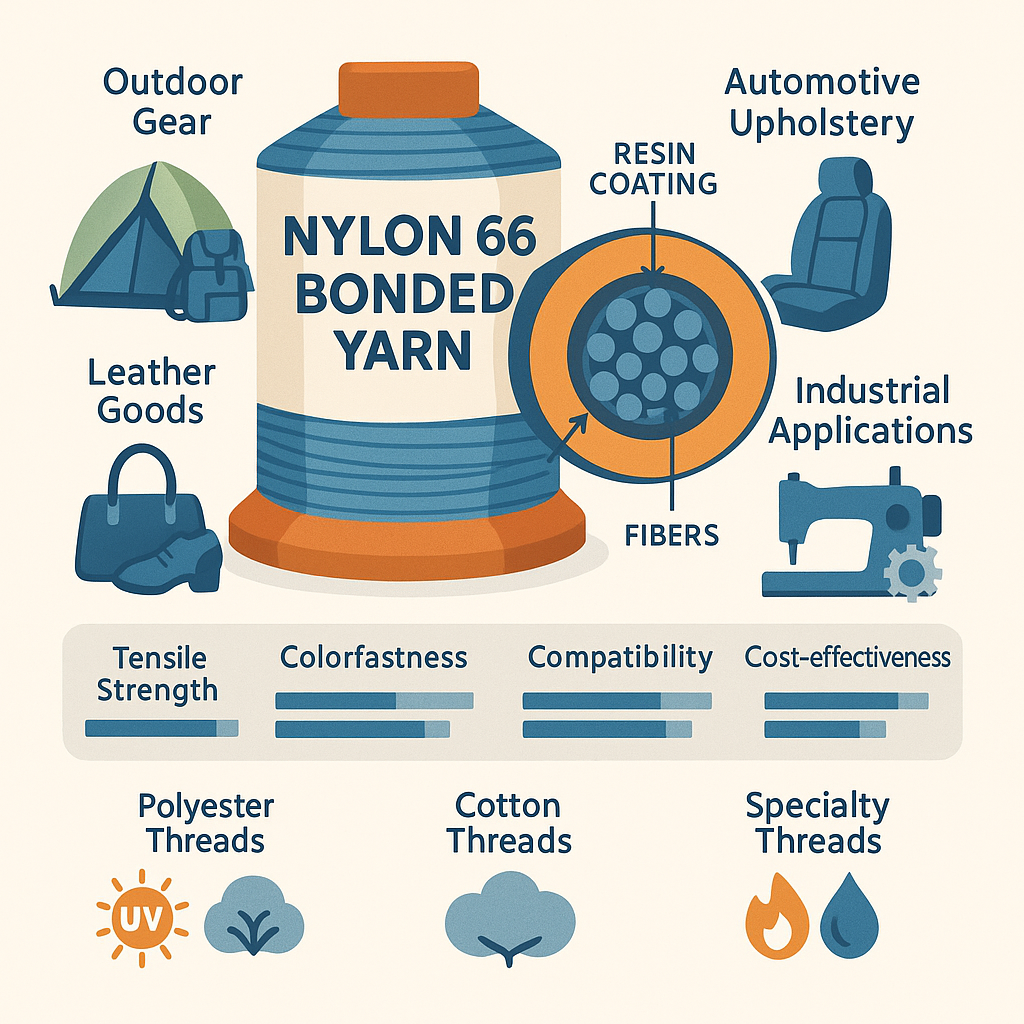
Nylon 66 bonded yarn is made from nylon 66 fibers that are treated to create a bonded structure. This bonding process involves coating the yarn with a resin or adhesive, which helps to reduce fraying and improve the overall strength of the thread. The result is a thread that is not only strong but also resistant to abrasion and wear, making it suitable for a wide range of applications.
Why it matters in sewing performance
The performance of nylon 66 bonded yarn is influenced by several factors, including its tensile strength, elasticity, and resistance to environmental conditions. These characteristics make it particularly valuable in applications where durability and reliability are essential. For instance, its resistance to UV light and moisture makes it suitable for outdoor fabrics and heavy-duty sewing projects.
Where is nylon 66 bonded yarn used?
Nylon 66 bonded yarn is versatile and finds application in various sectors, from apparel to industrial uses. Understanding where it is commonly used can help buyers make informed decisions.
Common sewing thread products or applications
- Outdoor gear: Used in tents, backpacks, and outdoor clothing due to its durability and weather resistance.
- Automotive upholstery: Ideal for stitching car seats and interiors, where strength and longevity are critical.
- Leather goods: Commonly used in handbags, belts, and shoes, providing a robust seam that can withstand wear.
- Industrial applications: Employed in heavy machinery and equipment, where thread integrity is vital for safety and performance.
What buyers usually check
When sourcing nylon 66 bonded yarn, buyers often consider the following factors:
- Tensile strength: Ensures the thread can withstand the forces exerted during sewing.
- Colorfastness: Important for applications where the thread will be exposed to sunlight or washing.
- Compatibility: Must be compatible with the sewing machine and fabric being used.
- Cost-effectiveness: Balancing quality with budget constraints is crucial for many buyers.
How to evaluate nylon 66 bonded yarn
Evaluating nylon 66 bonded yarn involves understanding its specifications and performance characteristics. This knowledge is essential for making informed purchasing decisions.
Key points on a specification sheet
When reviewing a specification sheet for nylon 66 bonded yarn, consider the following:
- Denier: Indicates the thickness of the yarn; a lower denier means finer yarn, while a higher denier indicates thicker yarn.
- Breaking strength: The amount of force required to break the yarn; higher values indicate stronger yarn.
- Elongation: Measures how much the yarn can stretch before breaking; important for applications requiring flexibility.
- Bonding agent: The type of resin or adhesive used in the bonding process can affect performance and compatibility.
Common misunderstandings
There are several misconceptions about nylon 66 bonded yarn that can lead to poor purchasing decisions:
- All bonded yarns are the same: Different bonding agents and processes can lead to significant variations in performance.
- Nylon is always the best choice: While nylon 66 offers many advantages, other materials may be more suitable for specific applications.
- Bonded yarns are only for heavy-duty applications: While they excel in demanding environments, they can also be used effectively in lighter applications.
Practical takeaway for sourcing teams
For sourcing teams, understanding the nuances of nylon 66 bonded yarn can lead to better material selection and improved sewing outcomes.
When to ask for samples
Requesting samples is advisable when:
- You are considering a new supplier or product line.
- You need to test the yarn’s compatibility with specific fabrics or sewing machines.
- You want to evaluate the yarn’s performance in real-world applications before making a bulk purchase.
When another thread type may fit better
While nylon 66 bonded yarn is versatile, there are instances where other thread types may be more appropriate:
- Polyester threads: May be better for applications requiring higher UV resistance.
- Cotton threads: Often preferred for natural fiber fabrics where a softer finish is desired.
- Specialty threads: Such as flame-resistant or water-repellent threads, may be necessary for specific industrial applications.
In conclusion, nylon 66 bonded yarn is a valuable material in the sewing industry, known for its strength and durability. By understanding its characteristics, applications, and how to evaluate it, sourcing teams can make informed decisions that enhance their sewing projects. Consider the specific needs of your applications and the performance characteristics of the yarn to choose the best option for your requirements.