
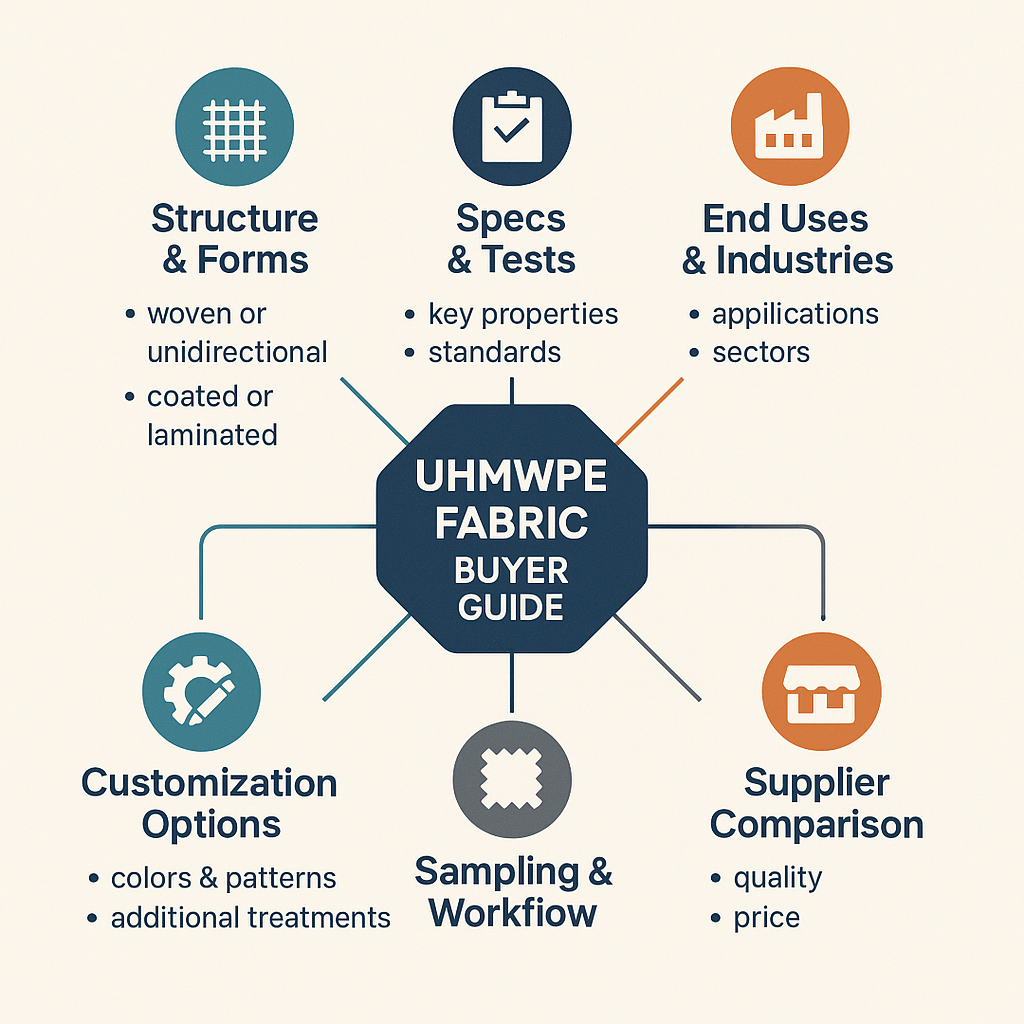
Product Structure and Available Forms
Understanding the structure and forms of UHMWPE (Ultra High Molecular Weight Polyethylene) fabric is crucial for making informed purchasing decisions. This material is known for its exceptional strength-to-weight ratio, chemical resistance, and low friction properties, making it suitable for a variety of applications.
Key Technical Points
- Molecular Weight: UHMWPE typically has a molecular weight exceeding 3 million g/mol, contributing to its superior mechanical properties.
- Fabric Forms: Available in woven, non-woven, and knitted forms, each offering unique benefits depending on the intended application.
- Thickness and Density: Variations in thickness and density can affect performance characteristics, including tensile strength and flexibility.
Application and Sourcing Considerations
When sourcing UHMWPE fabric, consider the specific requirements of your application. Factors such as environmental conditions, mechanical loads, and compatibility with other materials should guide your selection process.
Buyer Checklist Before Sampling
- Define the application requirements clearly.
- Identify the necessary fabric form and specifications.
- Research potential suppliers and their capabilities.
- Prepare questions regarding material properties and sourcing logistics.
Key Specifications and Test Items
Understanding key specifications and test items is essential for evaluating UHMWPE fabric. This section outlines the critical parameters that buyers should consider.
Key Technical Points
- Tensile Strength: A critical measure of how much force the fabric can withstand before breaking.
- Elongation at Break: Indicates the fabric’s ability to stretch without breaking, which is important for applications requiring flexibility.
- Wear Resistance: Essential for applications involving friction, such as in protective gear or industrial components.
Application and Sourcing Considerations
Different applications may prioritize various specifications. For instance, a fabric used in ballistic protection may require higher tensile strength, while a fabric used in conveyor systems may prioritize wear resistance.
Buyer Checklist Before Sampling
- Review the technical data sheets provided by suppliers.
- Ensure that the specifications align with your application needs.
- Ask about testing methods and certifications relevant to your industry.
Common End Uses and Industries
UHMWPE fabric is utilized across various industries due to its unique properties. Understanding these applications can help buyers make informed decisions.
Typical Industries Using This Material
- Aerospace: Used in lightweight components and protective gear.
- Medical: Employed in surgical sutures and implants due to its biocompatibility.
- Marine: Utilized in ropes, sails, and protective coverings.
Why Engineers and Buyers Choose It
Engineers and buyers often select UHMWPE fabric for its durability, lightweight nature, and resistance to environmental factors. These properties can lead to cost savings in maintenance and replacement over time.
When Another Material May Be Better
While UHMWPE has many advantages, there are scenarios where other materials may be more suitable. For instance, if extreme heat resistance is required, aramid fibers may be a better choice.
Customization Options
Customization can enhance the performance of UHMWPE fabric for specific applications. Understanding available options is vital for buyers.
Key Technical Points
- Coatings: Various coatings can improve properties such as water resistance or UV stability.
- Color and Pattern: Custom colors and patterns can be specified for branding or aesthetic purposes.
- Composite Structures: UHMWPE can be combined with other materials to enhance specific performance characteristics.
Application and Sourcing Considerations
When considering customization, it’s essential to communicate your specific needs clearly to suppliers. This ensures that the final product meets your performance and aesthetic requirements.
Buyer Checklist Before Sampling
- Define the customization requirements based on application needs.
- Discuss potential options with suppliers to understand feasibility.
- Request samples of customized products to evaluate performance.
Sampling, Qualification, and Order Workflow
A structured approach to sampling and qualification can streamline the procurement process for UHMWPE fabric. This section outlines key steps.
Key Technical Points
- Sampling Process: Request samples that reflect the final product specifications.
- Qualification Testing: Conduct necessary tests to ensure the fabric meets performance standards.
- Order Workflow: Establish clear communication with suppliers regarding timelines and expectations.
Application and Sourcing Considerations
Understanding the supplier’s capabilities and lead times can help in planning your project effectively. Ensure that the supplier can meet your quality and delivery requirements.
Buyer Checklist Before Sampling
- Confirm the sampling process and timeline with the supplier.
- Outline the qualification tests that will be performed.
- Establish a clear order workflow to avoid misunderstandings.
How to Compare Offers from Different Suppliers
Evaluating offers from various suppliers requires a systematic approach. This section provides insights into making effective comparisons.
Key Technical Points
- Specifications Comparison: Ensure that you are comparing like-for-like specifications across offers.
- Supplier Reputation: Research supplier backgrounds and customer reviews to gauge reliability.
- Support Services: Consider the level of technical support and customer service offered.
Application and Sourcing Considerations
Different suppliers may offer varying levels of expertise in specific applications. Choose a supplier that aligns with your industry needs and can provide relevant insights.
Buyer Checklist Before Sampling
- Compile a comparison matrix to evaluate offers systematically.
- Engage with suppliers to clarify any uncertainties in their proposals.
- Consider long-term relationships and support when making a decision.
Conclusion
In summary, navigating the complexities of sourcing UHMWPE fabric requires a thorough understanding of its properties, applications, and supplier capabilities. By following this buyer guide, decision-makers can make informed choices that align with their specific needs. Remember to evaluate technical specifications, consider customization options, and engage with suppliers to ensure a successful procurement process.
Ultimately, a well-informed approach will lead to better material selection, enhanced performance, and cost-effective solutions in your projects.