
The Bigger Picture Behind Agricultural Textiles
The agricultural sector is increasingly recognizing the importance of sustainability, not just as a buzzword but as a necessity for long-term viability. Sustainable agricultural textiles play a pivotal role in this paradigm shift. They encompass a wide range of materials and applications, from crop covers to irrigation systems, each contributing to more efficient and environmentally friendly farming practices.
Understanding sustainable agricultural textiles requires a nuanced approach. It’s not merely about using biodegradable materials or reducing carbon footprints; it’s about evaluating the entire lifecycle of the textile—from production to disposal—and its impact on agricultural practices. This article aims to dissect these complexities, providing insights that will help decision-makers navigate the landscape of sustainable agricultural textiles.
How Materials, Structure, and Processing Affect Results
The performance of agricultural textiles is heavily influenced by the materials used, their structural design, and the processing methods employed. Each of these elements contributes to the overall sustainability of the textile.
Why One Specification Never Tells the Full Story
When evaluating sustainable agricultural textiles, it’s crucial to understand that a single specification—such as tensile strength or UV resistance—does not provide a complete picture. For instance, a textile may exhibit excellent durability but could be made from non-renewable resources, negating its sustainability claims. Conversely, a biodegradable textile may lack the necessary strength for certain applications, leading to premature failure and increased waste.
Consider the following factors:
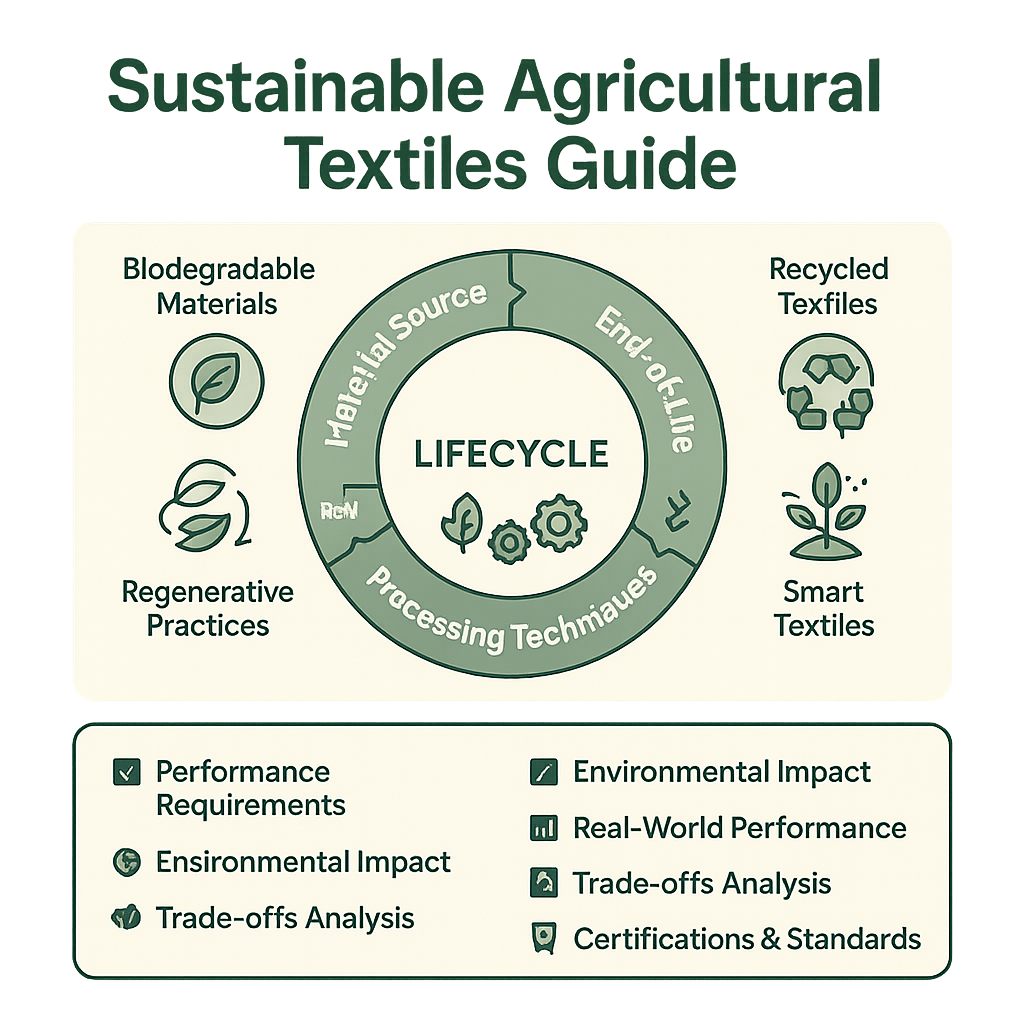
- Material Source: Is it renewable, recycled, or synthetic? The source can significantly affect the environmental impact.
- Processing Techniques: How the material is processed can influence its performance and sustainability. For example, energy-intensive processes may offset the benefits of using a sustainable material.
- End-of-Life Considerations: What happens to the textile after its useful life? Compostability and recyclability are critical factors.
How to Compare Options by End-Use Requirements
When sourcing sustainable agricultural textiles, it’s essential to align material selection with specific end-use requirements. This alignment ensures that the textiles not only meet performance standards but also contribute positively to sustainability goals.
Questions Worth Asking Before Sourcing
Before making sourcing decisions, consider the following questions:
- What are the specific performance requirements? Different applications may require varying levels of durability, UV resistance, and water permeability.
- What is the environmental impact of the material? Assess the carbon footprint, water usage, and energy consumption associated with the material’s lifecycle.
- How does the material perform under real-world conditions? Laboratory tests may not always replicate field conditions; seek data on long-term performance.
- What are the potential trade-offs? Understand the balance between performance, cost, and sustainability. Sometimes, the most sustainable option may not be the most cost-effective.
- What certifications or standards apply? Familiarize yourself with relevant certifications that can validate sustainability claims.
Examples, Trends, and What to Watch Next
The landscape of sustainable agricultural textiles is evolving rapidly, with several trends emerging that are worth monitoring:
- Biodegradable Materials: Innovations in biodegradable polymers are making it possible to create textiles that decompose naturally, reducing waste.
- Recycled Textiles: The use of recycled materials is gaining traction, helping to close the loop in textile production.
- Smart Textiles: Integrating technology into textiles for monitoring soil conditions or crop health is becoming more prevalent, enhancing efficiency.
- Regenerative Practices: Textiles that support regenerative agriculture practices are gaining attention for their potential to improve soil health and biodiversity.
As these trends develop, it’s essential for decision-makers to stay informed and consider how these innovations can fit into their sustainability strategies.
Conclusion
Discussing sustainability in agricultural textiles requires a comprehensive understanding of materials, performance, and the broader implications of sourcing decisions. By asking the right questions and considering the nuanced trade-offs involved, stakeholders can make informed choices that align with both agricultural needs and sustainability goals.
In summary, when evaluating sustainable agricultural textiles, focus on the complete lifecycle, performance requirements, and the specific applications at hand. This approach not only fosters better decision-making but also contributes to a more sustainable agricultural future.