
A Practical Way to Understand Agricultural Textiles
Agricultural textiles play a crucial role in modern farming practices, influencing crop yield, soil health, and resource management. As the agricultural sector evolves, understanding the various materials available becomes essential for making informed decisions. This article aims to provide a comprehensive comparison of agricultural textile materials, specifically focusing on polypropylene (PP), polyethylene (PE), and biodegradable options. By examining their properties, applications, and performance requirements, we can better navigate the complexities of material selection.
Materials and Construction Options
When evaluating agricultural textile materials, it is essential to understand the fundamental characteristics of each option. The three primary materials—PP, PE, and biodegradable textiles—offer distinct advantages and limitations.
Where Each Option Tends to Fit Best
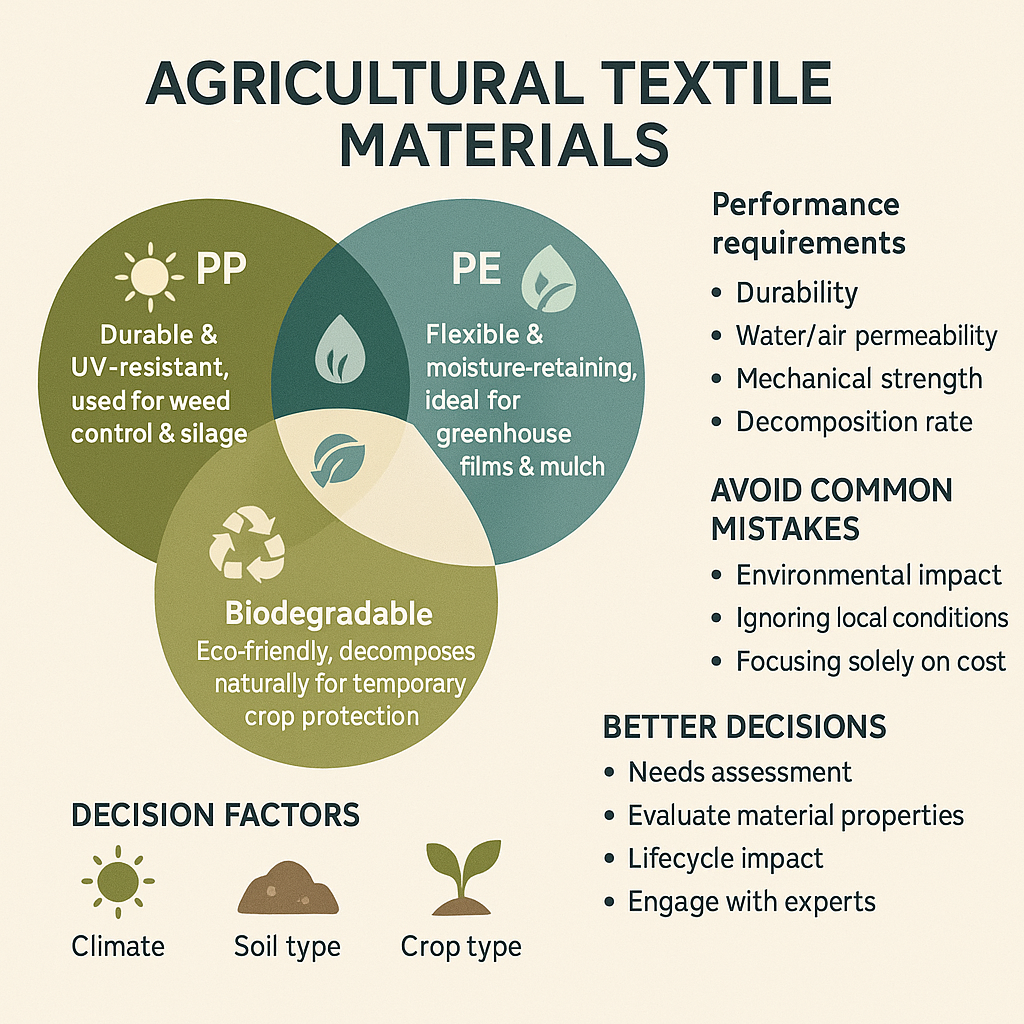
- Polypropylene (PP): Known for its durability and resistance to moisture, PP is widely used in applications such as weed control fabrics, crop covers, and silage bags. Its lightweight nature makes it easy to handle, while its UV resistance extends its lifespan in outdoor conditions.
- Polyethylene (PE): PE is often chosen for its flexibility and chemical resistance. It is commonly used in greenhouse films, mulch films, and irrigation systems. Its ability to retain heat and moisture makes it ideal for certain crops, particularly in colder climates.
- Biodegradable Textiles: These materials are designed to decompose naturally over time, reducing environmental impact. They are increasingly used in applications where temporary coverage is needed, such as crop protection and soil erosion control. However, their performance can vary significantly based on environmental conditions.
Performance Requirements That Matter Most
Understanding the performance characteristics of agricultural textiles is critical for ensuring that the selected material meets the specific needs of the application. Key performance requirements include:
- Durability: The material must withstand environmental stresses such as UV exposure, moisture, and temperature fluctuations.
- Water and Air Permeability: Depending on the application, the ability of the textile to allow water and air to pass through can be crucial for plant health.
- Mechanical Strength: The tensile strength of the material affects its ability to endure physical stresses during handling and use.
- Decomposition Rate: For biodegradable textiles, understanding the rate of decomposition is vital to ensure that they provide adequate coverage for the required duration.
How Environment and Use Conditions Change the Decision
The choice of agricultural textile material is heavily influenced by environmental factors and specific use conditions. For instance:
- Climate: In regions with high UV exposure, PP may be preferred due to its UV resistance. Conversely, in humid climates, PE’s moisture retention properties might be more beneficial.
- Soil Type: The interaction between the textile and soil can affect plant growth. Biodegradable options may be more suitable in organic farming practices where soil health is a priority.
- Crop Type: Different crops have varying requirements for light, moisture, and temperature, influencing the choice of textile material.
Common Mistakes in Selection or Sourcing
When sourcing agricultural textiles, decision-makers often encounter pitfalls that can lead to suboptimal choices. Common mistakes include:
- Overlooking Environmental Impact: Failing to consider the environmental implications of material selection can lead to long-term issues, especially with non-biodegradable options.
- Ignoring Local Conditions: Not accounting for local climate and soil conditions can result in material failure and reduced crop yield.
- Focusing Solely on Cost: While budget constraints are important, prioritizing cost over performance can lead to higher expenses in the long run due to material replacement or crop loss.
What Better Decisions Look Like in Practice
Making informed decisions regarding agricultural textile materials involves a systematic approach that considers various factors:
- Conducting a Needs Assessment: Clearly define the requirements of the agricultural application, including environmental conditions and crop types.
- Evaluating Material Properties: Assess the performance characteristics of each material option against the defined needs.
- Considering Lifecycle Impact: Analyze the environmental impact of the materials over their entire lifecycle, from production to disposal.
- Engaging with Experts: Collaborate with material specialists or agricultural engineers to gain insights into the best options for specific applications.
In conclusion, the comparison of agricultural textile materials—PP, PE, and biodegradable options—requires a nuanced understanding of their properties, applications, and performance requirements. By avoiding common pitfalls and adopting a systematic decision-making process, stakeholders can make better choices that enhance agricultural productivity while considering environmental impacts. As the industry continues to evolve, staying informed about material advancements will be crucial for future success.
Ultimately, the right agricultural textile material can significantly influence crop health and yield, making it essential for decision-makers to approach material selection thoughtfully and strategically.