
What does thread tex conversion uses mean in sewing thread applications?
Thread tex conversion uses refer to the process of converting the linear density of sewing threads into a standardized measurement known as tex. This measurement is crucial for understanding the weight and thickness of the thread, which directly impacts its performance in various sewing applications. Knowing how to interpret these conversions can help manufacturers and sourcing teams make informed decisions about thread selection.
Basic definition
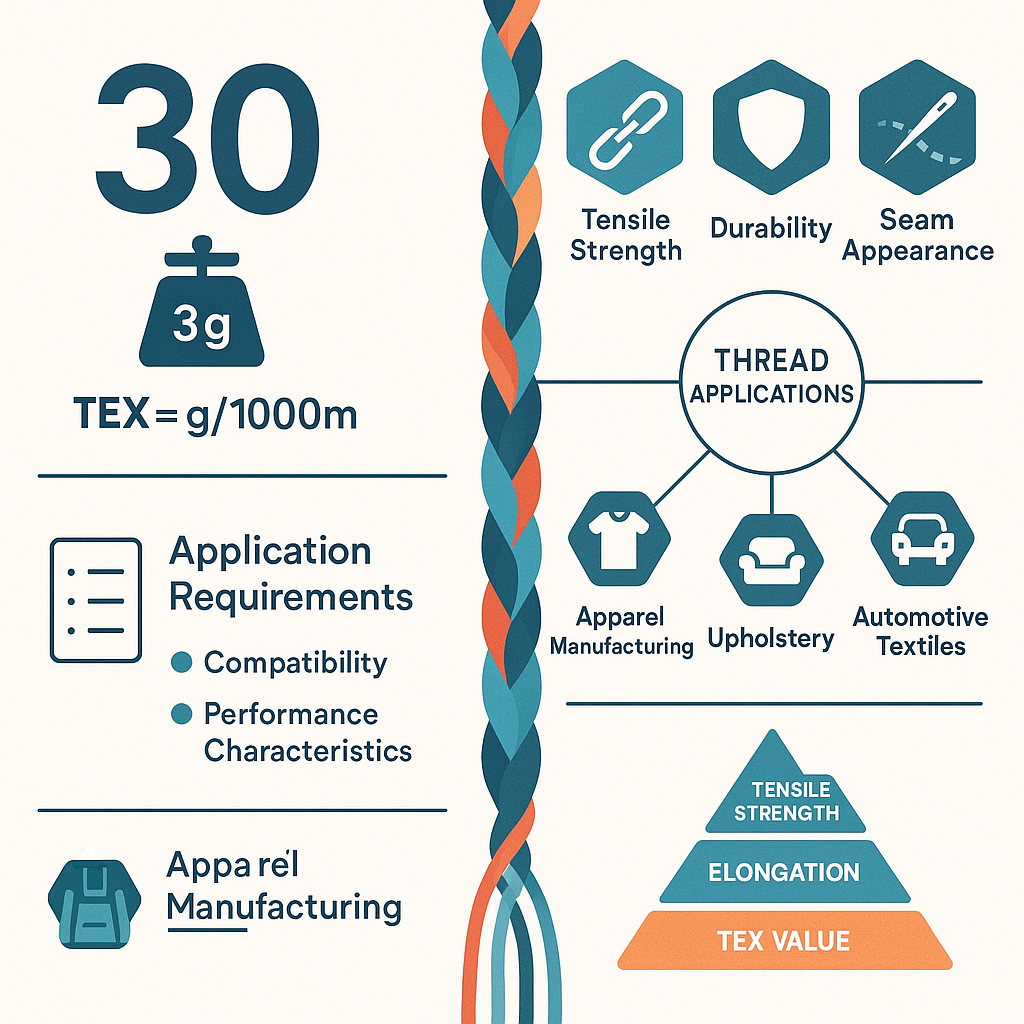
Tex is a unit of measurement that indicates the mass in grams of 1,000 meters of thread. For example, a thread with a tex value of 30 means that 1,000 meters of that thread weighs 30 grams. This conversion is essential for comparing different threads and understanding their suitability for specific applications.
Why it matters in sewing performance
The tex value of a thread influences several performance characteristics, including:
- Tensile strength: Heavier threads (higher tex values) typically offer greater tensile strength, making them suitable for high-stress applications.
- Durability: The thickness of the thread can affect its wear resistance, impacting the longevity of the sewn product.
- Seam appearance: Thicker threads can create more pronounced seams, which may be desirable in certain applications, while finer threads provide a more delicate finish.
Where is thread tex conversion uses used?
Understanding thread tex conversion uses is vital across various sewing applications. Here are some common areas where this knowledge is applied:
Common sewing thread products or applications
Thread tex conversion is relevant in several products and applications, including:
- Apparel manufacturing: Different garments require varying thread weights for optimal seam strength and appearance.
- Upholstery: Heavier threads are often used in upholstery to withstand wear and tear.
- Automotive textiles: Specialized threads are required for automotive interiors, where durability and resistance to environmental factors are critical.
- Technical textiles: Applications such as outdoor gear and industrial fabrics often demand specific thread characteristics for performance.
What buyers usually check
When evaluating threads based on tex conversion, buyers typically consider:
- Application requirements: The intended use of the thread will dictate the necessary tex value.
- Compatibility: Ensuring that the thread is compatible with the sewing machine and fabric type is crucial.
- Performance characteristics: Buyers often look for threads that meet specific performance criteria, such as tensile strength and durability.
How to evaluate thread tex conversion uses
Evaluating thread tex conversion uses involves understanding the specifications and characteristics of the thread. Here are some key points to consider:
Key points on a specification sheet
A specification sheet for sewing threads should include:
- Tex value: Clearly stated to facilitate comparison.
- Tensile strength: Indicating how much force the thread can withstand before breaking.
- Elongation: The ability of the thread to stretch without breaking, which can affect seam performance.
- Colorfastness: Important for applications where the thread will be exposed to sunlight or washing.
Common misunderstandings
There are several misconceptions regarding thread tex conversion uses that can lead to poor thread selection:
- Higher tex always means better quality: While higher tex values can indicate stronger threads, they may not always be suitable for every application.
- All threads with the same tex are interchangeable: Different materials and constructions can lead to varying performance even with the same tex value.
Practical takeaway for sourcing teams
For sourcing teams, understanding thread tex conversion uses is essential for making informed decisions. Here are some practical tips:
When to ask for samples
Requesting samples is advisable when:
- Evaluating a new thread for a specific application.
- Testing compatibility with existing materials and machinery.
- Assessing performance under real-world conditions.
When another thread type may fit better
Consider alternative thread types when:
- The application requires specific properties that a different thread can better provide.
- Cost considerations make a different thread type more viable without sacrificing quality.
- Environmental factors necessitate the use of specialized threads, such as bonded or corespun yarns.
In conclusion, understanding thread tex conversion uses is vital for optimizing sewing performance and ensuring the right materials are selected for various applications. By considering the specifications, common uses, and potential misunderstandings, sourcing teams can make informed decisions that enhance the quality and durability of their sewn products.